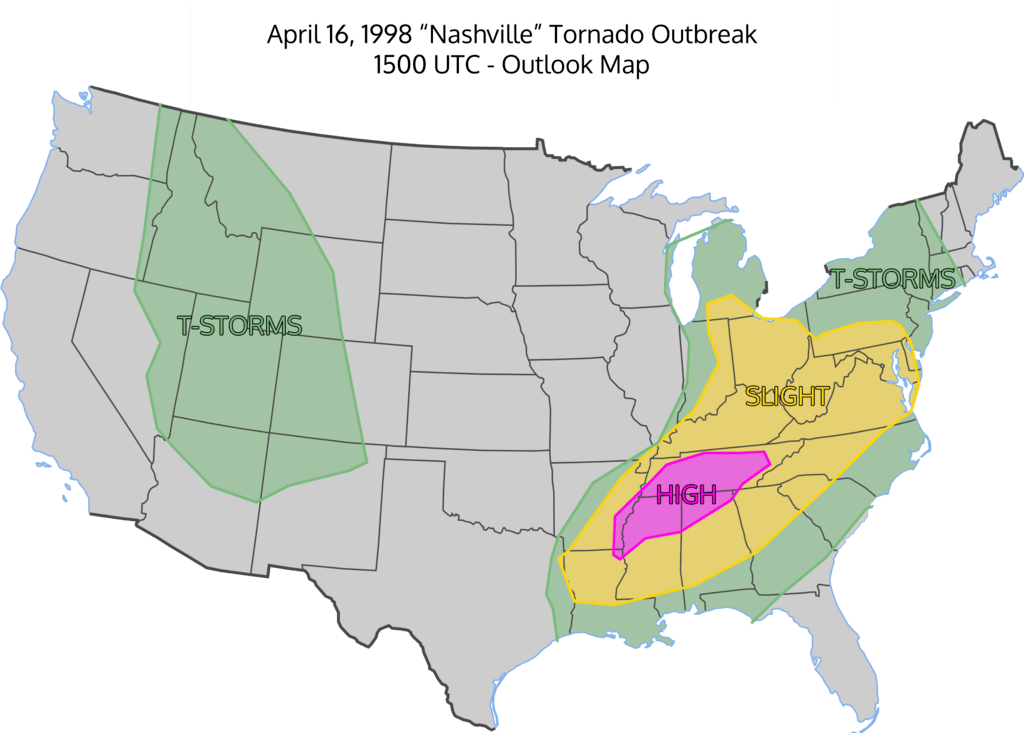
The date is April 16, 1998. It’s a humid spring day in middle Tennessee. Unfortunately, most don’t know the conditions for a historic weather day is brewing right in front of their own eyes.. The Storm Prediction Center (SPC) has issued a High Risk (5/5), which mostly covers southern states in the US. Specifically, Tennessee and Mississippi are in the center of the risk.
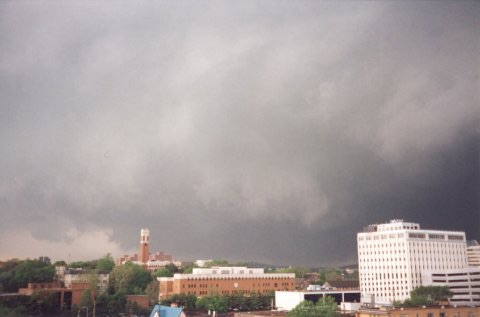
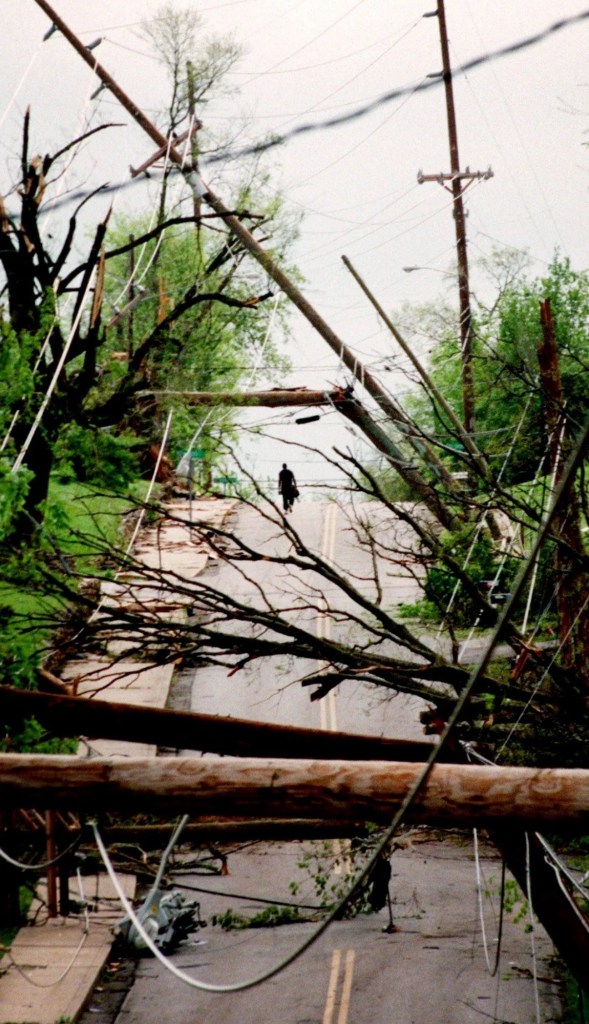
As the afternoon begins, so do the storms. At first, relatively weak storms occur with a minimum tornado count. But, towards the middle of the afternoon, the growing storm system (on its second day of producing twisters) finally reaches TN and starts to drop multiple tornadoes. This included an infamous F3 twister in Nashville, which garnered major media attention as it tore through the city on live TV. Along with that, the twister did cause major damage throughout the area. This twister has also stayed relevant as it’s a prime example that tornadoes can in fact happen anywhere, even major cities.
But, just as the Nashville twister dissipated east of town and the word spread of a major tornado striking Tennessees capital, another small supercell in south-central TN began to intensify. This storm, mostly over rural (for tennessee standards) lands had not produced anything tornadic before. But, as it tracked through Hardin County, that changed. It was here that the twister began to drop its first confirmed tornado.
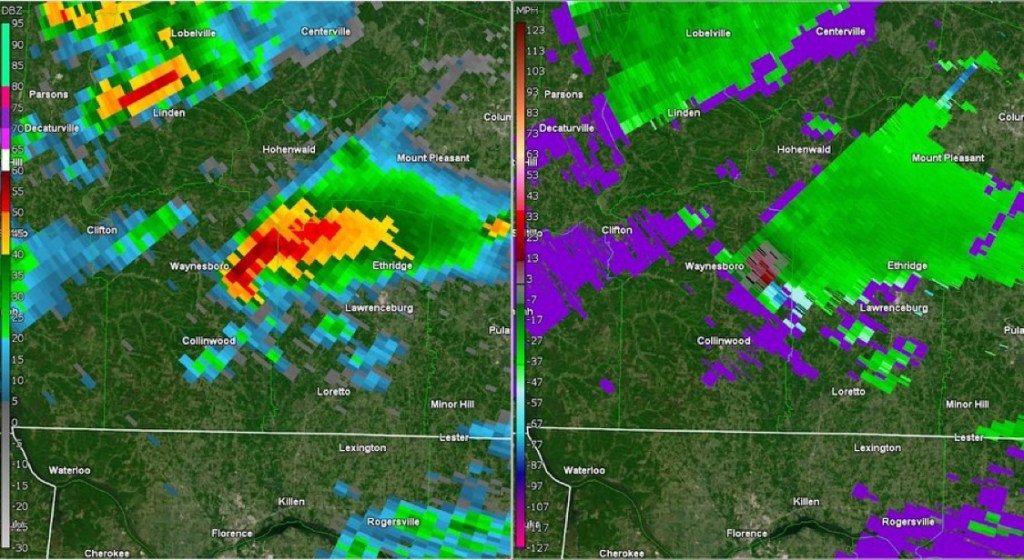
This first tornado mainly struck the counties of Hardin and Wayne, Tennessee. Throughout its 30 mile long path, the twister did manage to kill 3 people. But, due to its mostly rural location, only scattered strong structural damage and “massive” tree damage could be noted.
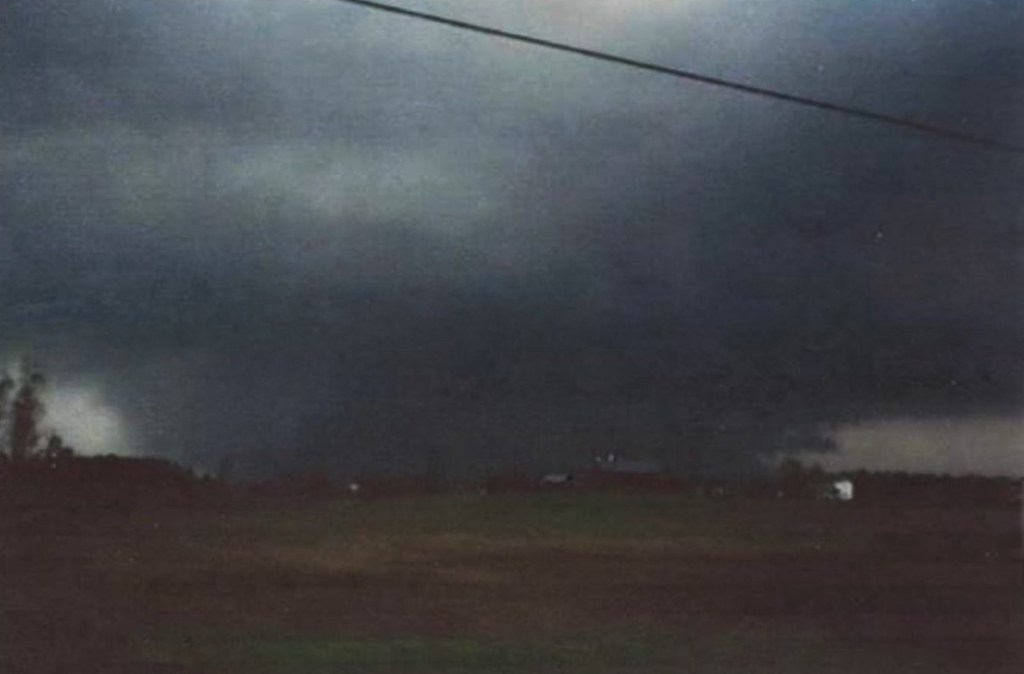
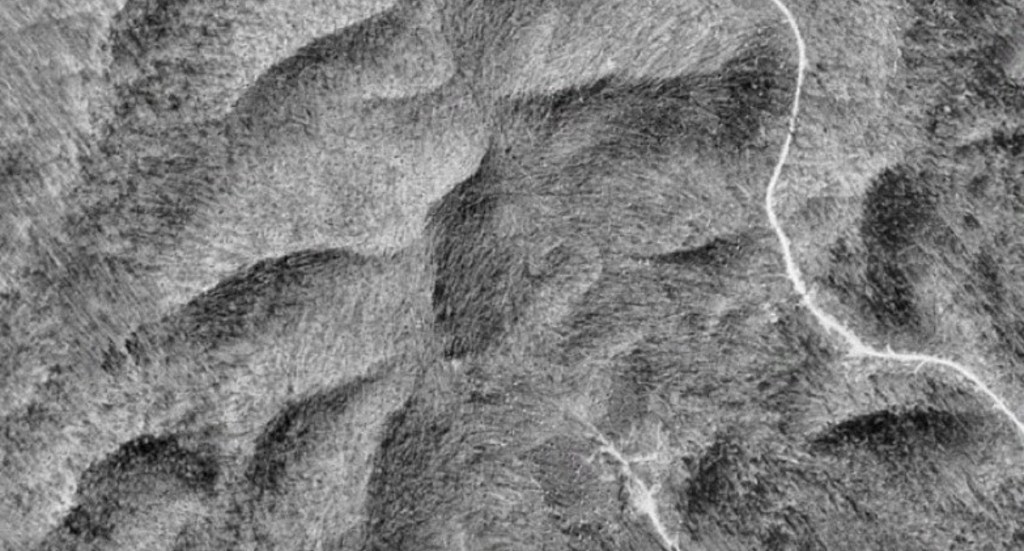
Shortly after causing its final damage, the twister would quietly die out in rural amish lands. But, this wasn’t the last of this storm. It was only a few minutes until the powerful parent supercell was already ready to produce a much stronger tornado:
“The Forgotten F5”
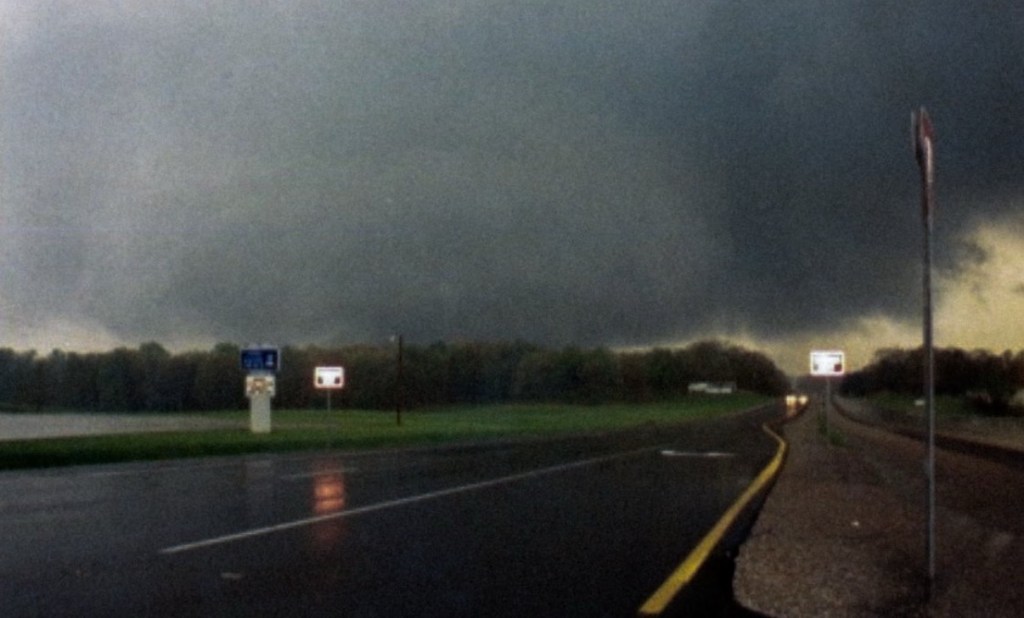
This tornado – which began as a weak, wispy funnel – touched down west of Deerfield, TN at around 4:30 PM. Little did anyone know, the twister was soon going to injure 21 and embark on a devastating path. Unfortunately, due to its elusive nature, the specific details of this track are almost completely unknown. But I will cover what we know.
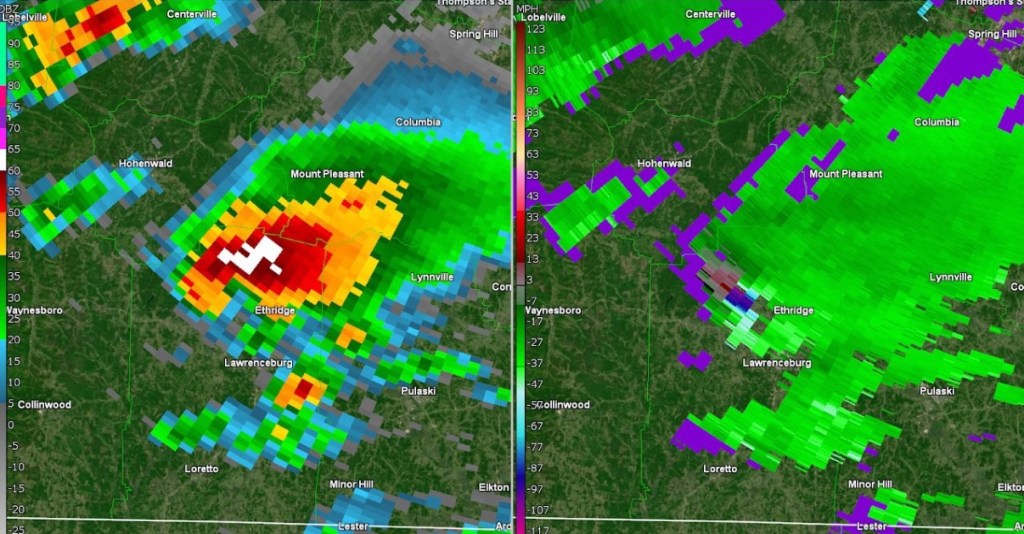
Throughout its 20 mile path, the tornado was actually observed and caught on video multiple times throughout its path. Through my research, i’ve been able to find 3 separate videos of the twister.
– One filmed from Center TN,
– Another near Deerfield TN,
– And the final from Summertown TN
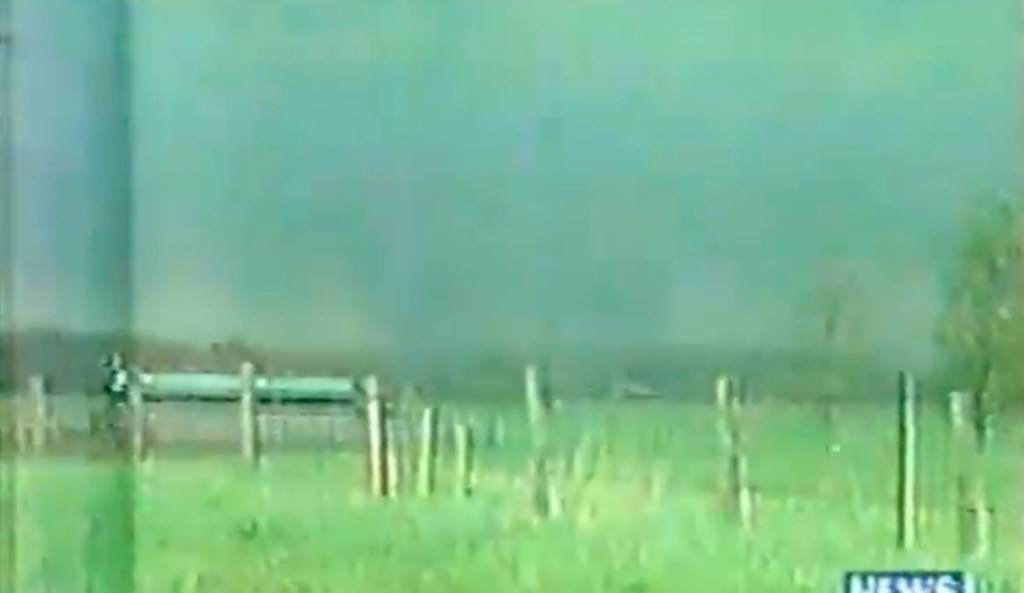
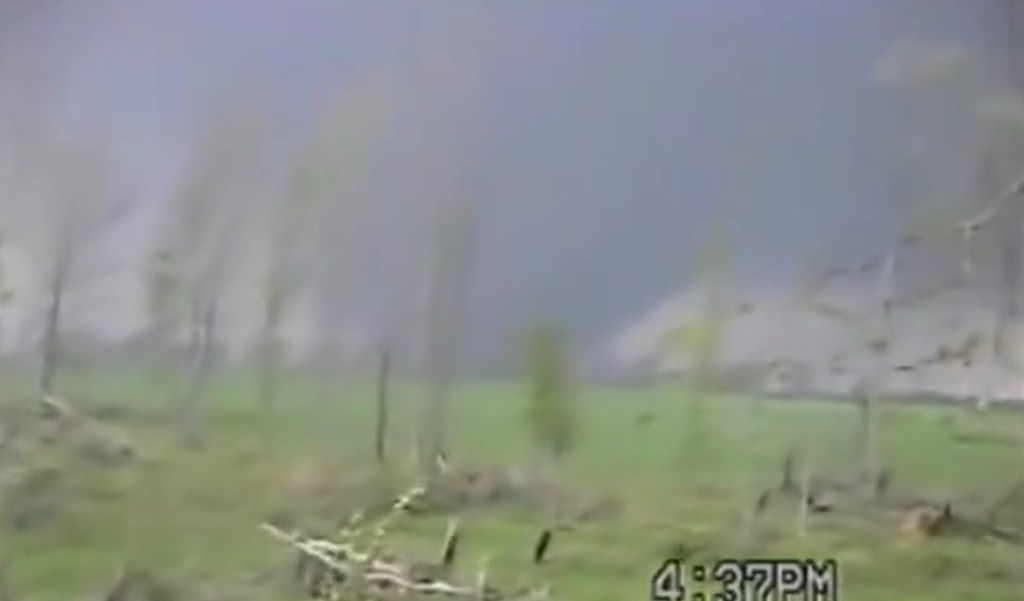
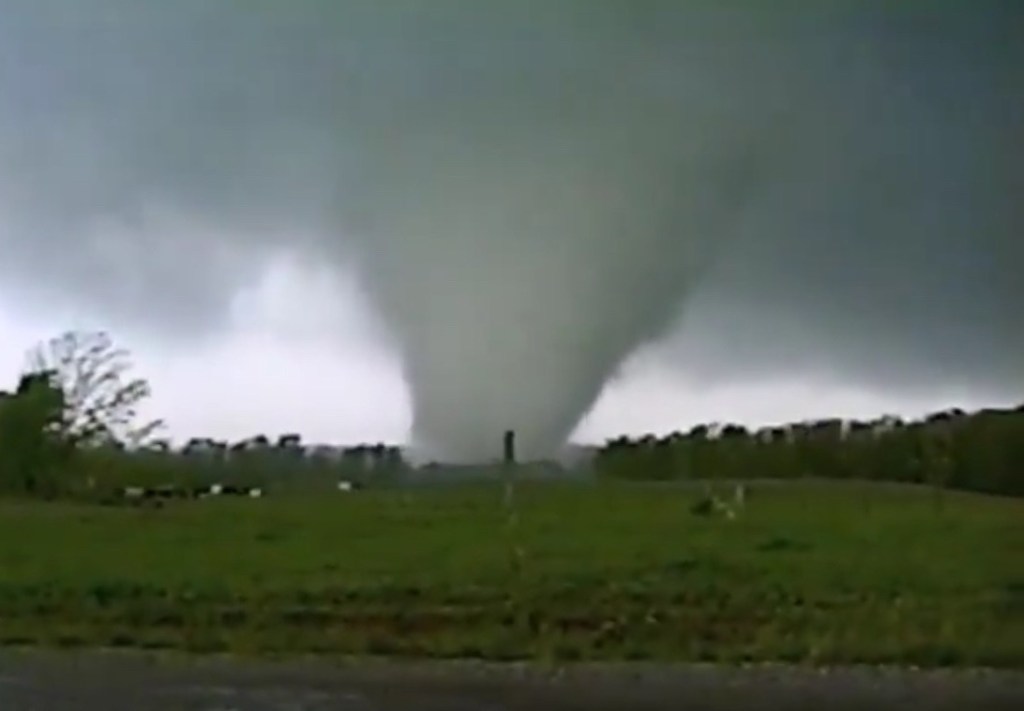
Not only were those 3 recordings taken, but so were a series of Storm Spotter photos shared online in 2002~. These have been since taken down (as many other sites from the period), but I recently found them sitting around on Internet Archive. The first was taken by a Henryville, TN resident, and the last 3 by a local chaser in Crestview, TN.
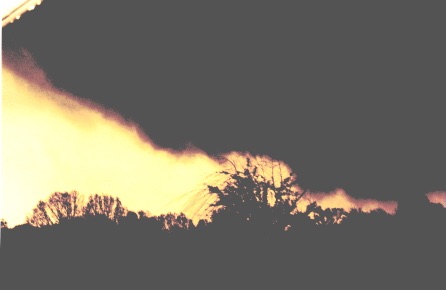
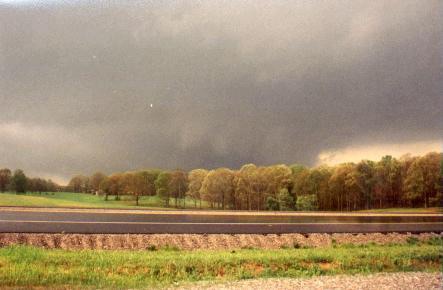
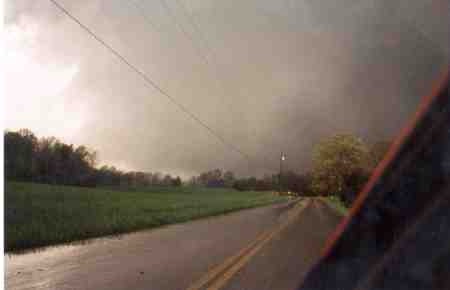
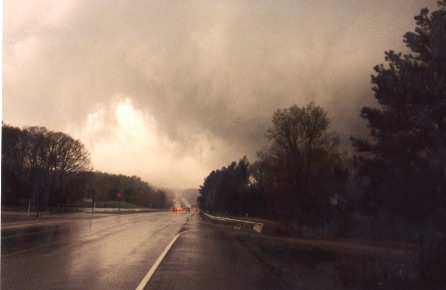
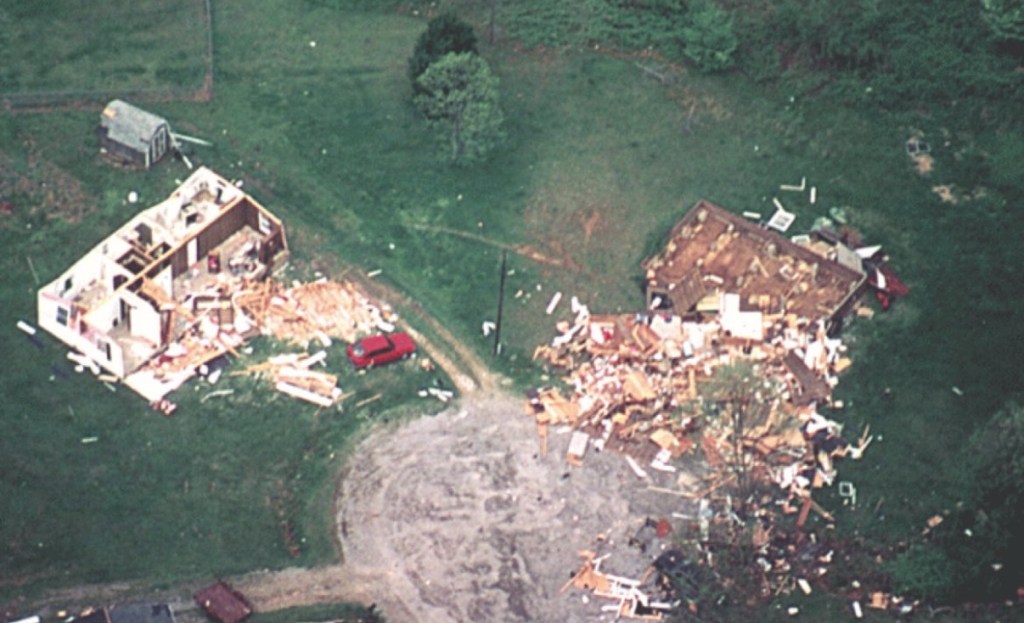
Along with its beautiful look, the tornado also obviously caused incredible damage. But, any destruction from this twister was scattered, as only so many structures existed in its path. But, homes that were struck sustained strong damage. Images and reports of leveled brick, wood, and mobile homes were all collected over the years, and likely influenced the F5 rating.
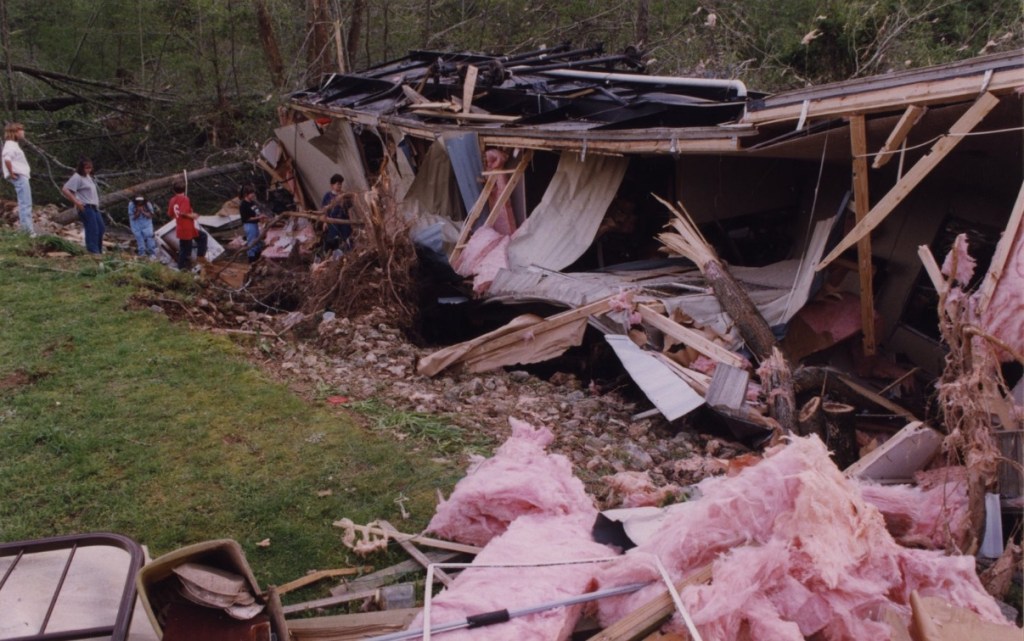

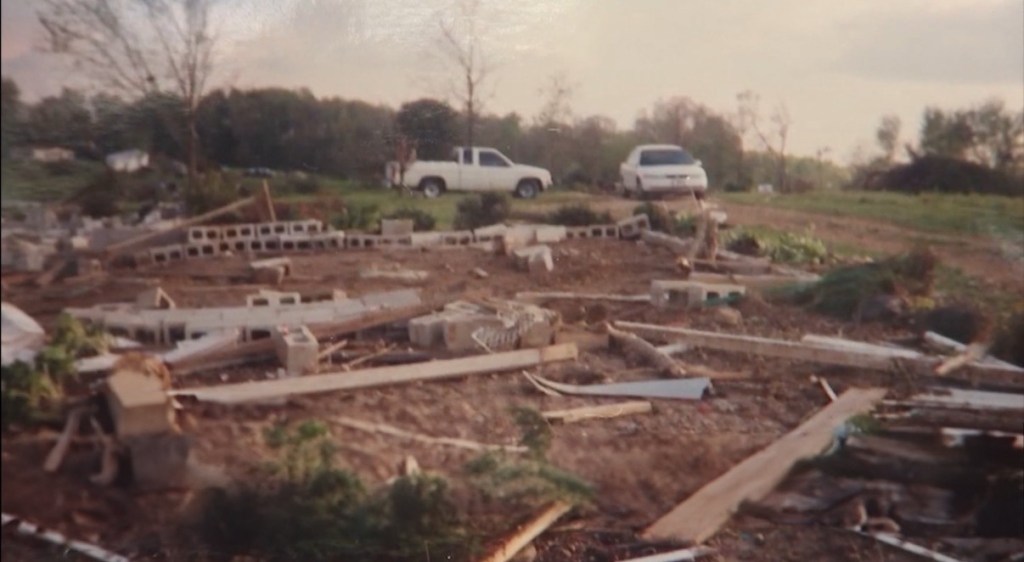
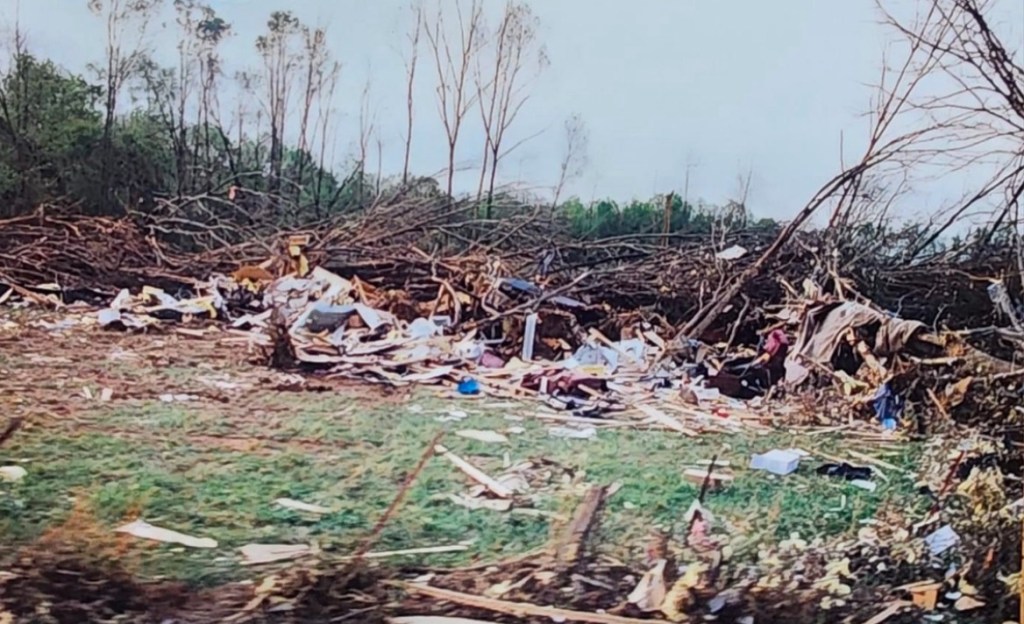
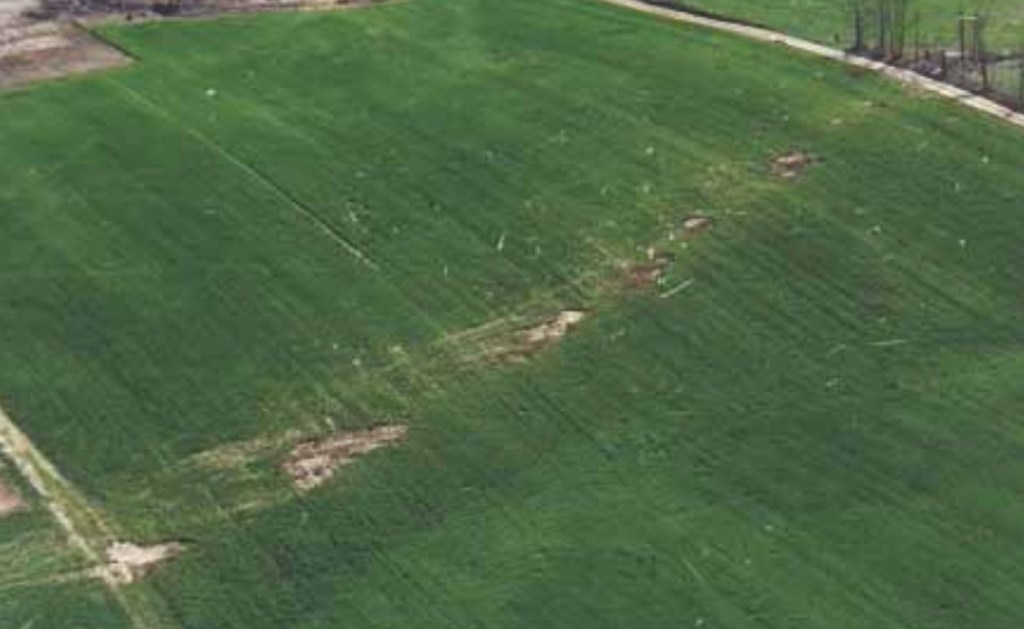
But, the actual damage that influenced the specific rating of F5 is unknown. It’s rumored that surveyors found trees uprooted and thrown 50 feet, as well as that some pavement was ripped out of the ground near such location. But, no physical proof has been discovered.
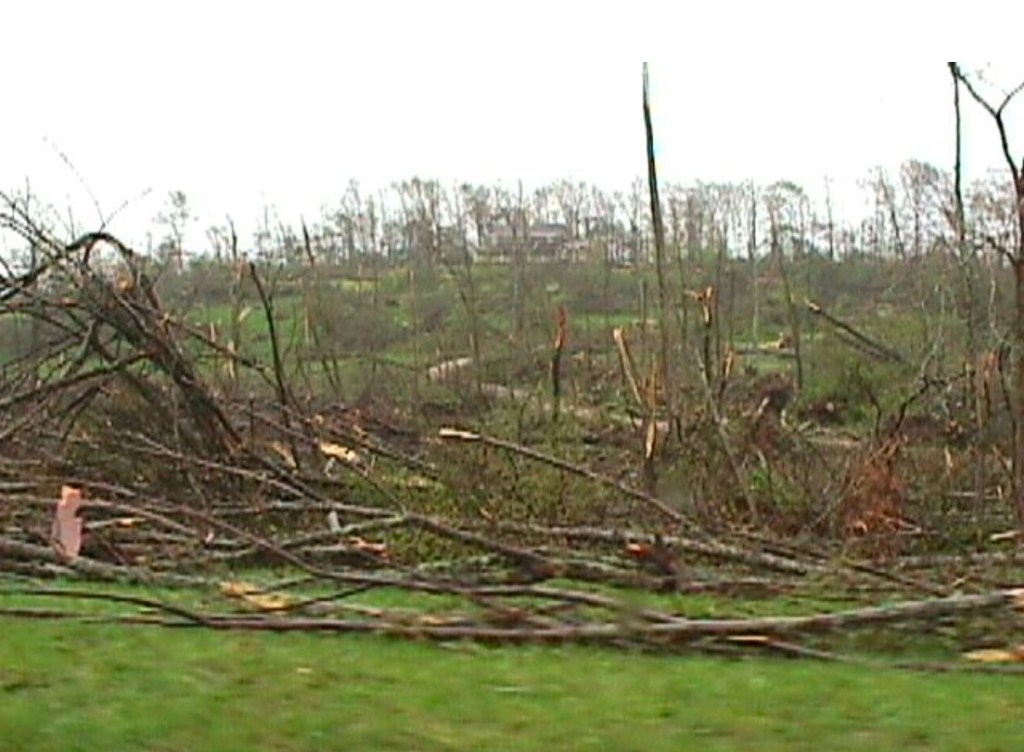
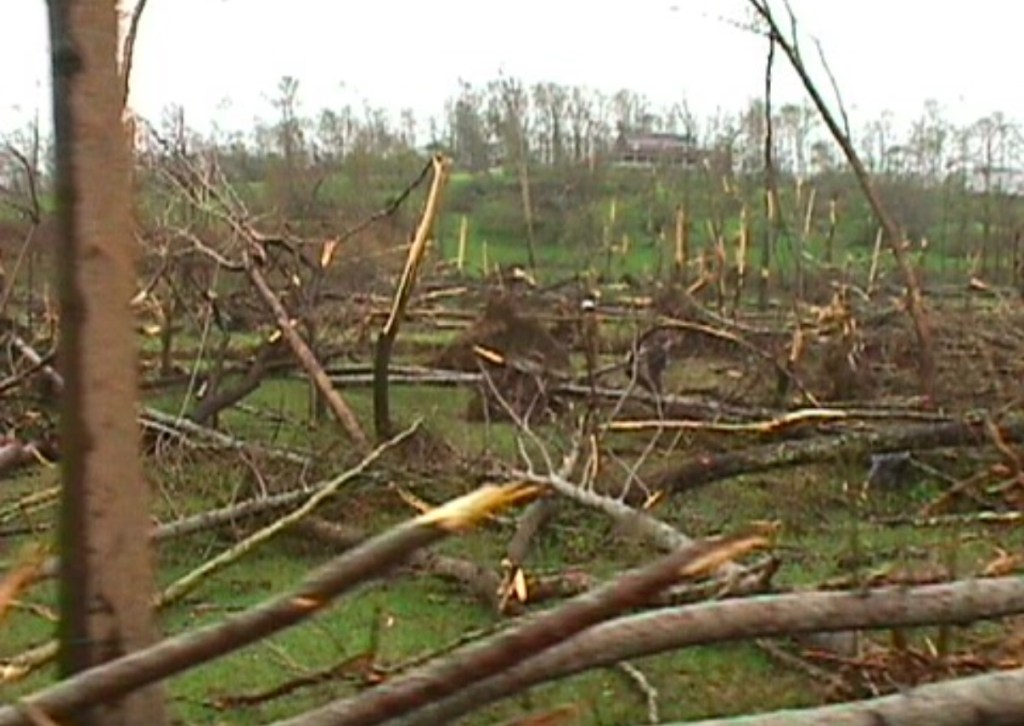
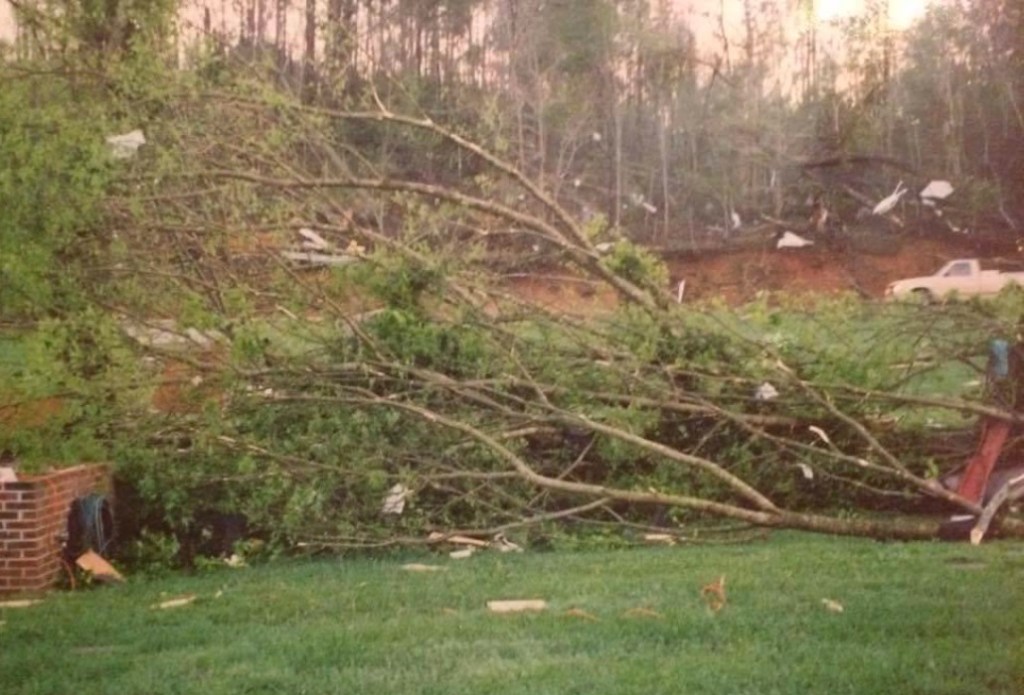
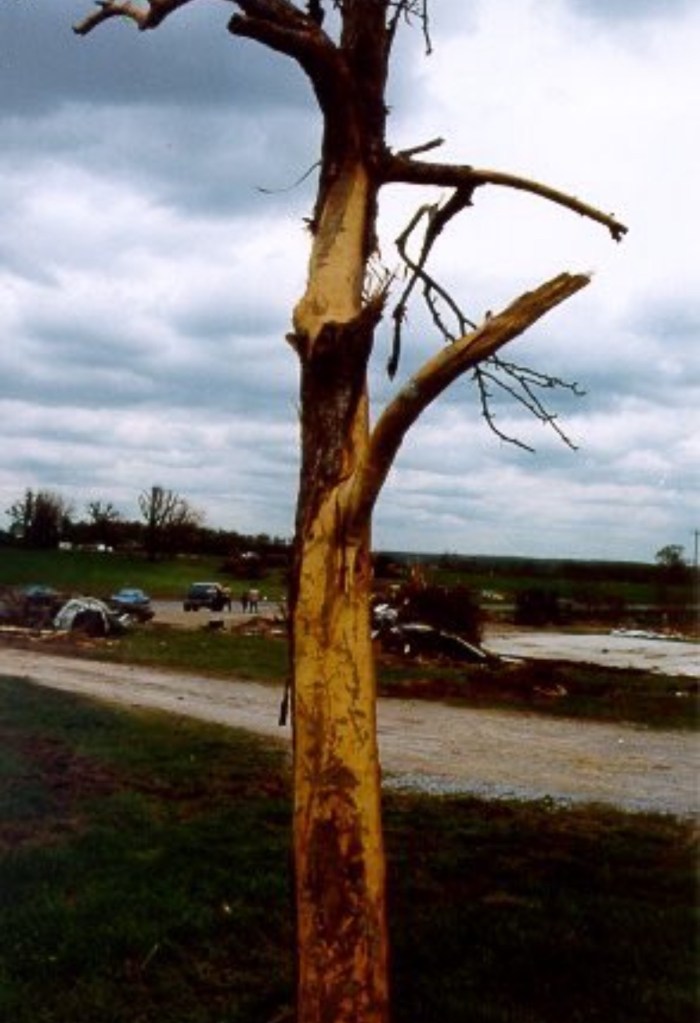
Another rumor is that a car was thrown 10~ miles from one of the hardest hit areas, but this still remains a mystery. Other images from the event DO show damaged cars, but none with such damage validating the mentioned claim.
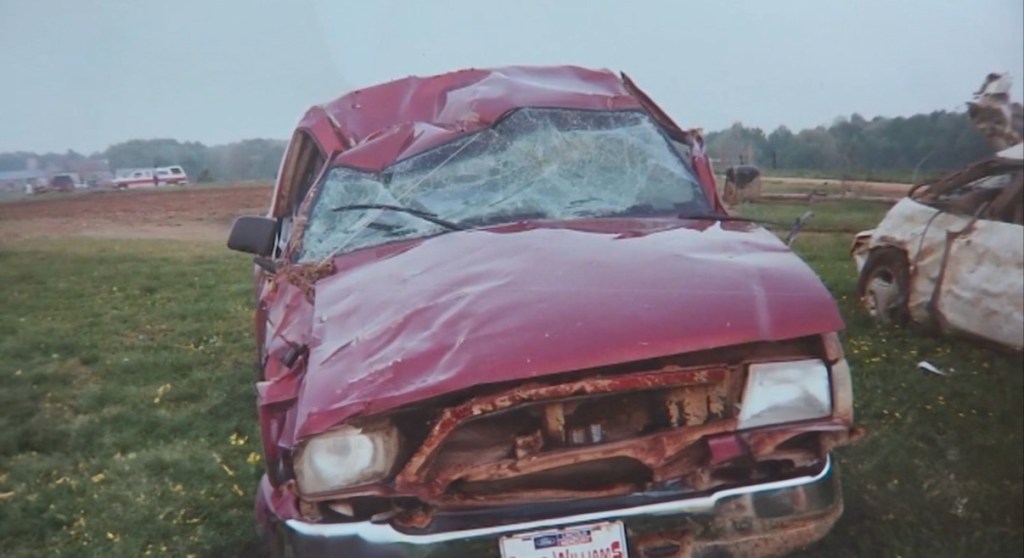
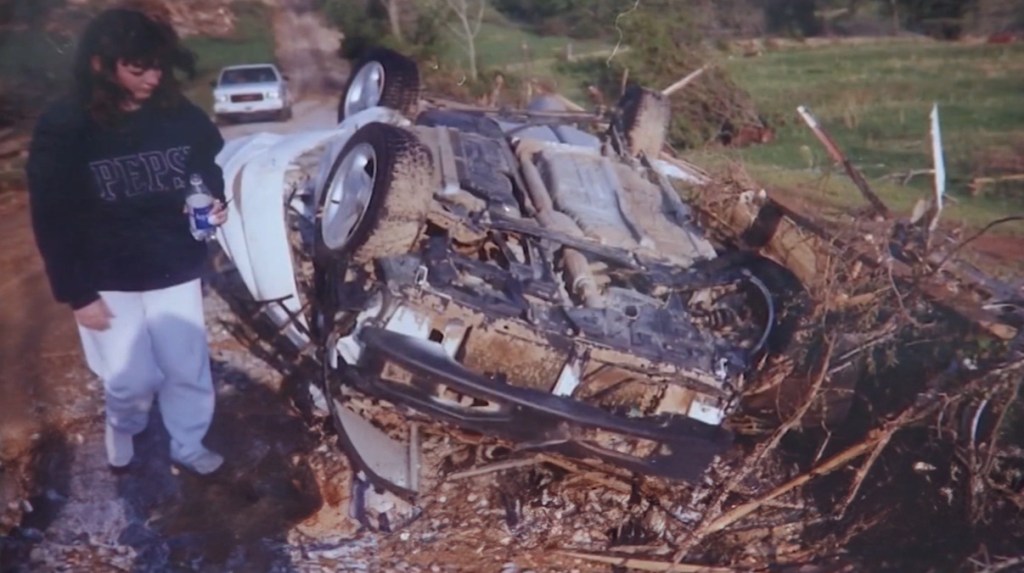
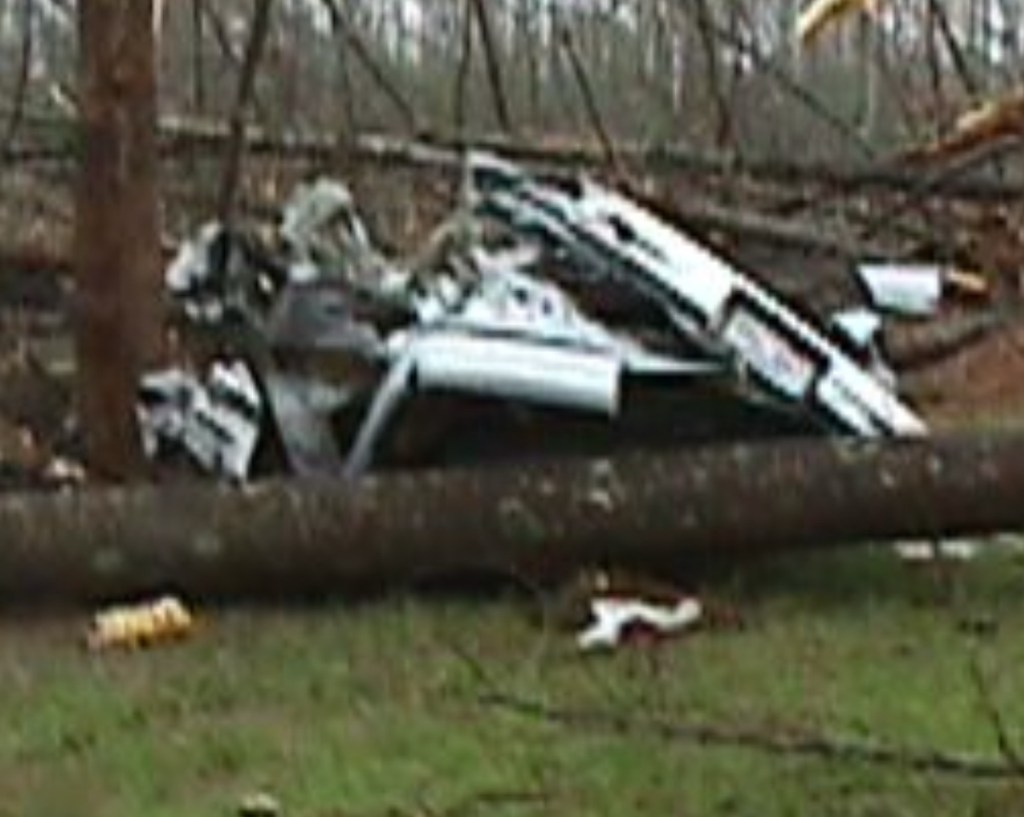
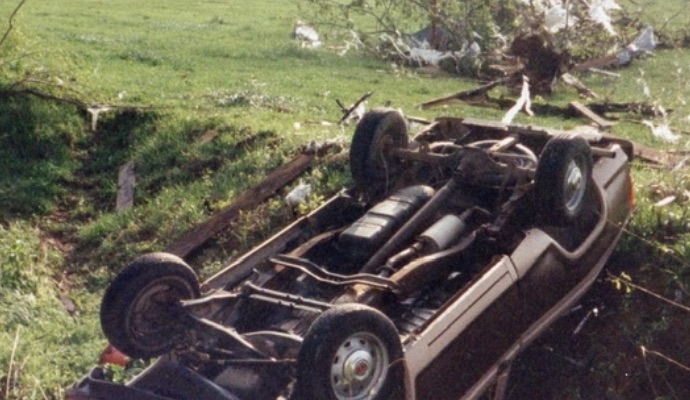
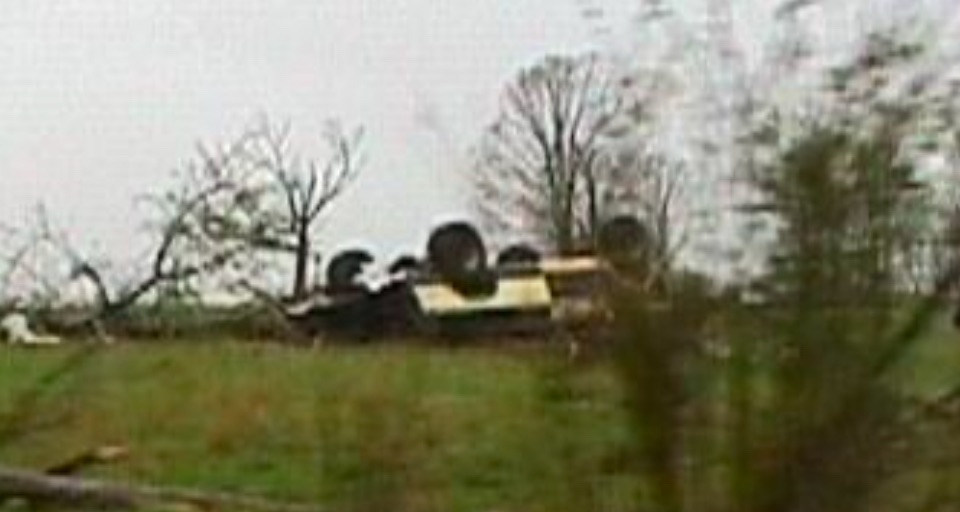
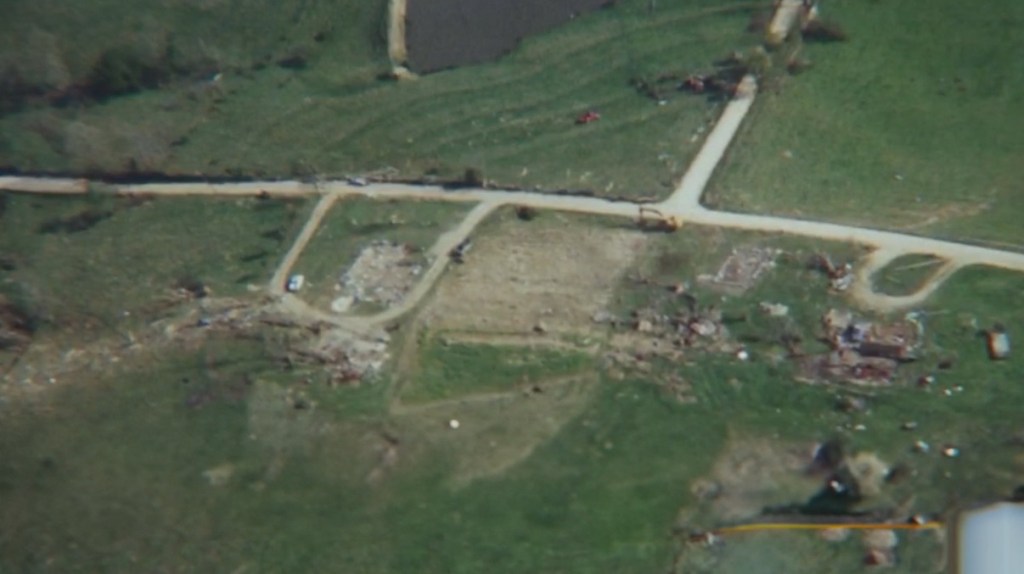
Aside from scattered galleries, the damage documentation (despite being some of the only documentation) is very scarce with this twister. Only 3 aerial images are known, one showing the ground scouring observed by Tim Marshall, and the other two showing structural damage.
Shortly after striking one final cottage, the tornado lifted and the supercell quickly recycled again. This time, it produced yet another F4 tornado. This twister (seen below) noticeably struck the outskirts of Culleoka, TN, injuring 9 and damaging multiple homes. This was the final tornado from this storm.
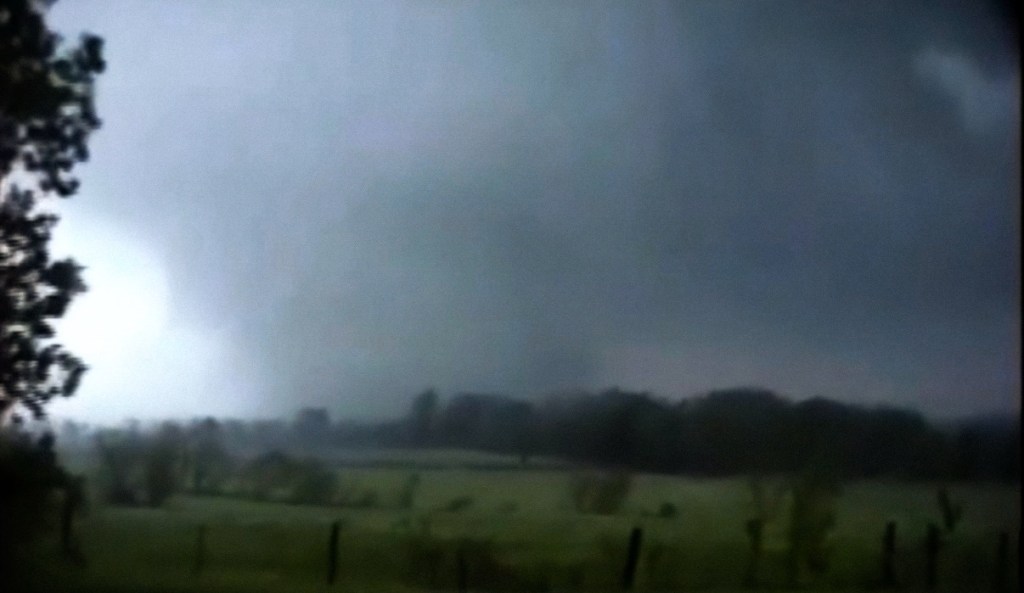
NOTE: Some residents have reported the survey from this tornado not including multiple well-built leveled homes. I can’t confirm nor deny this, as I wasn’t there.
Now for the big question:
What made the Lawrenceburg tornado forgotten?
– One reason is that the major media attention from this event almost all went to the Nashville F3. Since it went through such a major city, local and national news often only reported on this twister.
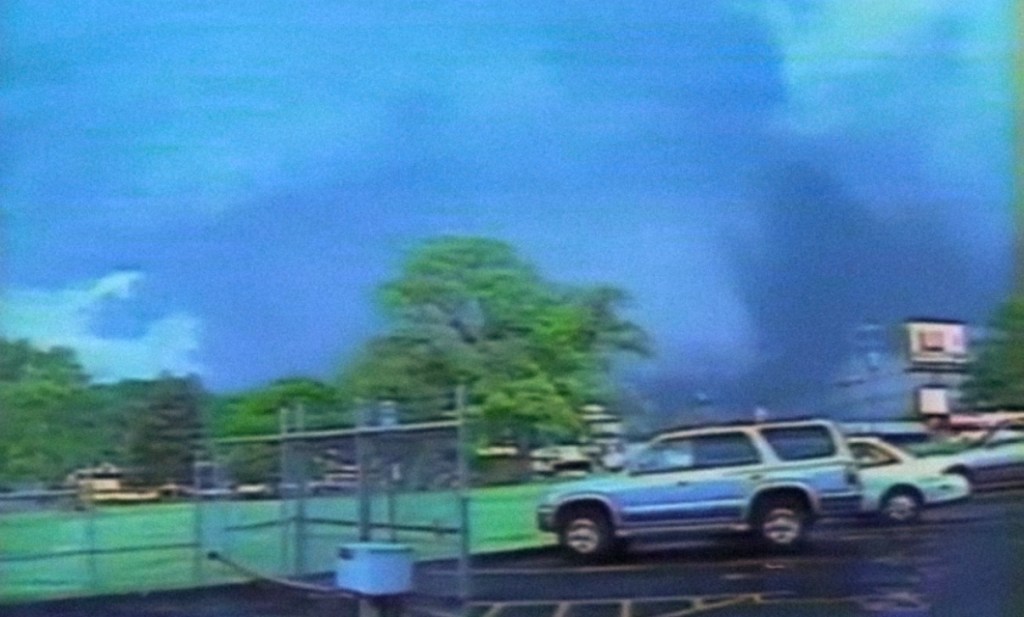
Another reason is the fact this specific twister was so rural. Yes, it caused intense damage, but that was still scattered. It didn’t cause any deaths, and even during the event, it was only covered live by one TV station. The lack of easy-to-access media can also be accredited.
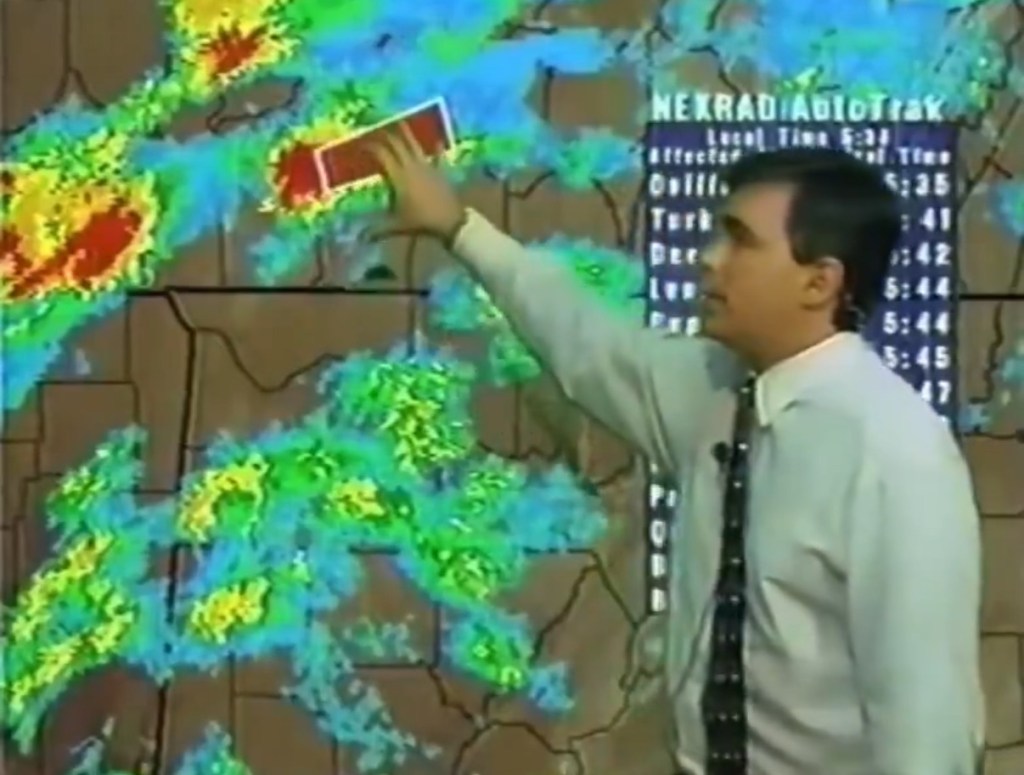
Overall, this tornado shouldn’t be “forgotten”. But, many factors have built up over time to the point it’s gained such a name. I hope I covered what I could in this post, so do enjoy!
Some useful resources for more information:
weather.gov/ohx/forgottenf5
weather.gov/ohx/19980416
en.m.wikipedia.org/wiki/Tornado_o…
tnvalleyweather.com/index.php/2024…
Lastly, special thanks to Brian Wilson for helping me with some official info for this blog!
NOTE: The tornado it would produce has had a debated path since occurrence. Initially, it was thought to be one large F5 twister across 4 counties. But, re-analysis has suggested 3 tornadoes.
This blog is written with consideration of the “3-tornadoes” consensus only.


Leave a Reply