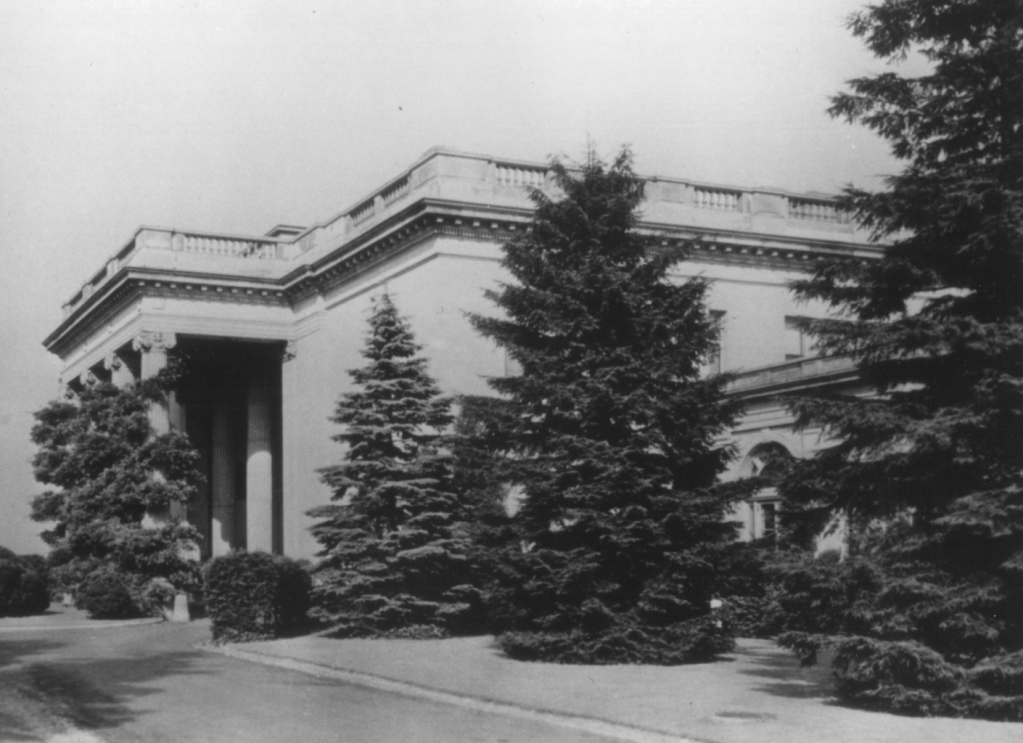
In late 1951, an exiled and shunned European King purchased an estate on Long Island, New York, for use as his personal foreign palace. Ultimately, his dream for this grand property never truly came to be. Despite this, and the main mansions demolition over 70 years ago, the story of “Knollwood” is nowhere near over. Today, I will recite this incredible history to you, and with a series of photographs never once seen by the public before this very moment. I hope you enjoy!
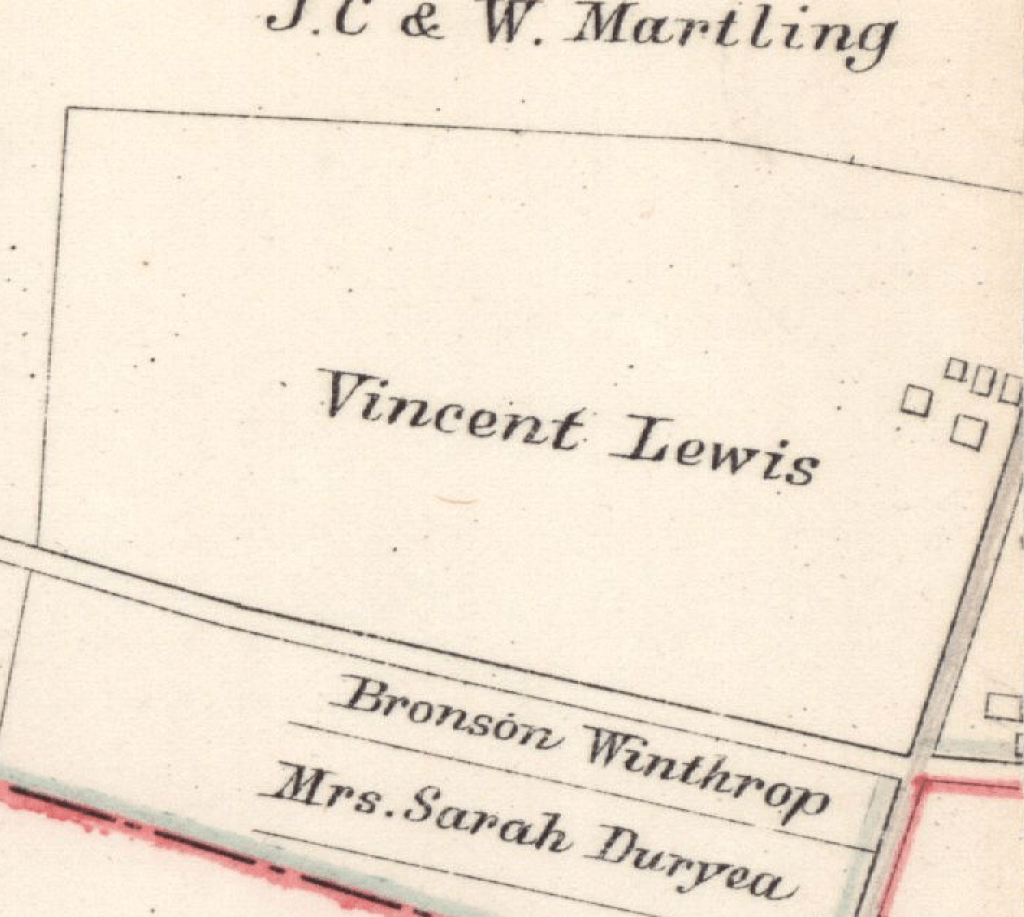
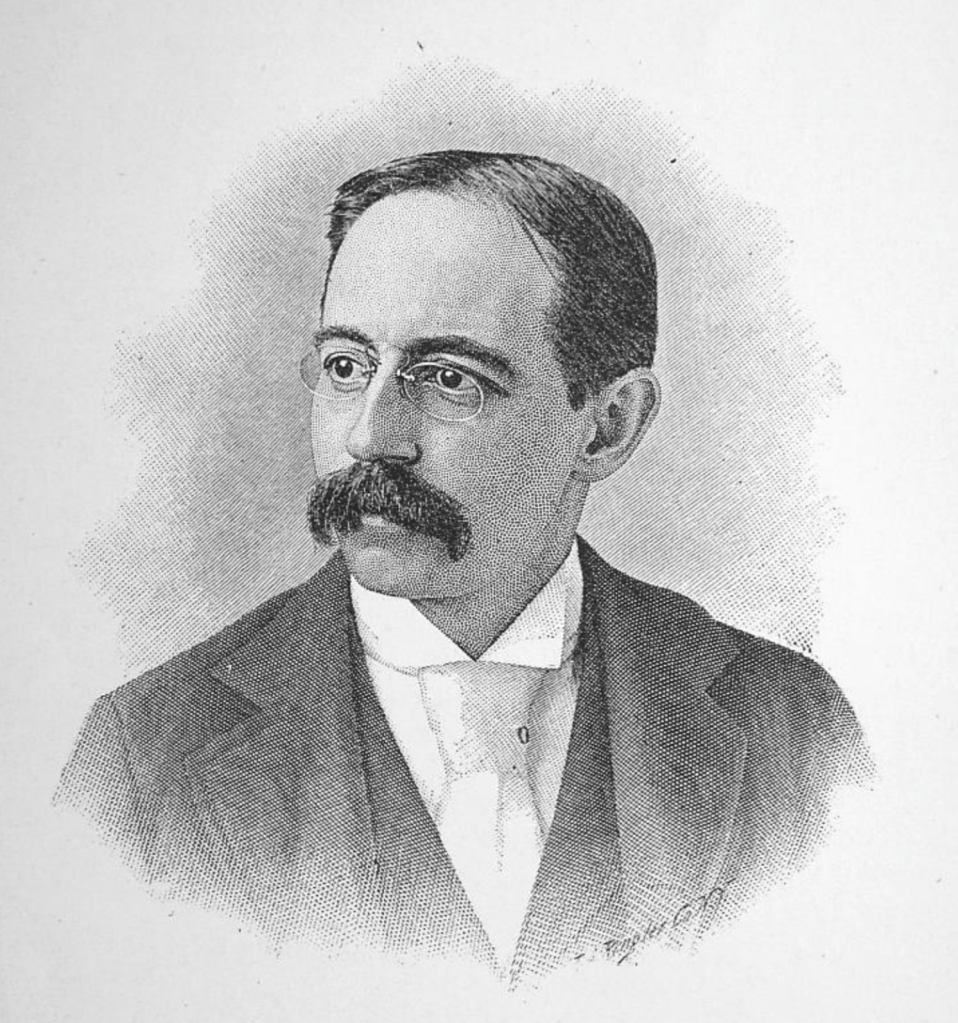
On March 12, 1906, a Wall Street financier by the name of Charles I. Hudson purchased a massive 278-acre property of New York farmland formerly owned by Mr. Vincent M Lewis (d. 1901) & his family. This plot of land, which was located in present-day Muttontown, New York, consisted of pristine fields as far as the eye can see. So, why would a Wealthy Stock Brocker buy such an uninteresting property? Well, to build his own Gilded Age estate, of course.
Starting just a few months later, Hudson began the process of preparing his estate. First, he sought out to find the perfect architect. Eventually, he decided on having the firm “Hiss and Weekes” design the residence, which was to hopefully be in the Italian Renaissance style. Along with building architects, Mr. Hudson was also searching for a landscaping architect. With such a big property, the project would of course be extensive. But, the firm he chose, “Vitale & Geiffert”, were ready for the challenge.
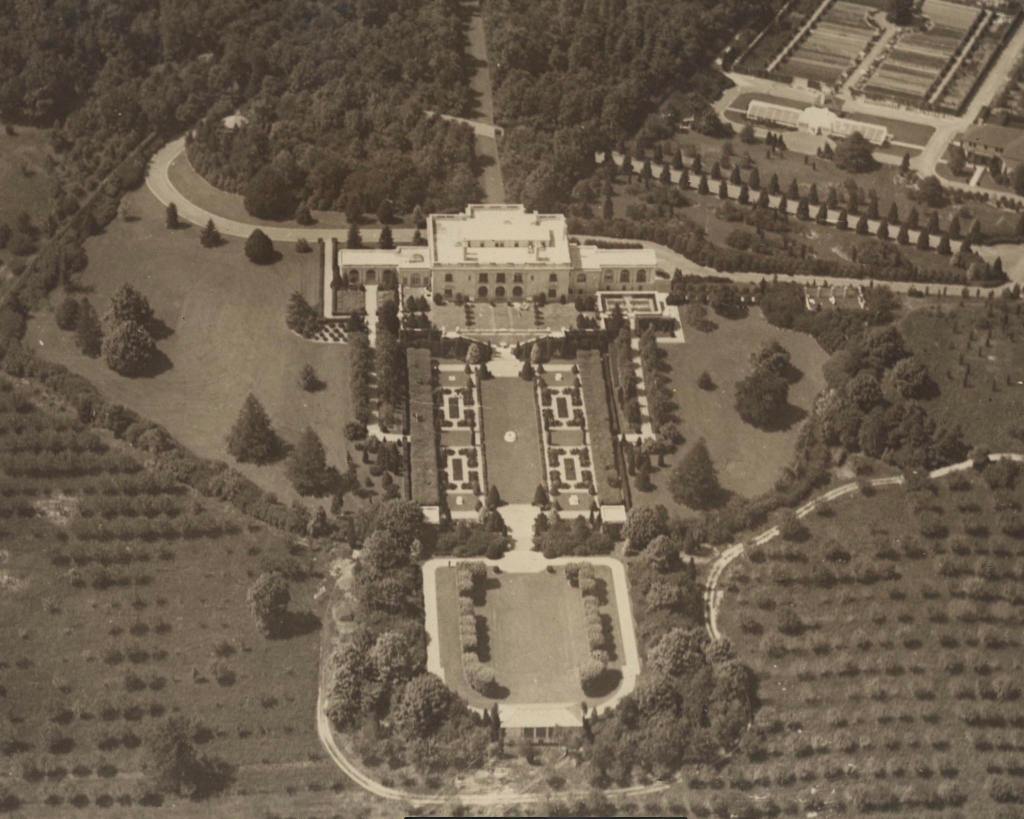
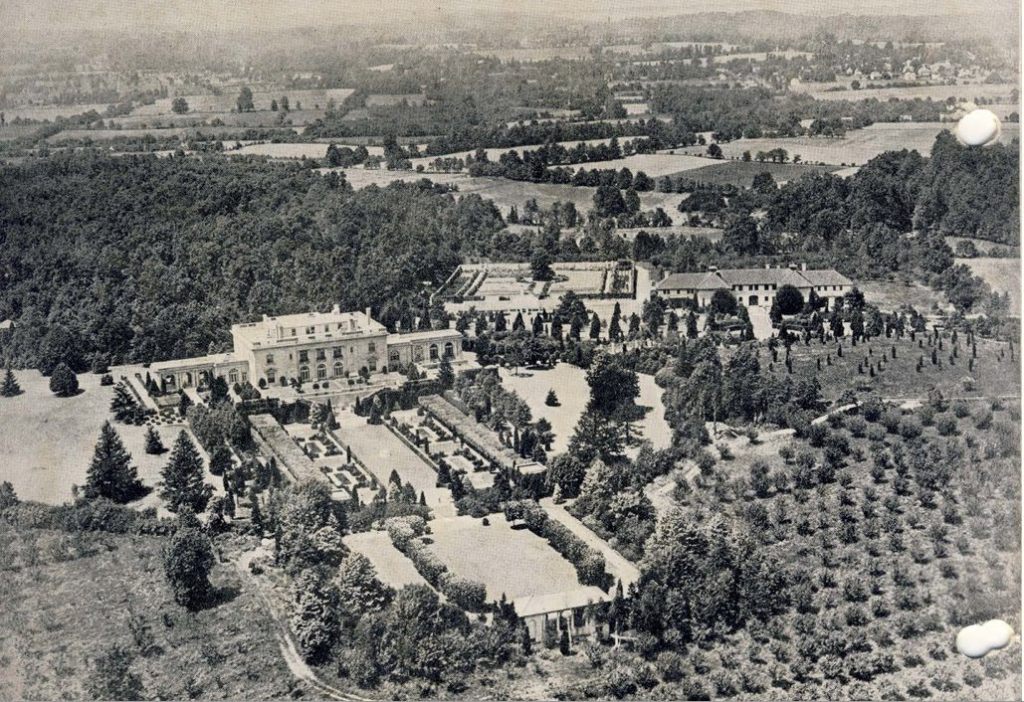
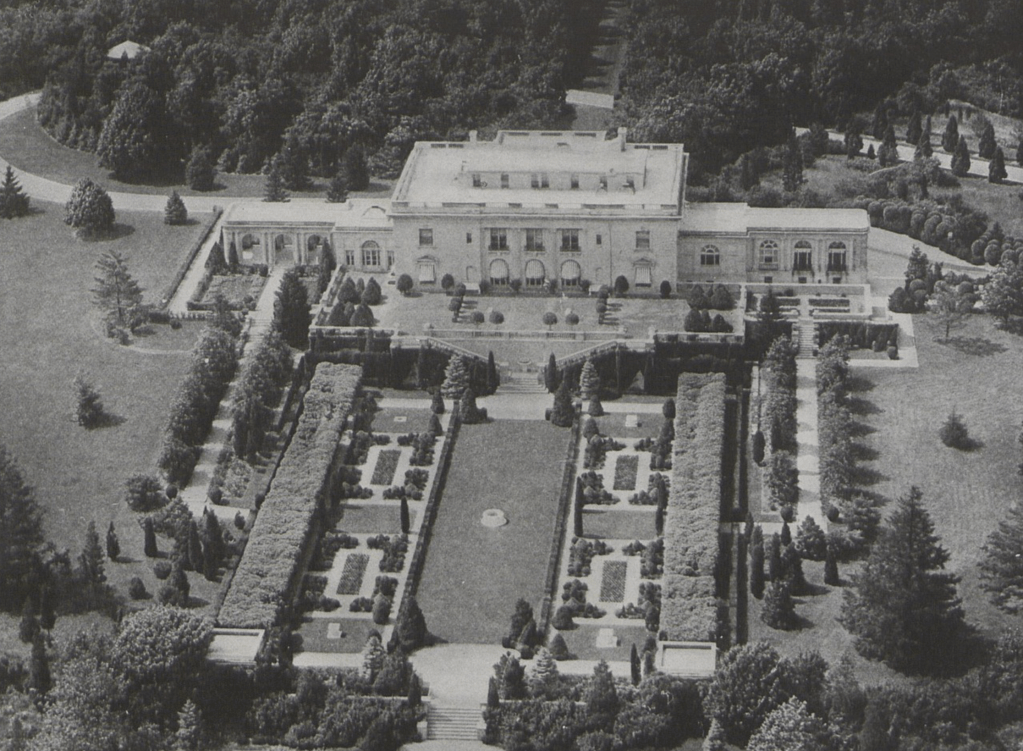
So, with his architects chosen, and the property ready, his dream could finally come true! In late 1906, construction began on this incredible estate, which was to be called “Knollwood Farm” (likely due to its location atop a raised mound). It was one year later, in 1907, that the construction of “Knollwood Farm” was finally completed.
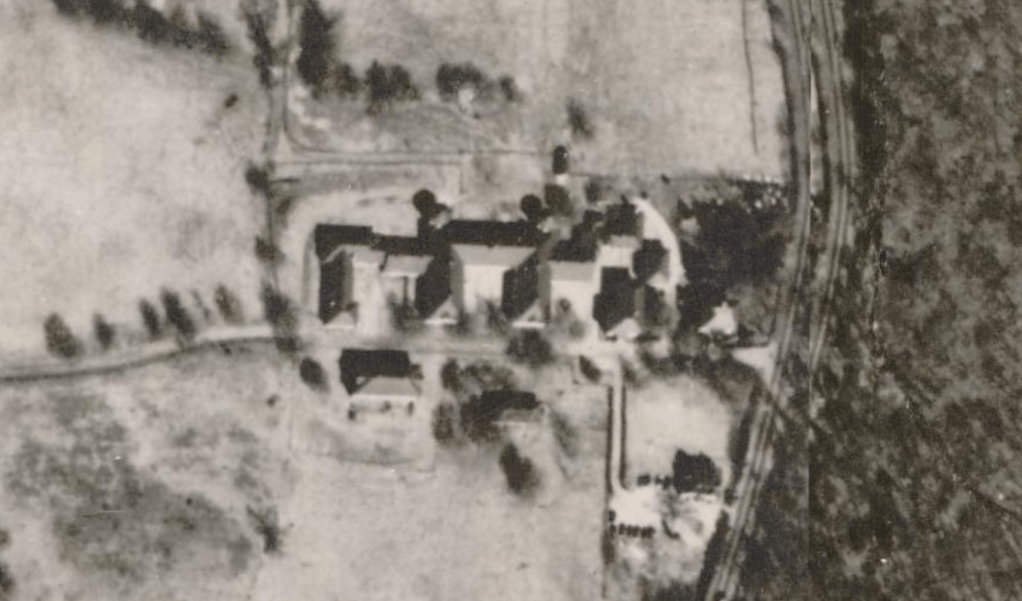
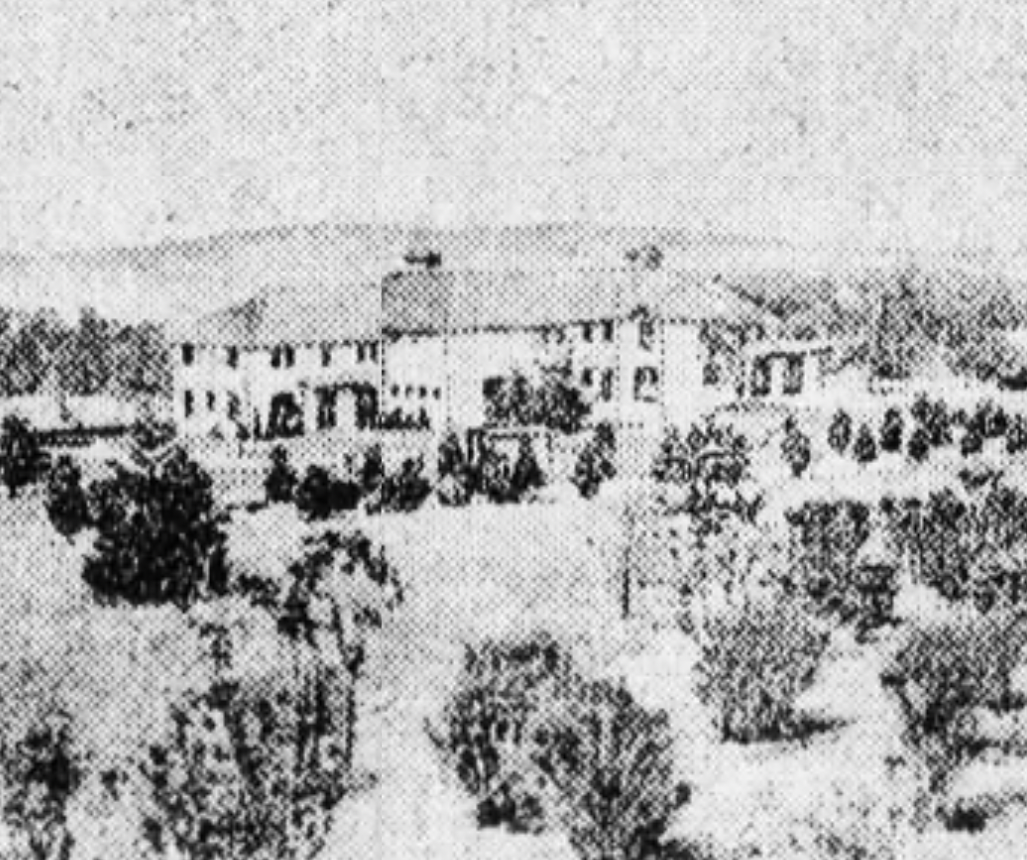
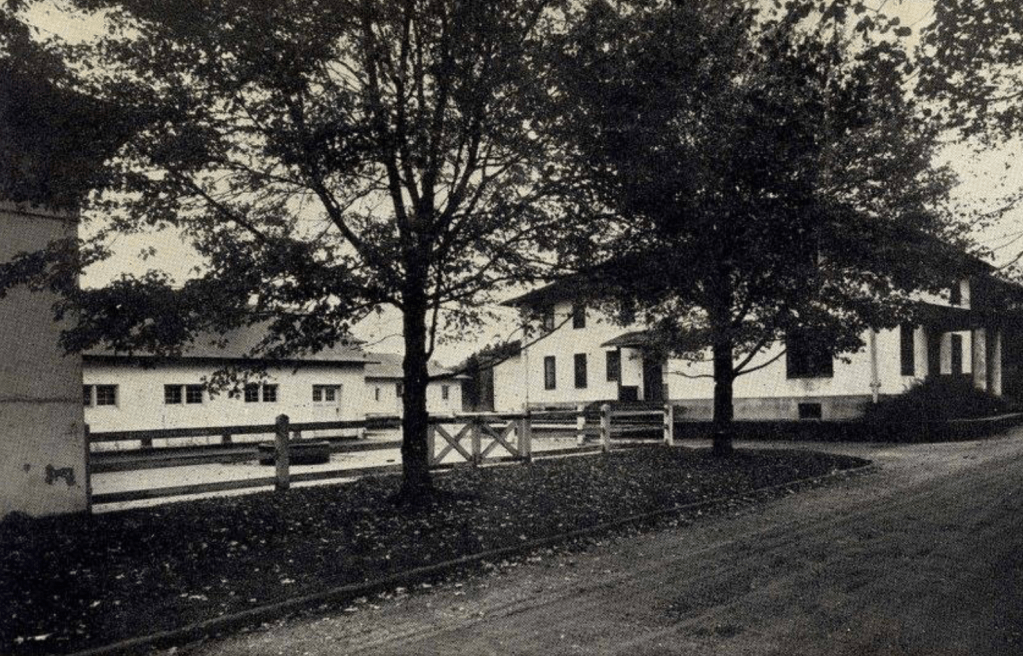
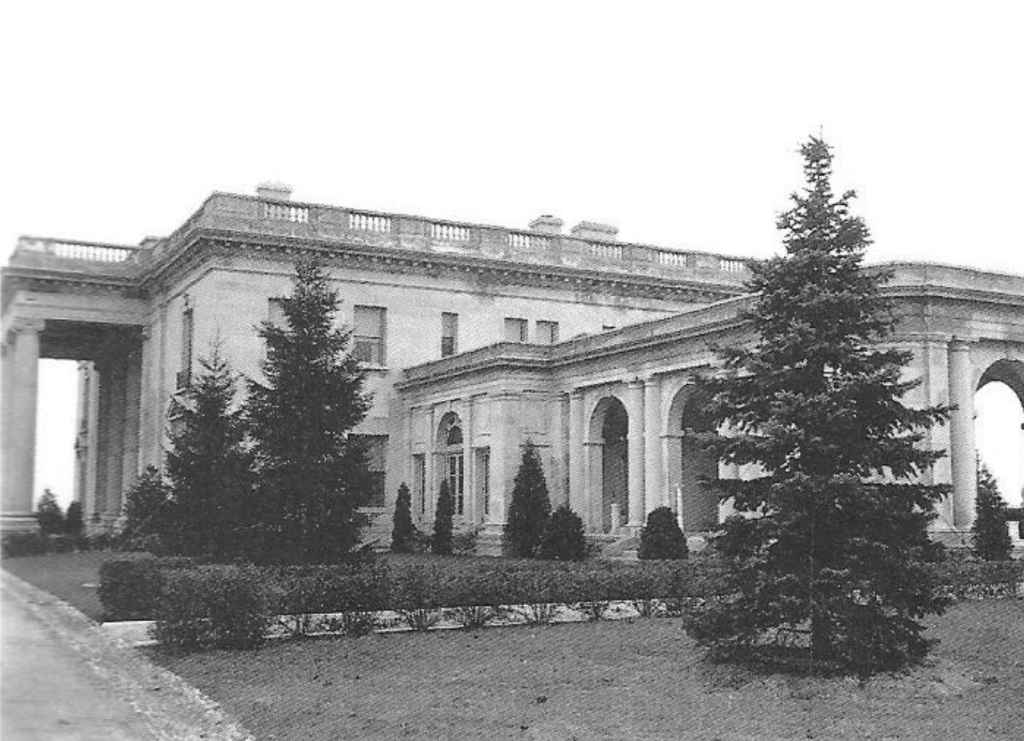
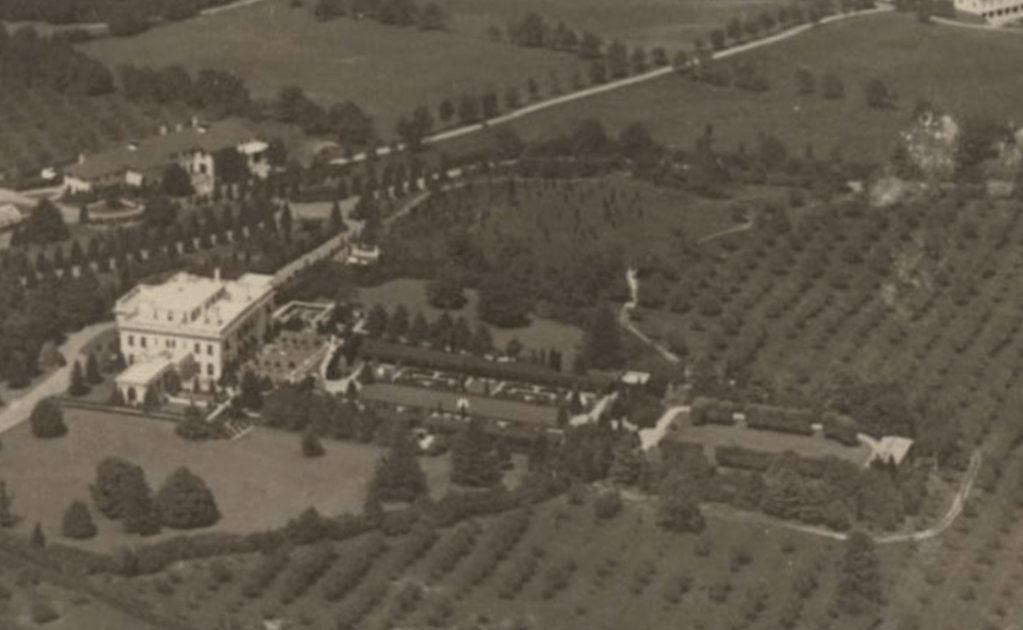
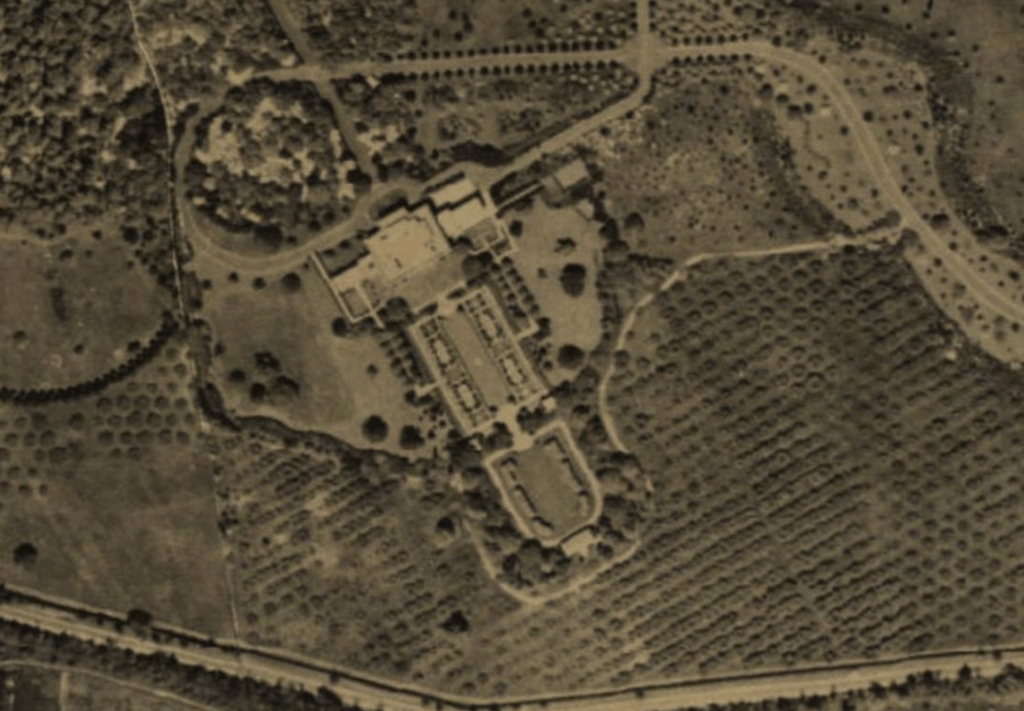
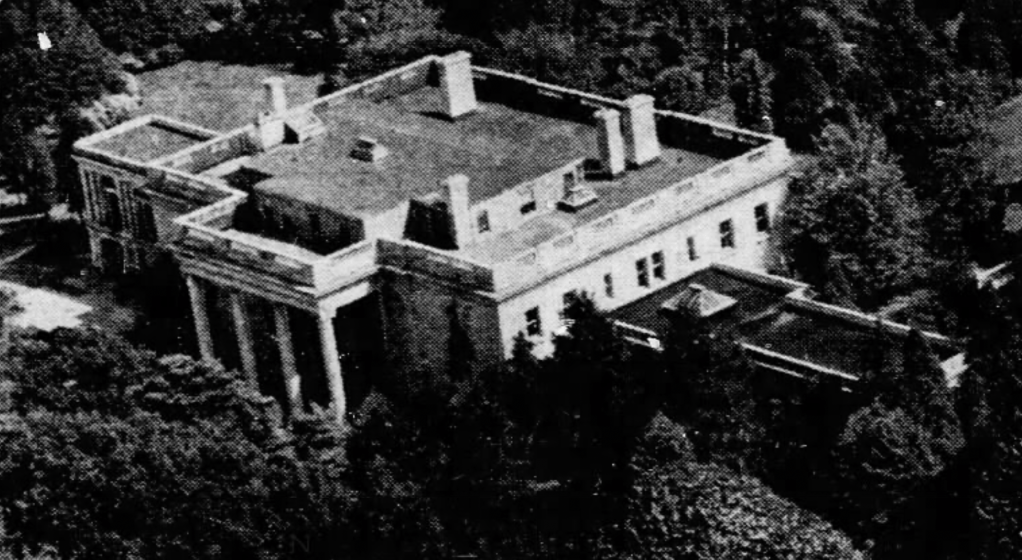
The product was an estate of the most grand proportions. To be able to grasp its full beauty, one would have to see it with their own two eyes. For now, aerial photographs will have to suffice. To my understanding, the property consisted of a massive main home, terraced garden, carriage house, farm complex, and winding driveway. Anyone entering this estate would be undoubtedly teleported into another world, one of wealth and prosperity only.
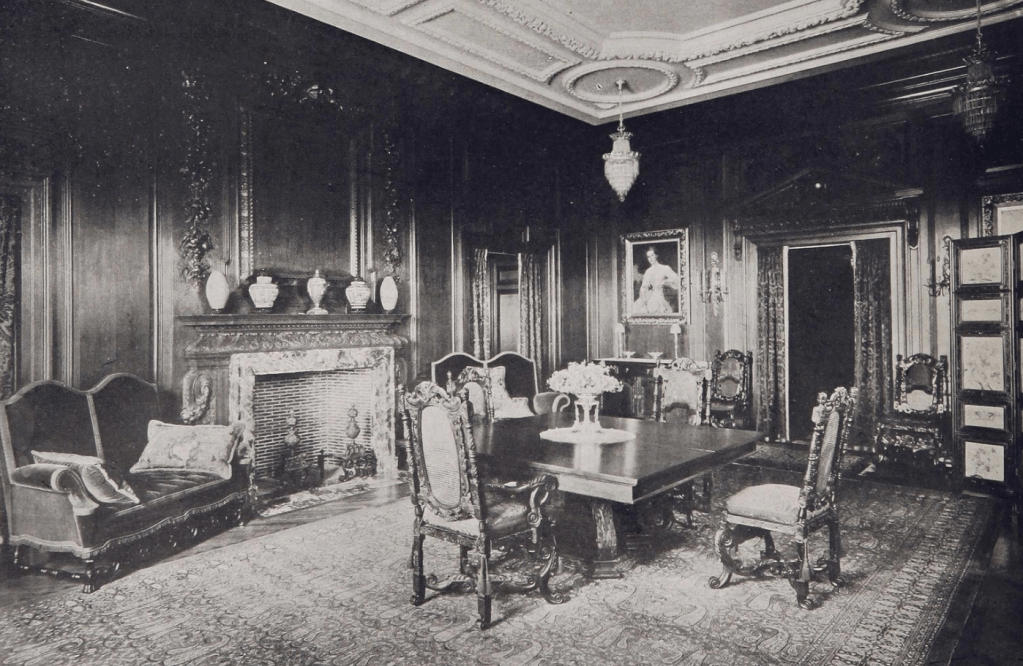
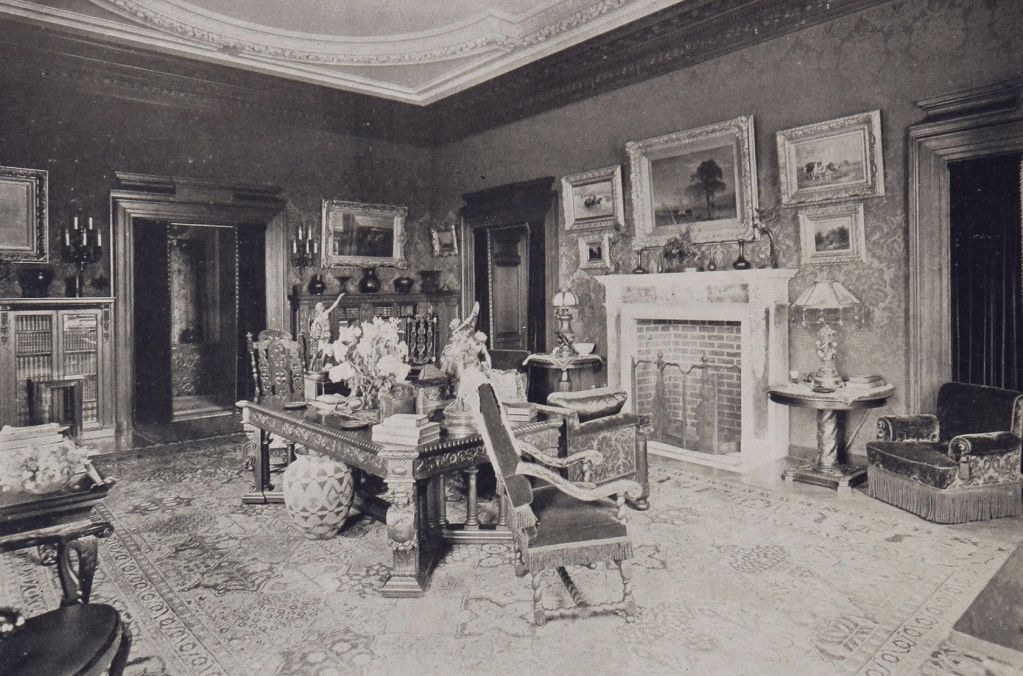
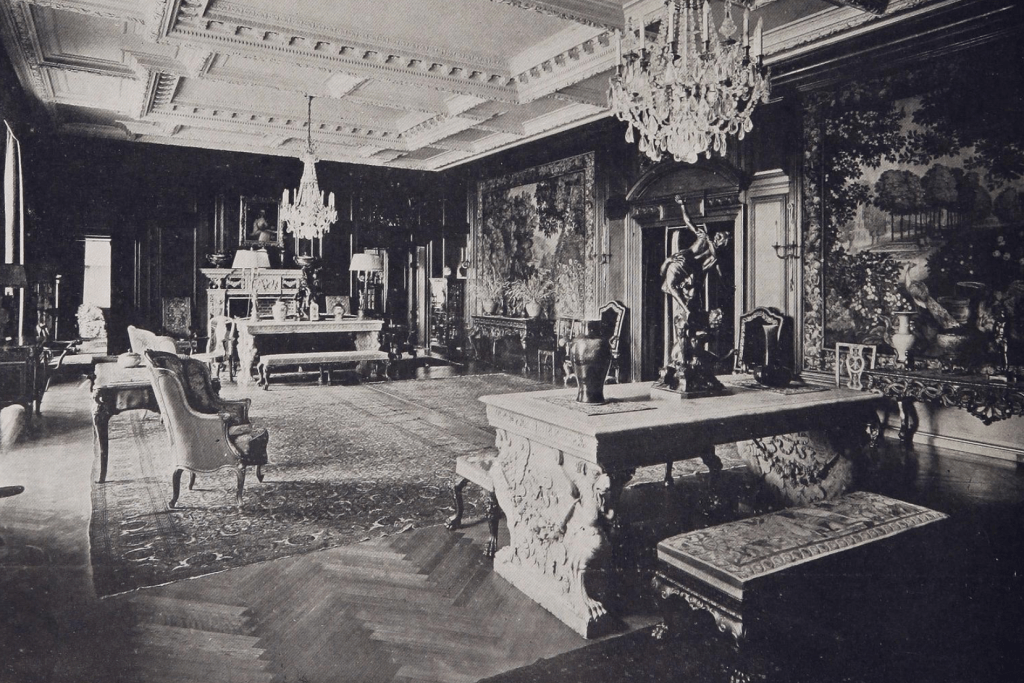

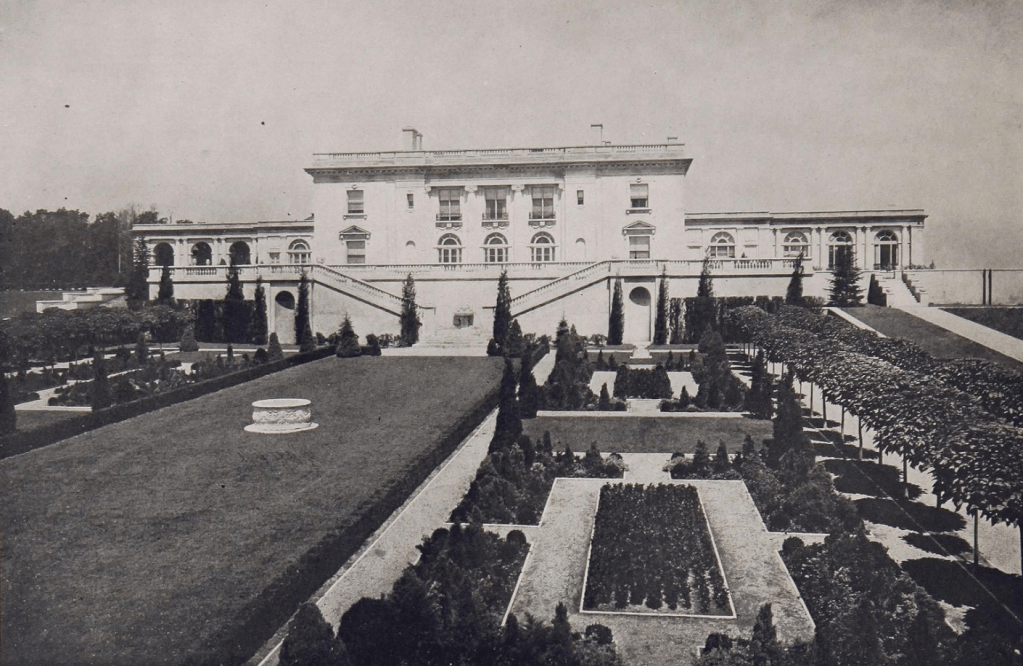
Thus, by the time 1908 came around, Hudson & his family moved in to the spectaular residence and began enjoying the luxuries of Long Island Gold Coast life. For the coming years, this would remain the case. In the winter and fall seasons, “Knollwood Farm” would be monitored by a superintendent & its staff only. Starting in the springtime, Charles & his wife Helen Grauwiller Hudson would reside at the lush estate.
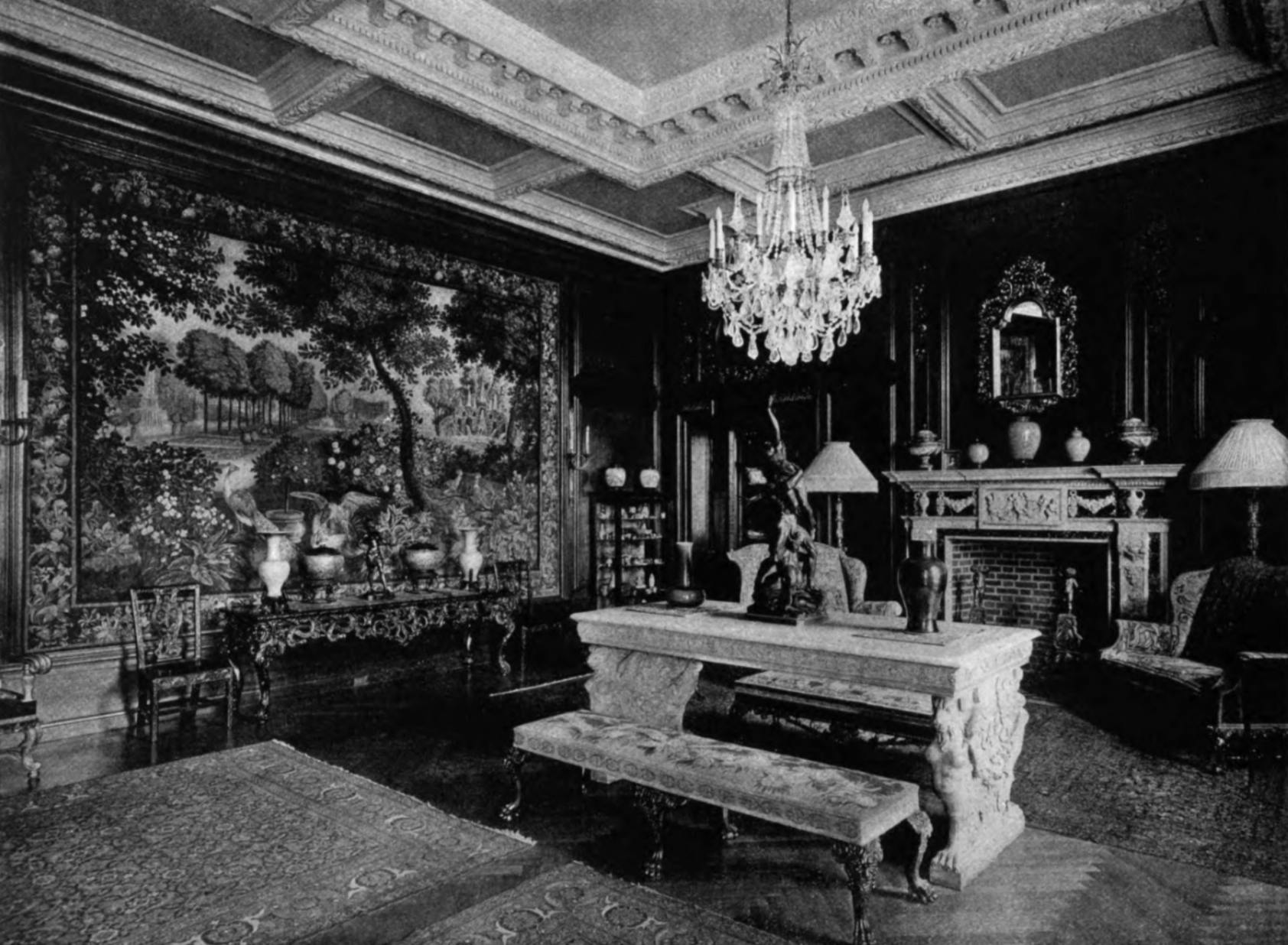
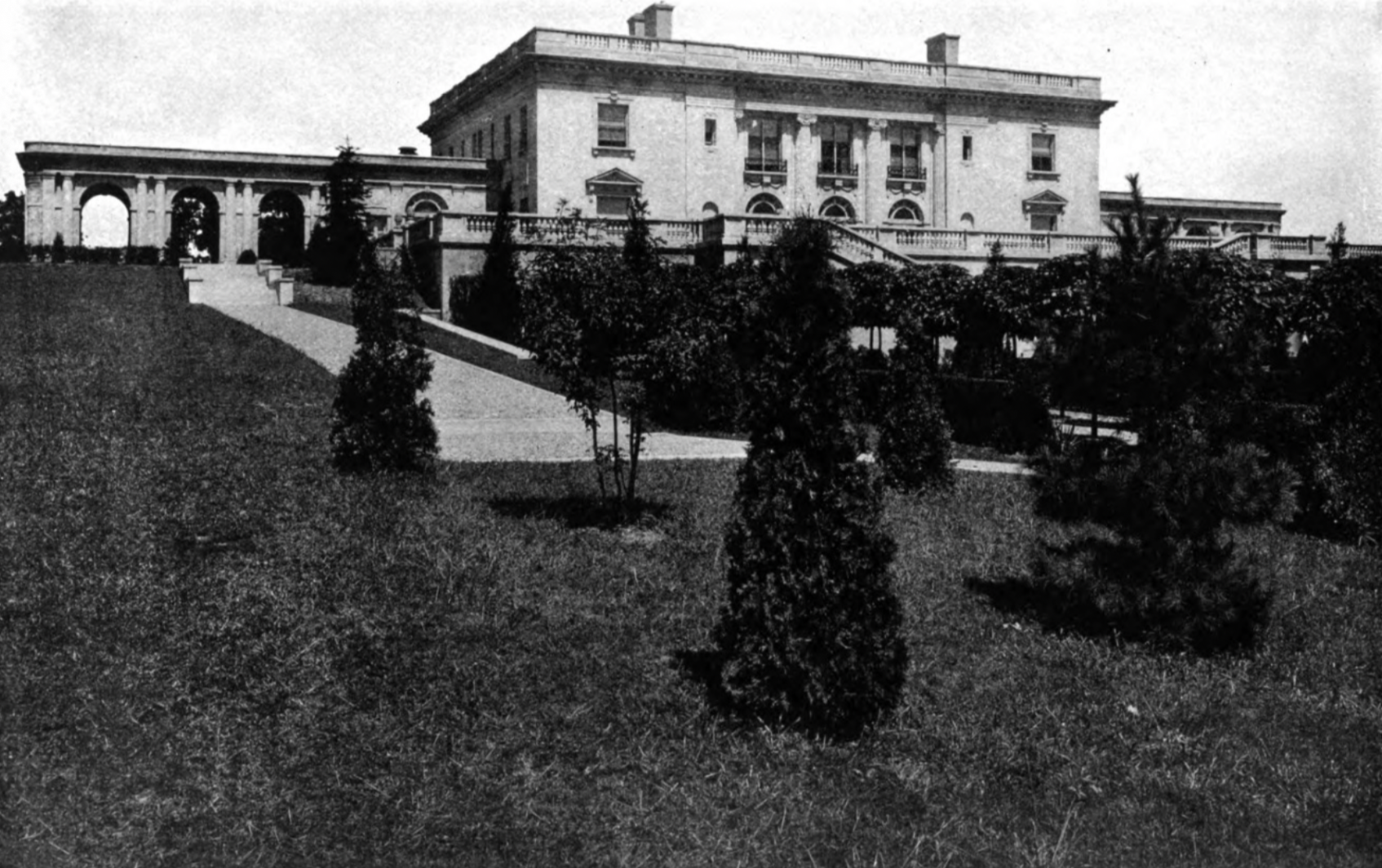
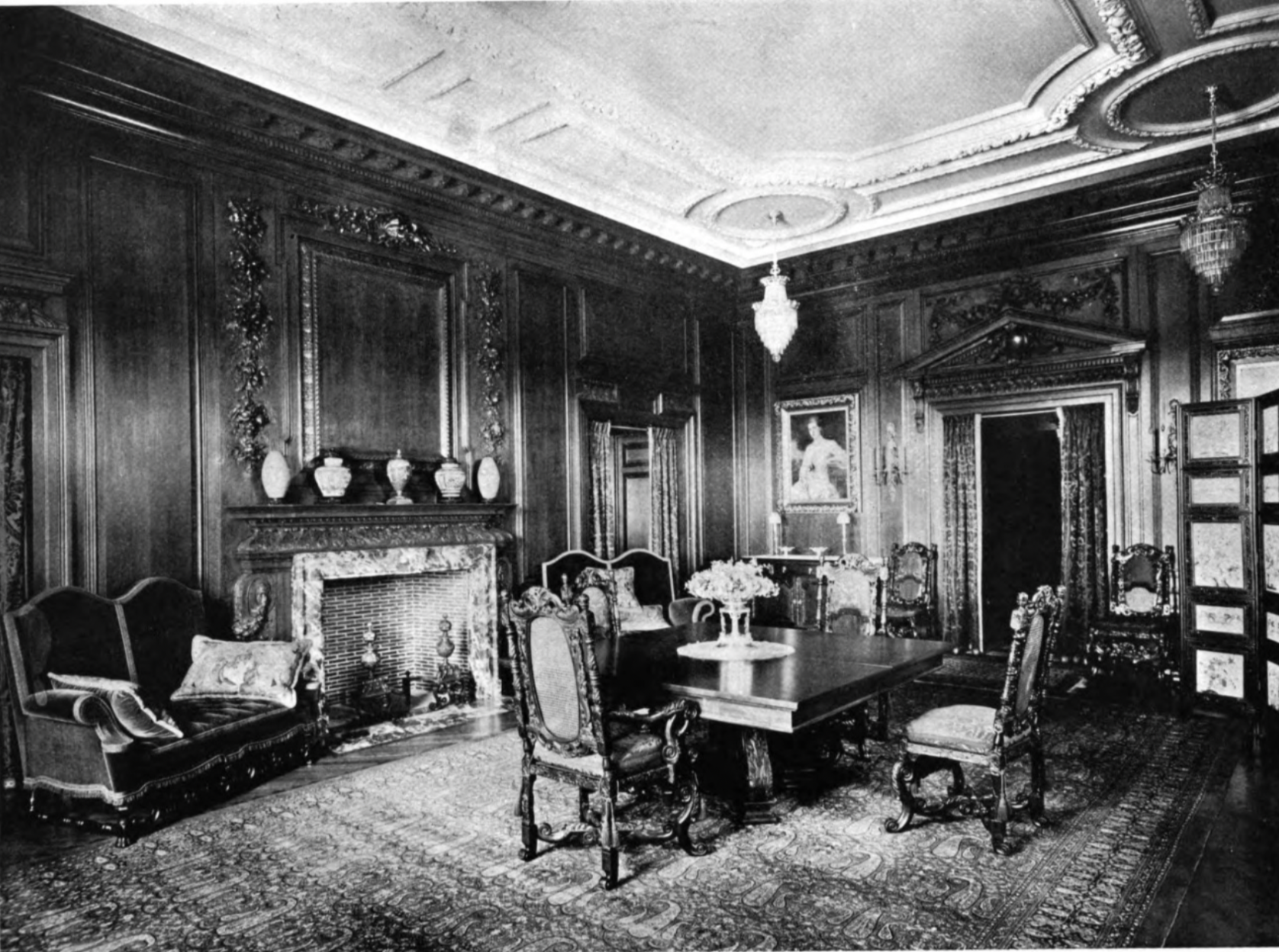
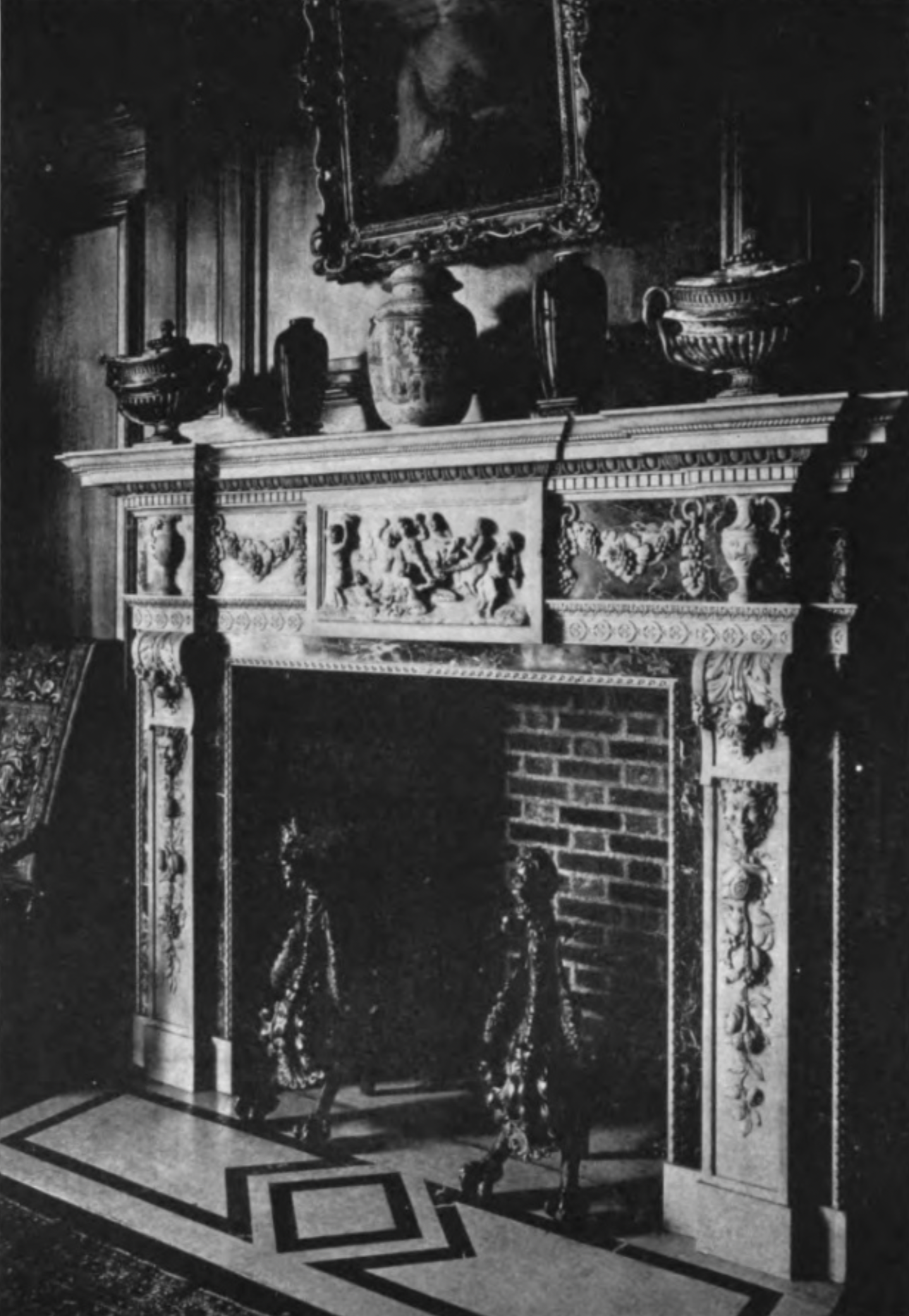
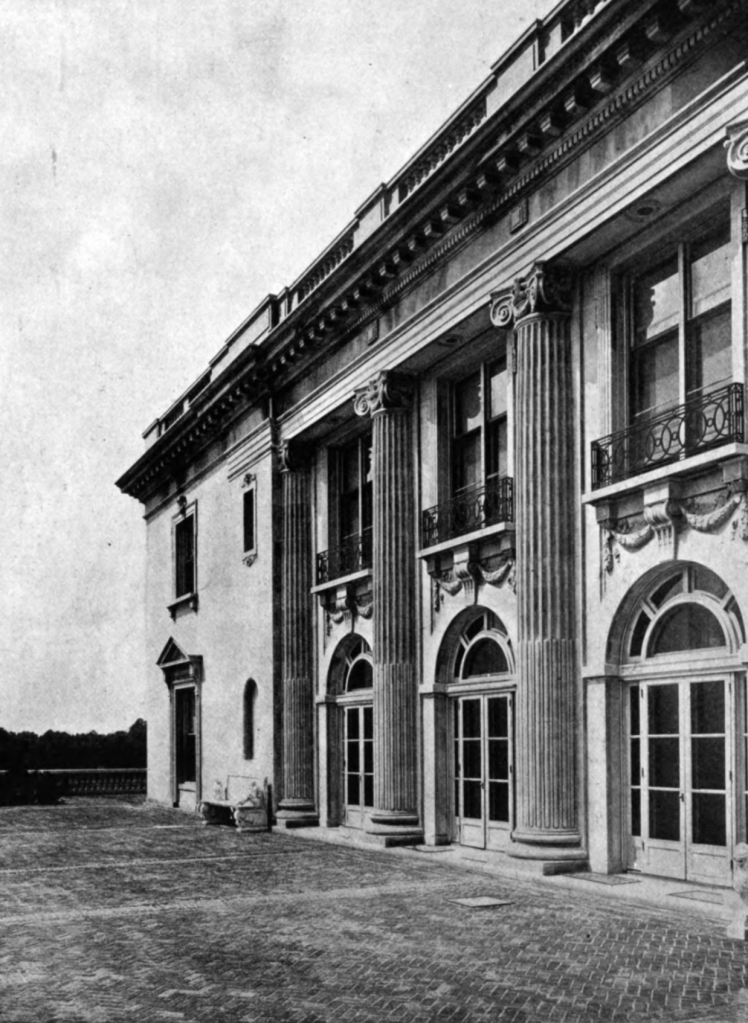
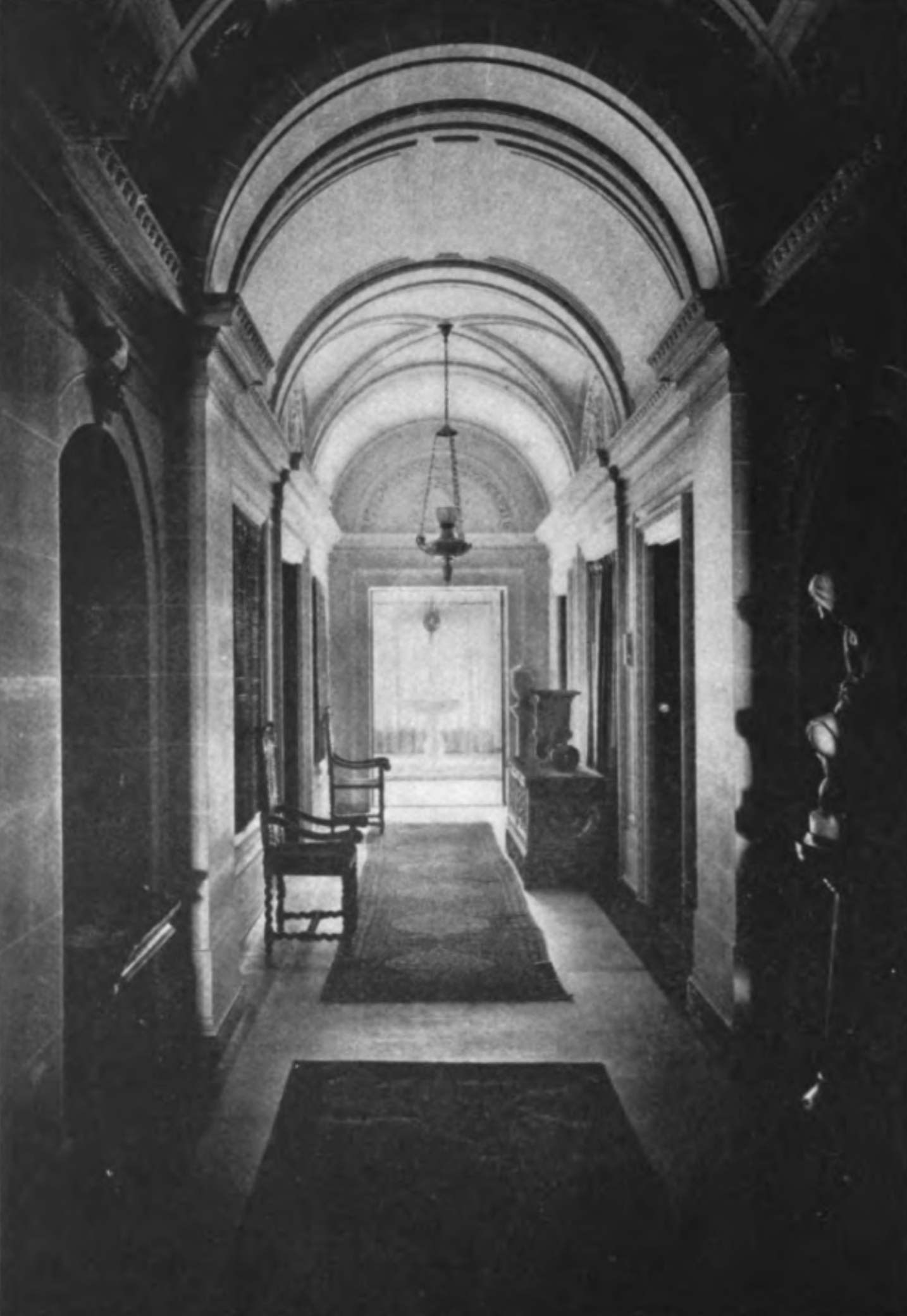
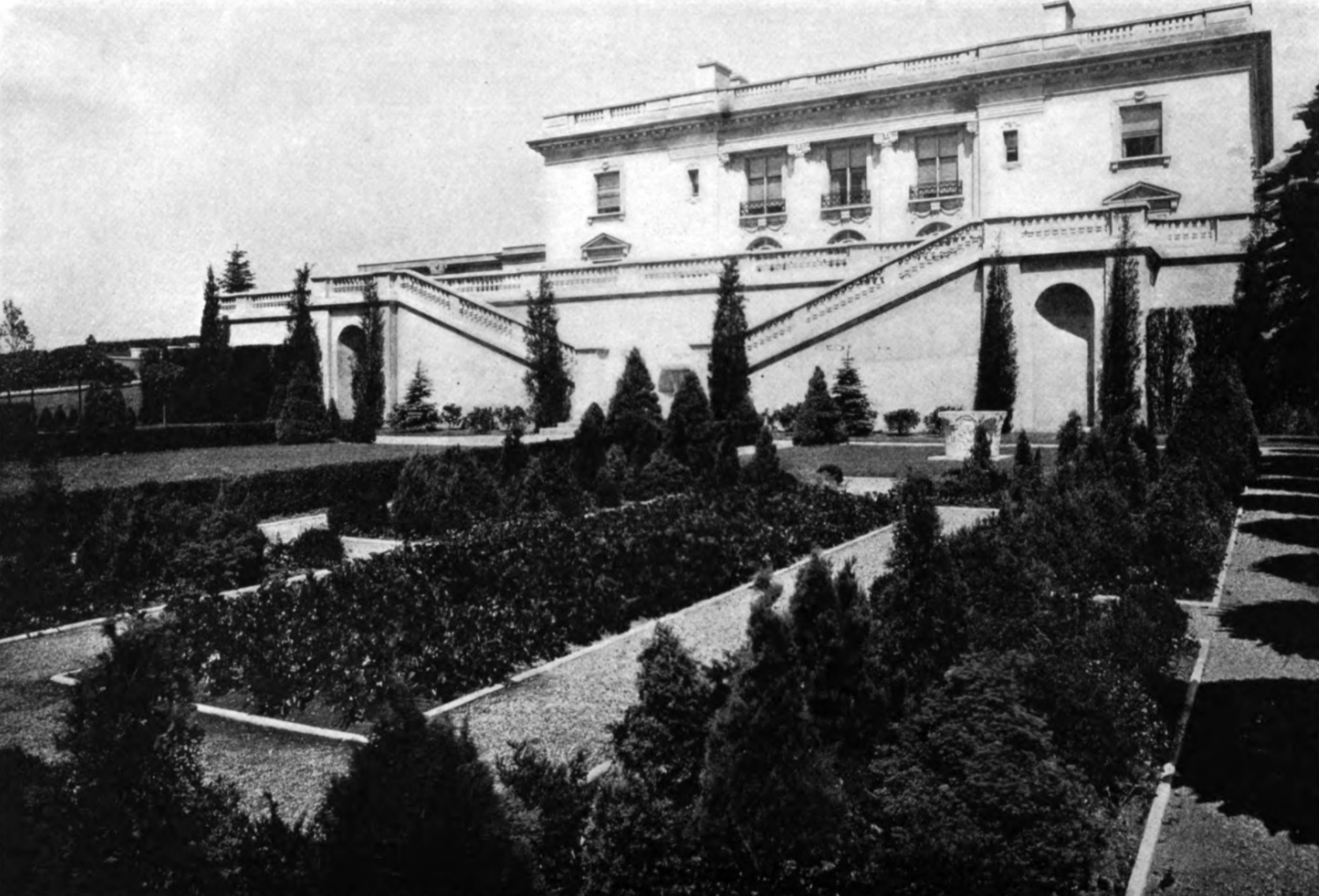
The architects that designed it, Hiss & Weekes, also took much pride in the work. It was considered one of their best pieces, especially with consideration of the main homes unique appearance. So, it’s no surprise that in the coming decades, Hudson would allow an array of architectural & garden photographers on his estate. All would undoubtedly bask in the beauty of “Knollwood Farm”, before documenting it through their many lenses. By 1920, Charles Hudson’s estate was all over the most notable design periodicals.
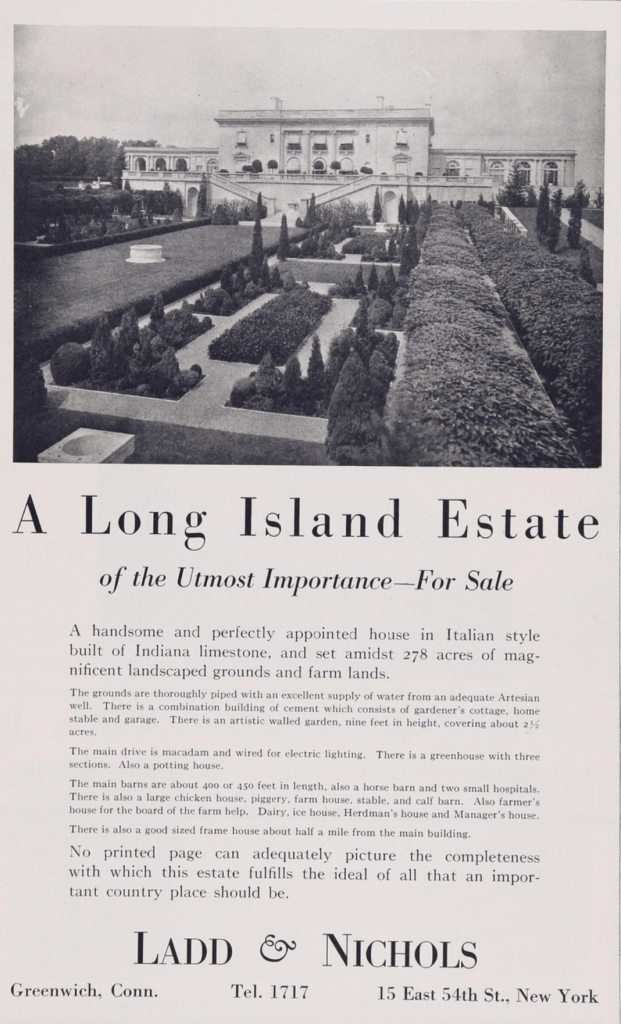
So, when Hudson put “Knollwood Farm” up for sale that same year, it was quick to be plastered atop as many real estate magazines as humanly possible. Now, it was only being referred to as “Knollwood.” After all, it would be borderline comedic to call this massive estate a “Farm.” Even so, despite the appeal of such a grand mansion, the home wouldn’t see any buyers.. yet.
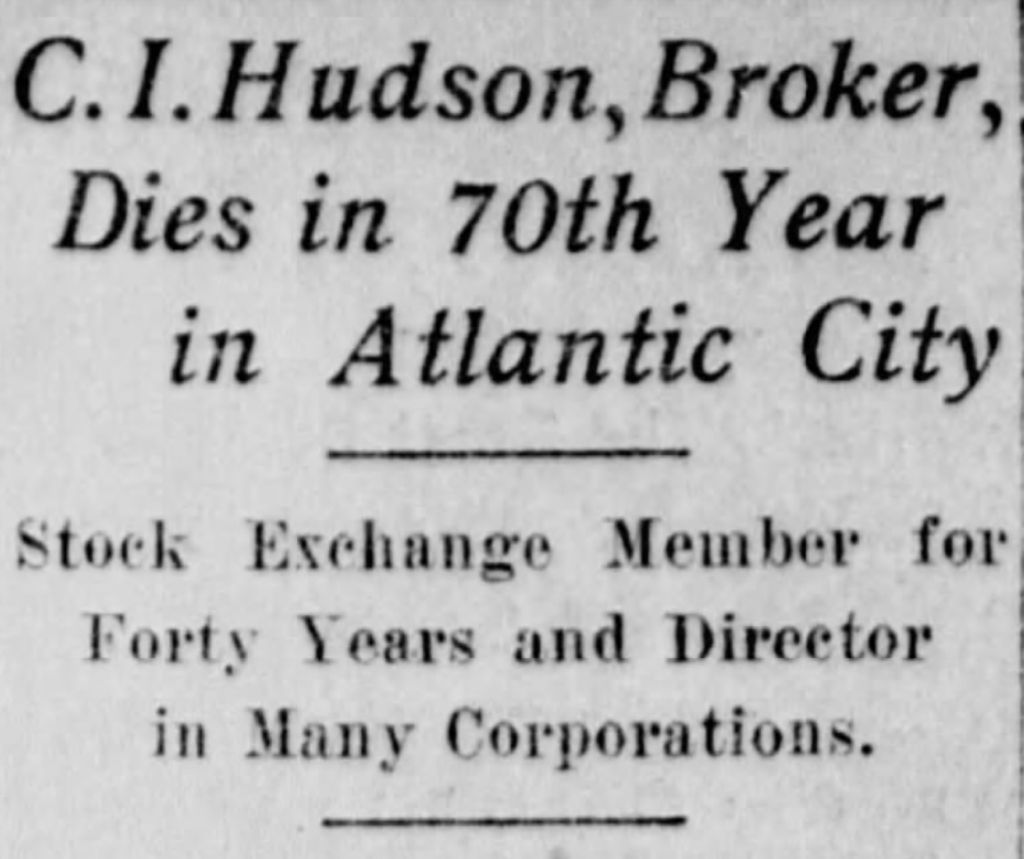
Before we discuss the first purchasing of “Knollwood”, an unfortunate occurrence must be recalled. On November 15, 1921, Charles I. Hudson would succumb to an illness that had plagued him for months. At age 69, Hudson left a net worth of over $1.4 Million ($17 Million adjusted for inflation), which would soon be split among his children and wife. In accordance with his will, Mrs. Hudson took ownership of “Knollwood” shortly after. Yet, this was only a brief affair.
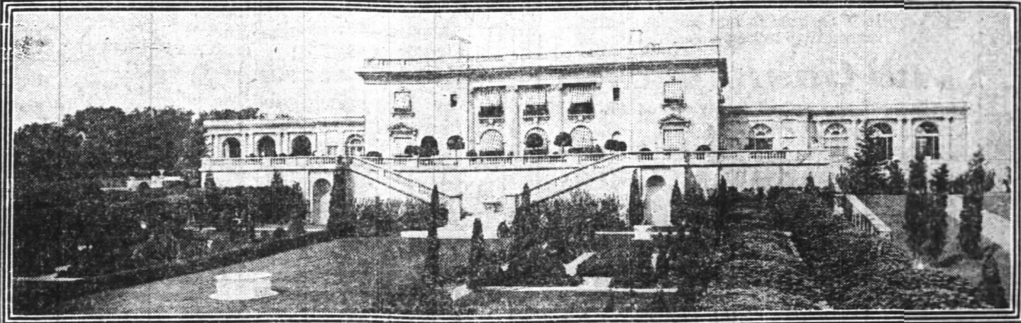
That is because, on March 19, 1922, newspapers worldwide reported that the acclaimed “Knollwood” estate had finally been purchased. The buyer? 93-year-old Gustavia Adolphus Tapscott Senff. Senff, who was a widow of 11 years, would buy the home & an accompanying 23-acre lot, totaling the entire estate too around 300 acres.
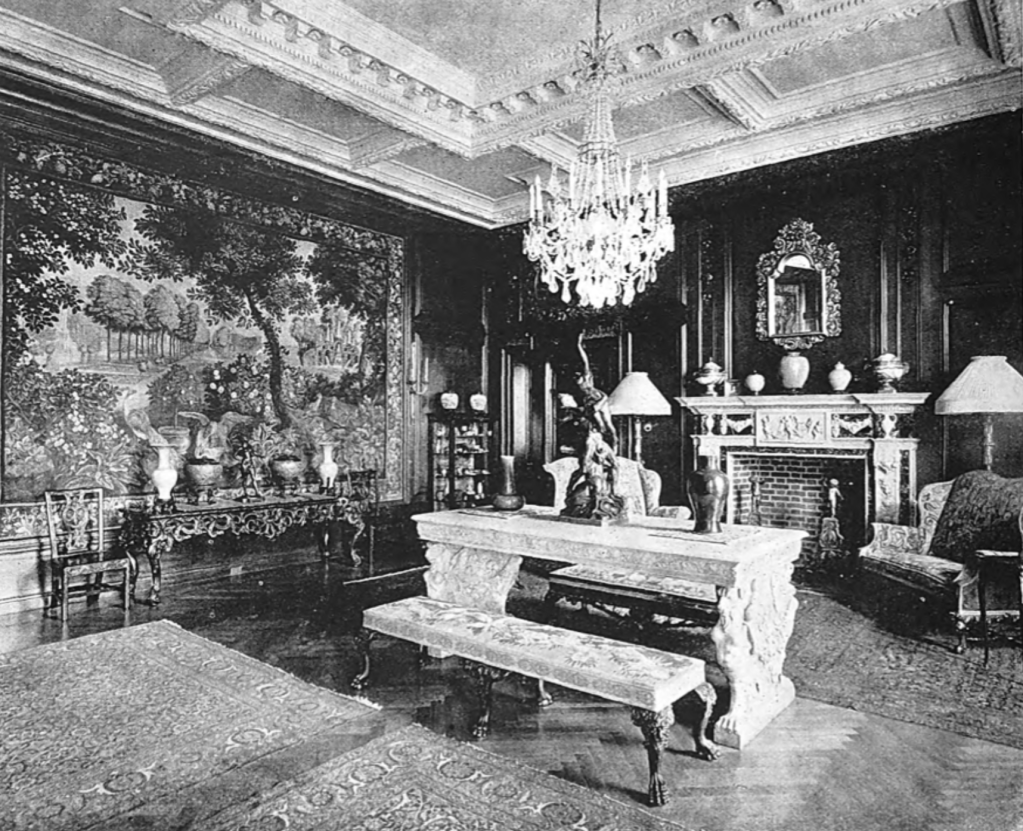
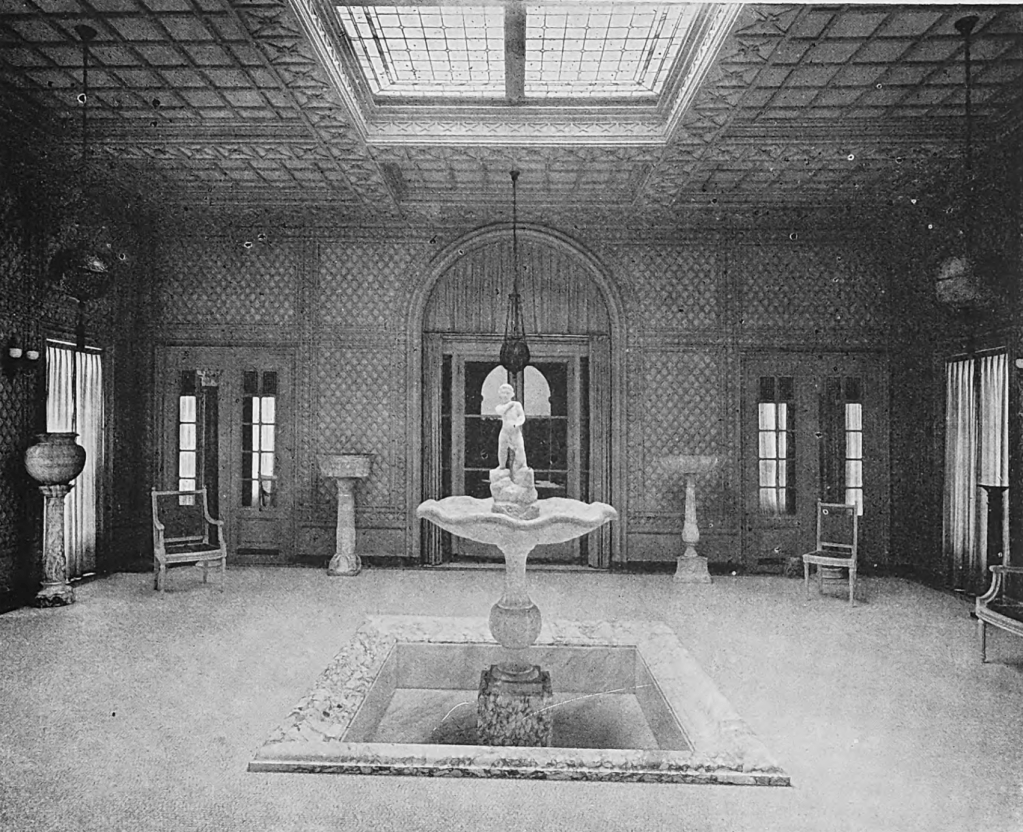
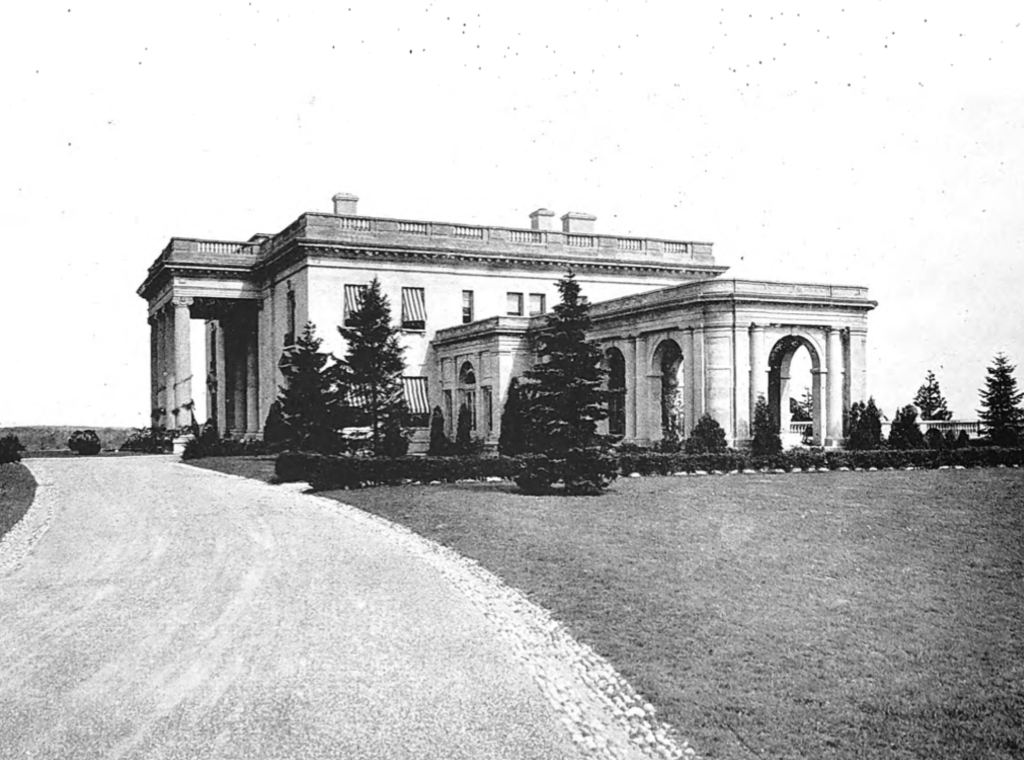
That spring, Senff would move in to “Knollwood”, which was jam-packed with artifacts and luxuries for her to enjoy. Interestingly, it was reported by timely papers that upon her purchasing Senff would be soon making “many additions” to the estate. However, no notable changes to the grounds or main residence were observed in the coming years.
Despite being older than most Gold Coast Estate Owners, Senff reportedly had an array of visitors during her stay, including the Prince of Wales (though i’m unsure if this was just an offer or full-time visit)! Unfortunately, though, it was just 5 years later – in 1927 – that Mrs. Senff passed on. It is unknown if the value of her general estate at this time, but with her late husband & her own family’s preexisting affluence, it’s believed to be incredible.
In the coming months, a short series of internal discussions within the Senff family would occur. In this time, it was decided that Mrs. Senff’s nephew Charles Senff McVeigh Sr. and his wife Alice Antille Bacon would now take ownership of “Knollwood.” Like Gustavia, Charles & family were quick to move in.
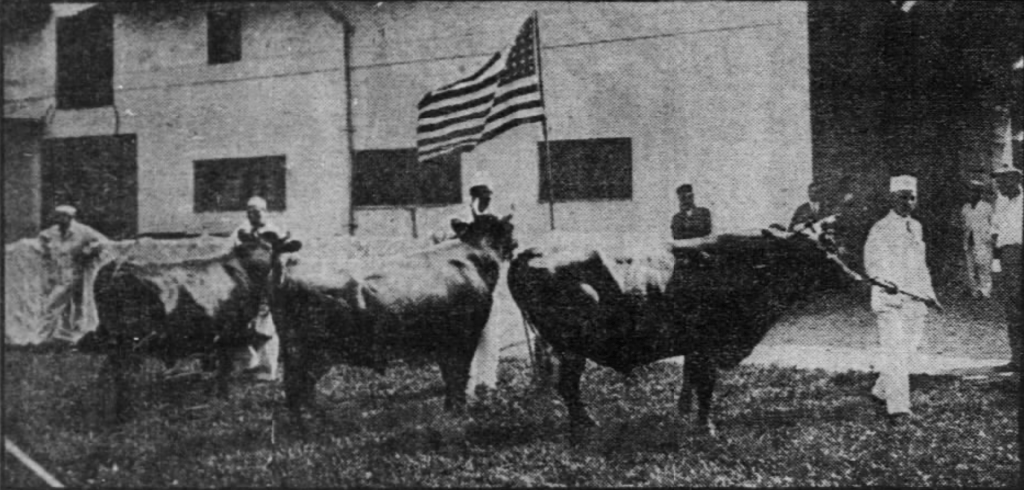
For the next few decades, this remained the case. As expected, Charles & Alice would use this home in the summer (are you starting to see a theme here?), and staff would monitor it in the off-season. Like Mr. Hudson, the Senff family also allowed a variety of photographers, historians & more into the grounds to update their catalogs. “Knollwood” continued to be, despite its change in ownership, a symbol of the Long Island Gold Coast.
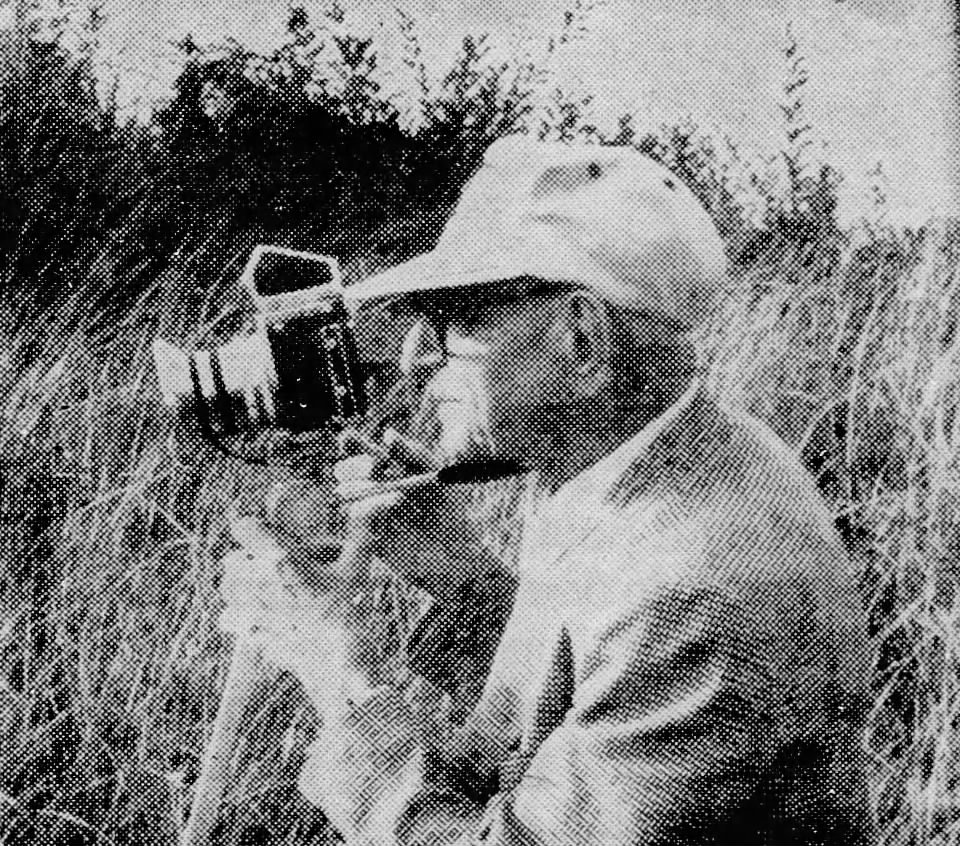
One of these lucky visitors was the famous Samuel Gottscho. If you don’t know who he was, he was one of the most notable architectural photographers of the name. Oftentimes, his photos were the backbone of magazines such as the American Architect, the Architectural Record, and even newspapers like the New York Times.
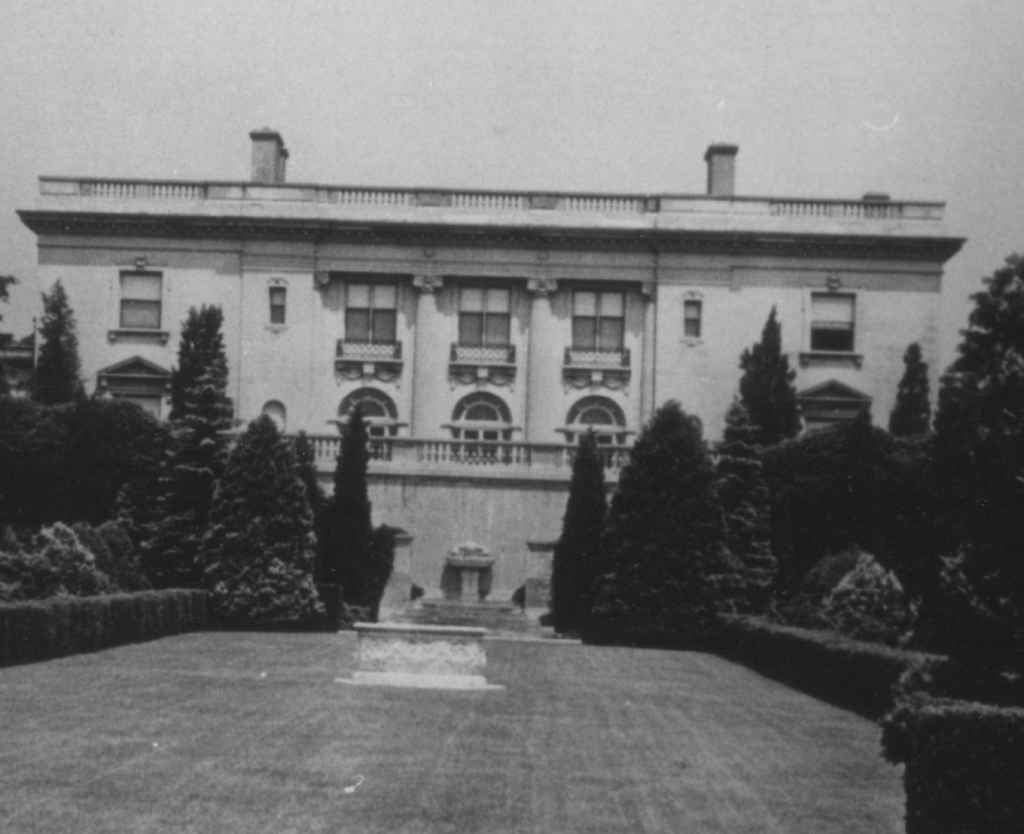
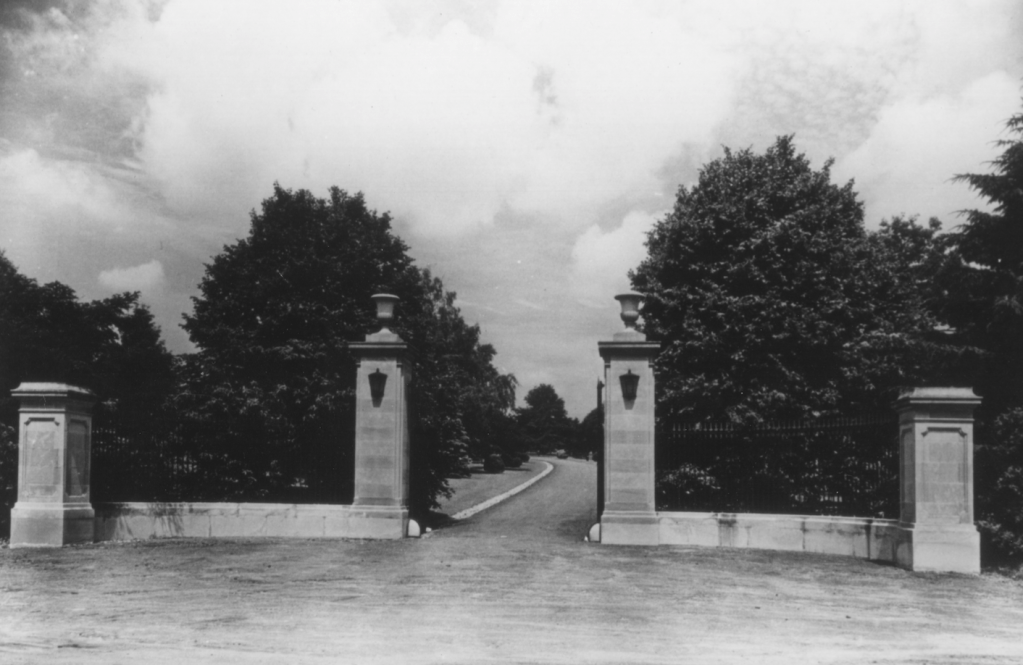
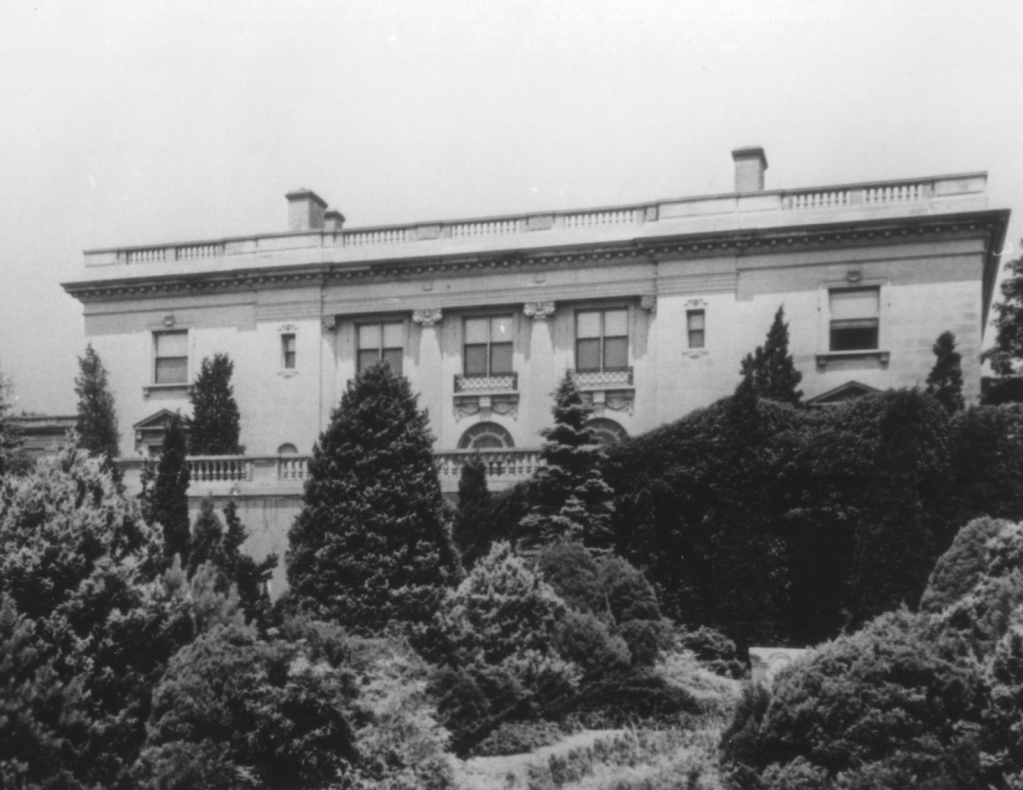
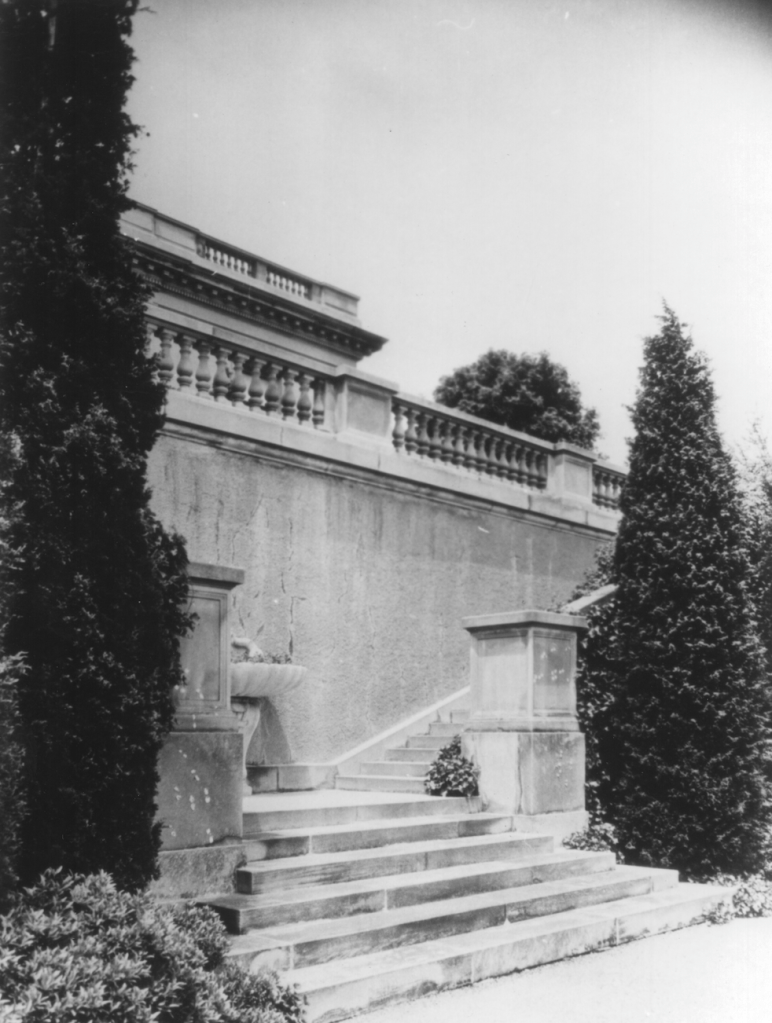
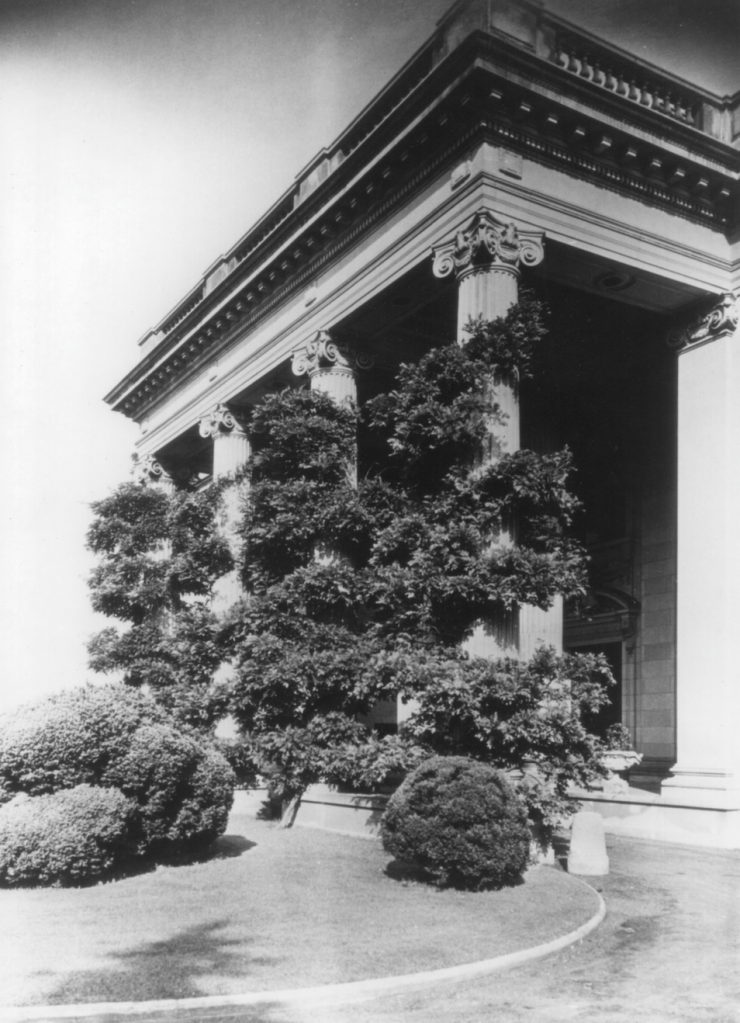
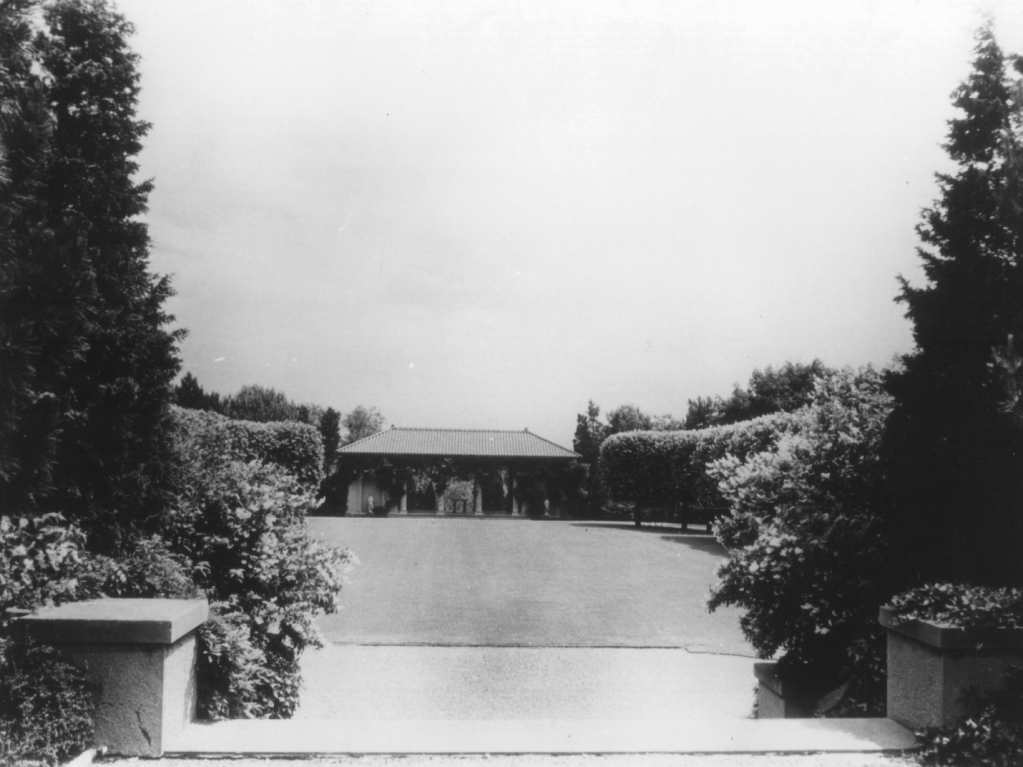
From June 30 to July 3, 1928, Gottscho explored the grounds of “Knollwood”, in an attempt to capture its full beauty. However, as far as i’m aware, these photos never got released. While the reason remains unknown, one thing is: That wouldn’t be the case forever. For now, just remember this event as we discuss the rest of “Knollwood”’s history.
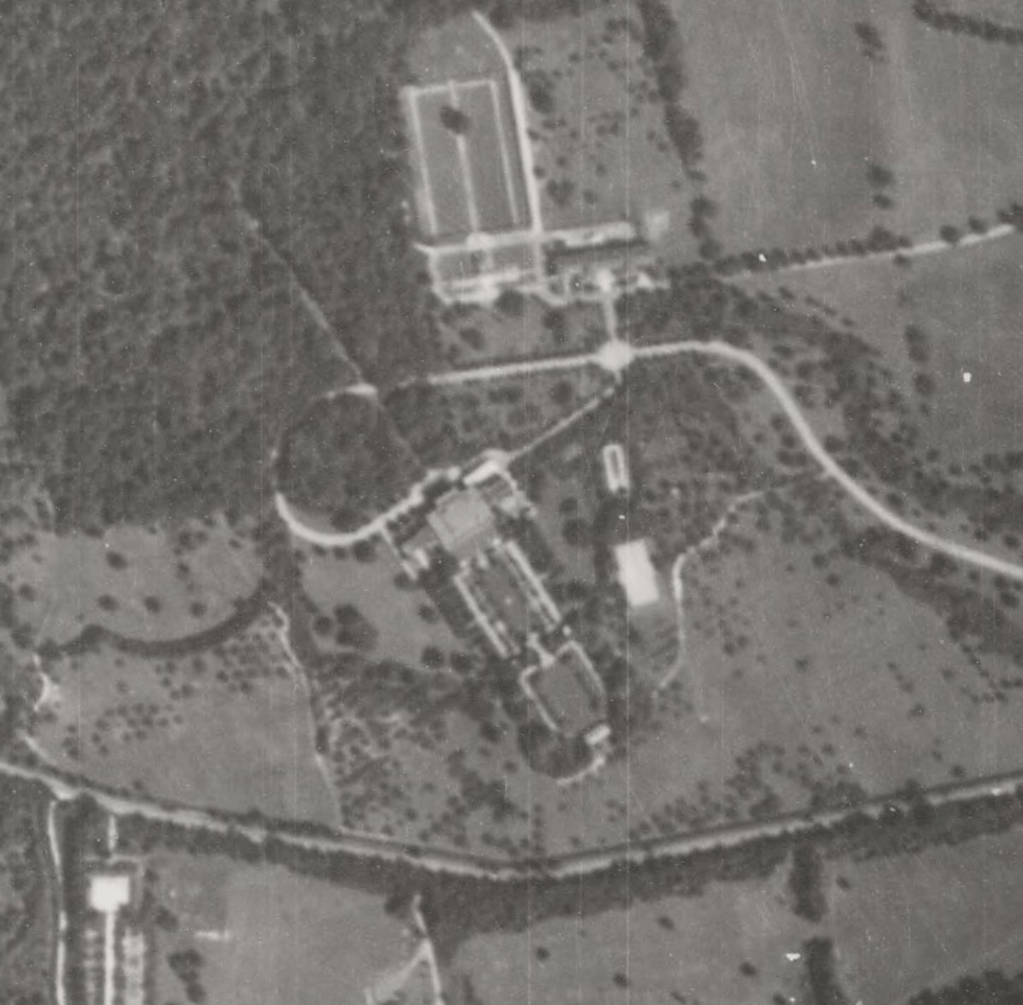
Anyways, where were we? Ah, it is the 1940s and “Knollwood” is a proud Senff family home. Since close to nothing happened in the 1930s, we will be unfortunately skipping that decade in terms of coverage. Nonetheless, by the time 1945 rolled around, “Knollwood” was becoming very expensive to upkeep. With the struggles of the Great Depression and the tolls of World War 2, maintaining such an estate was nearly impossible during this era. To make matters worse, a fire struck the garage and stables in February of that year, destroying the buildings completely.
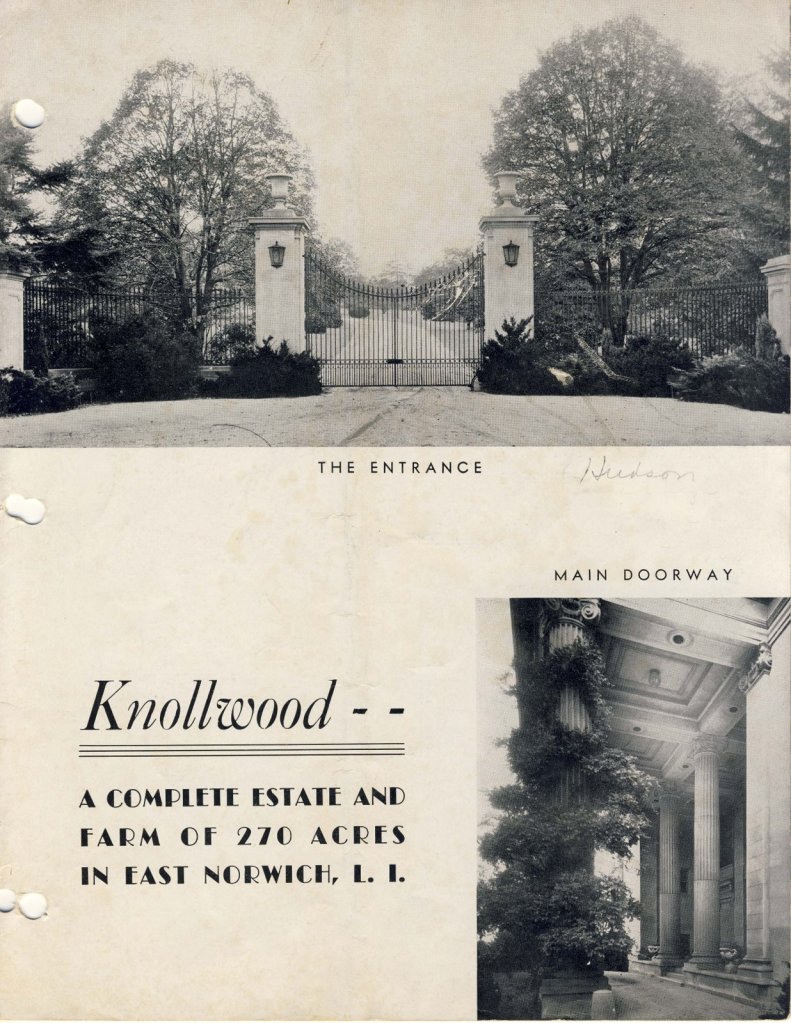
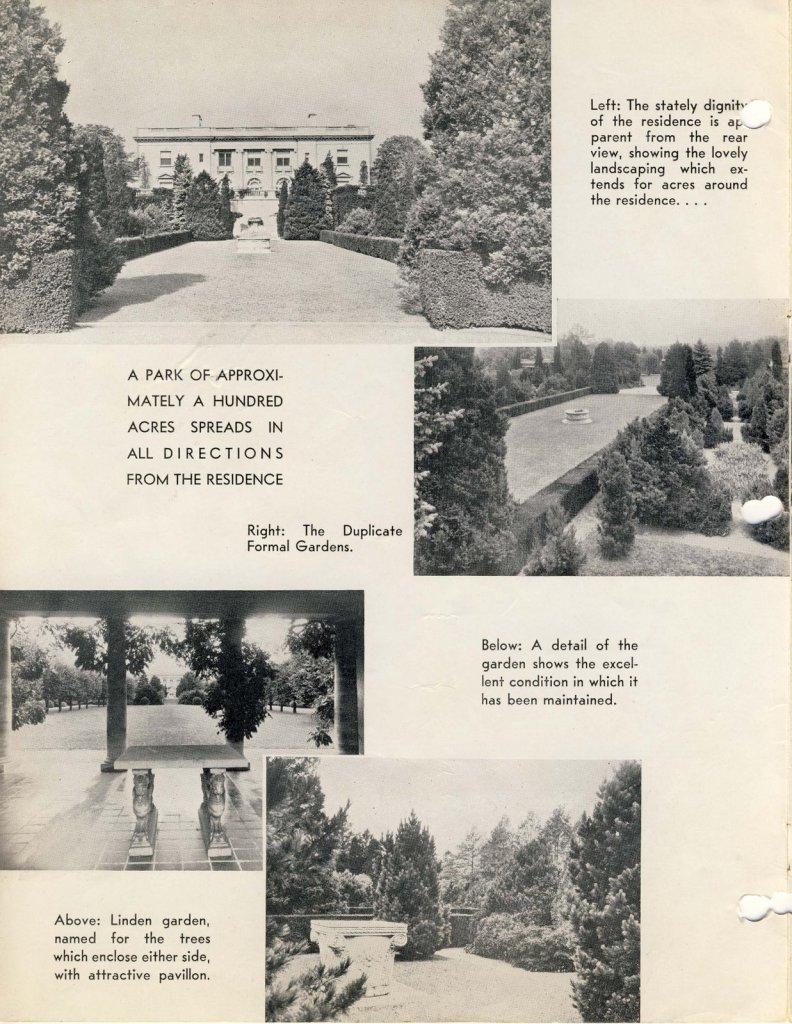
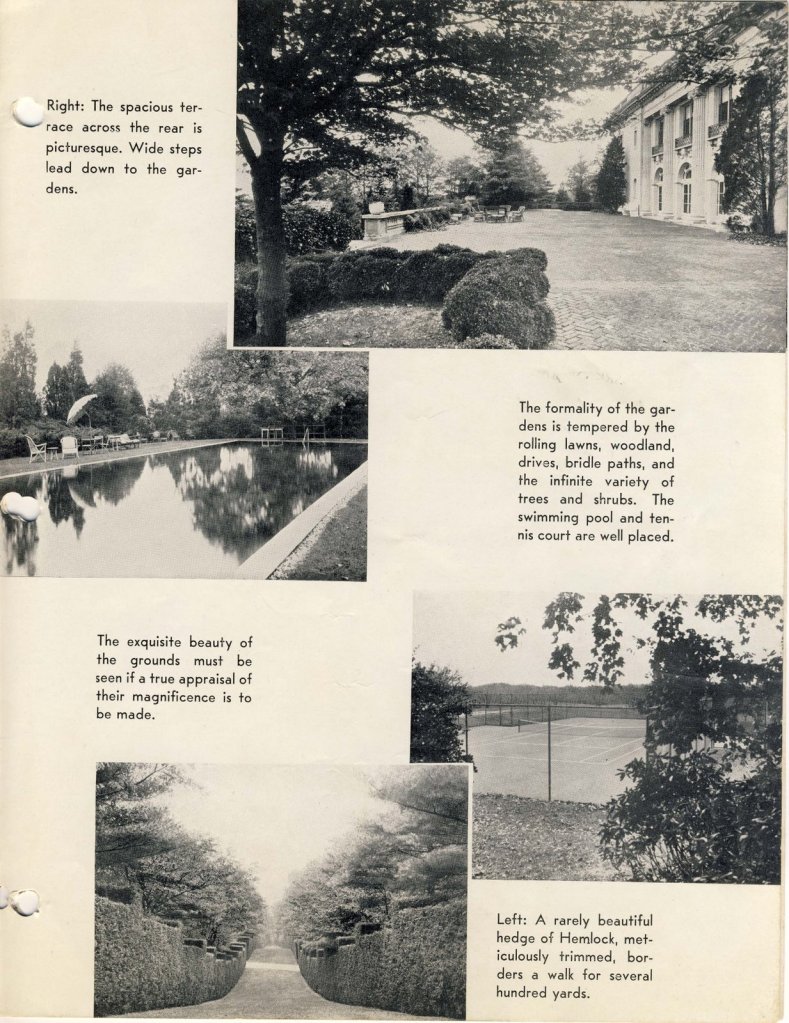
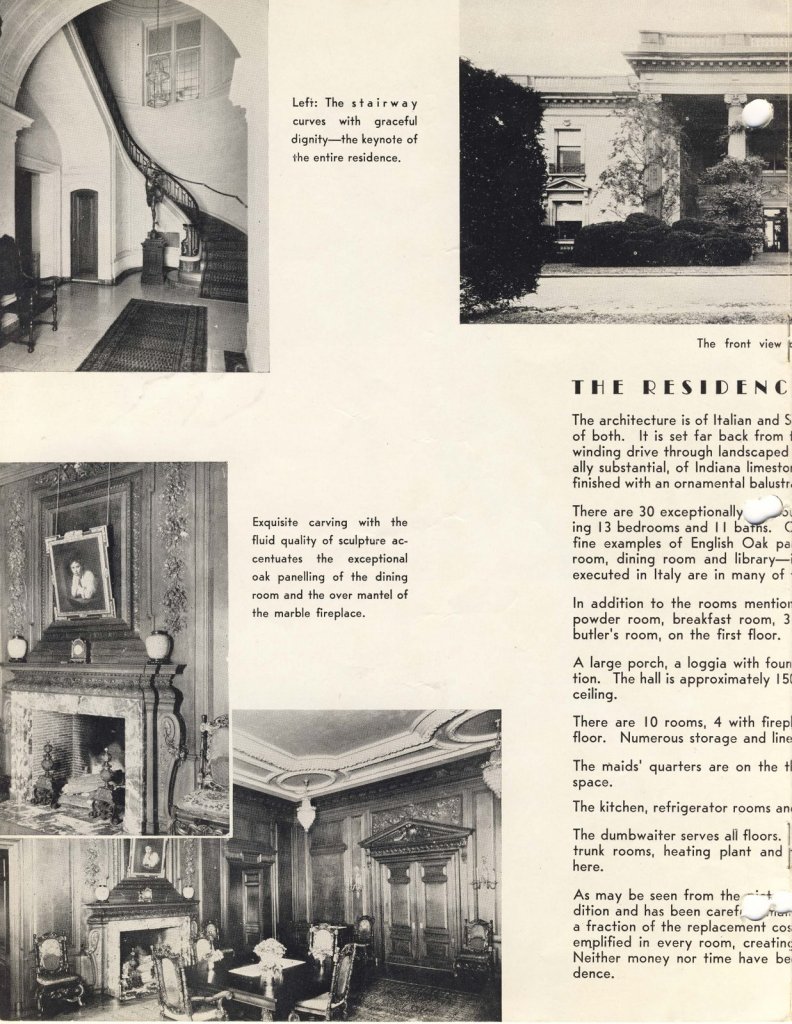
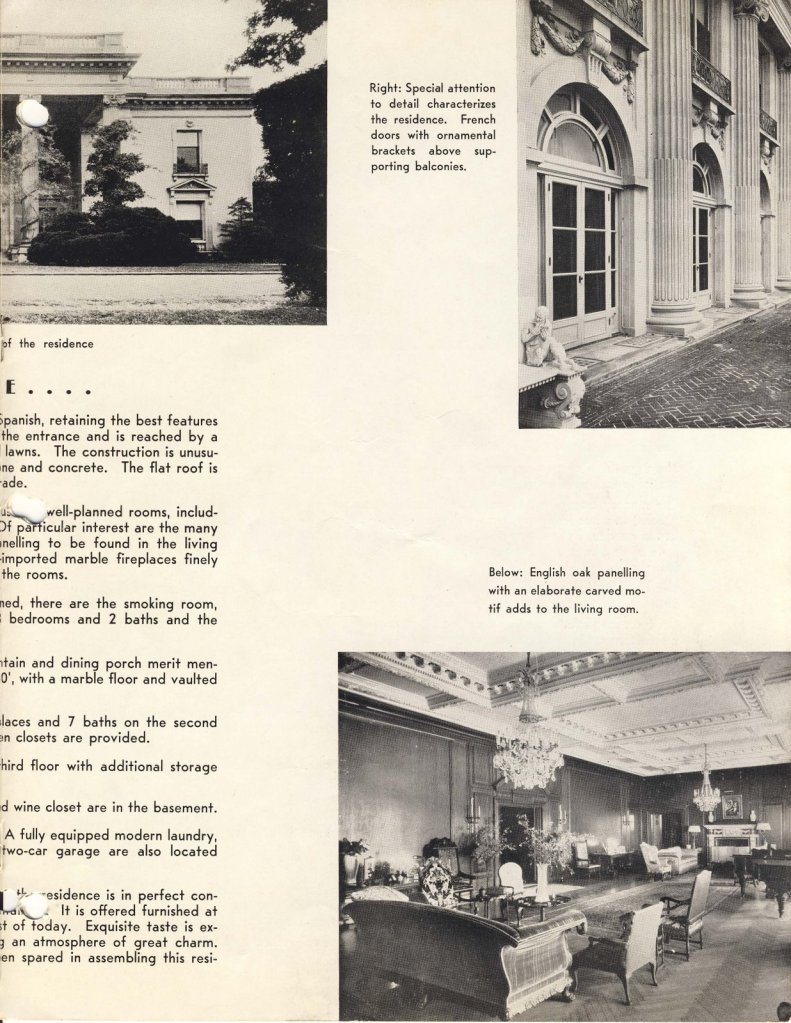
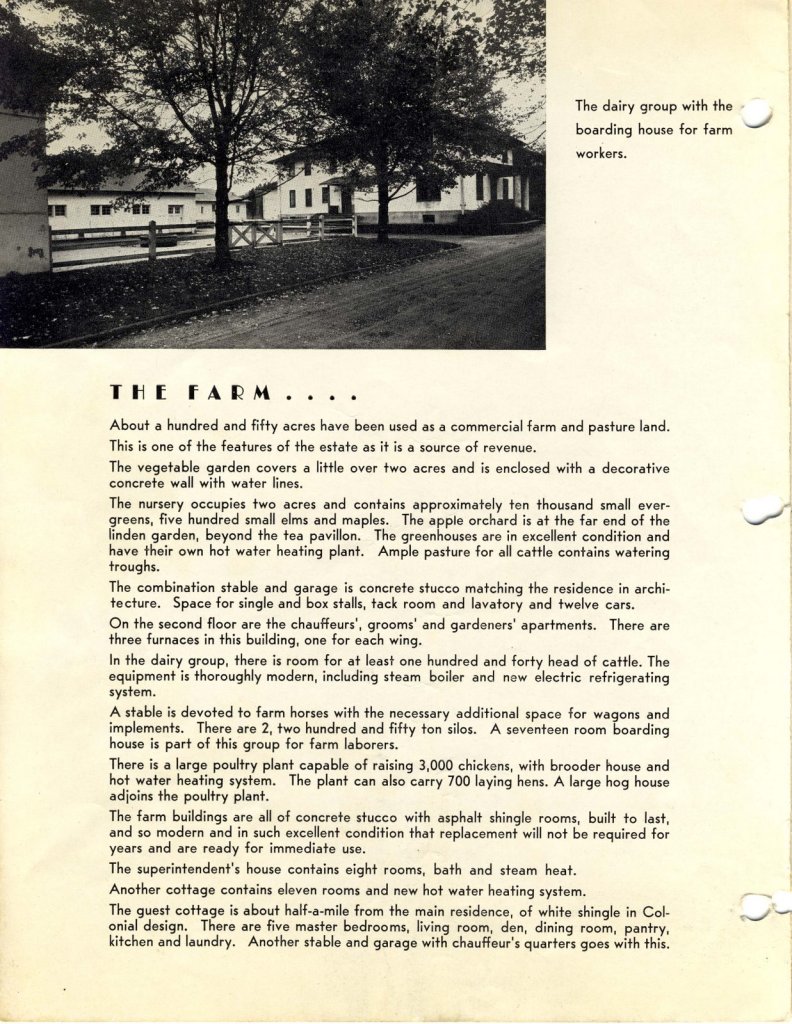
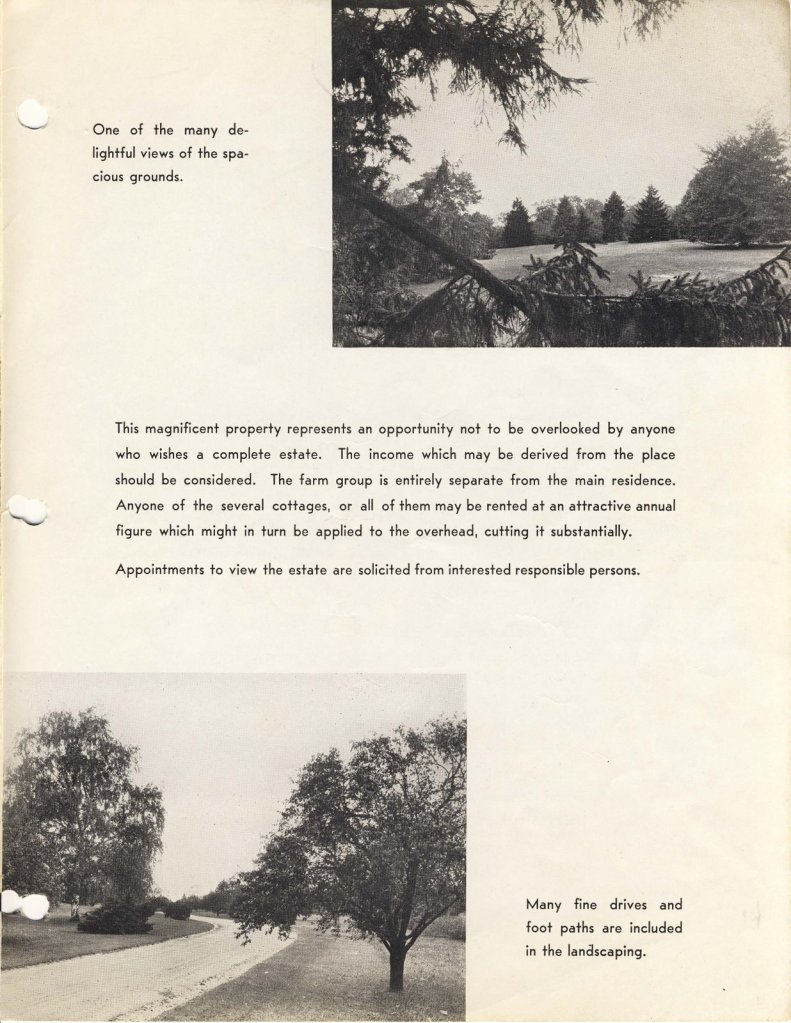
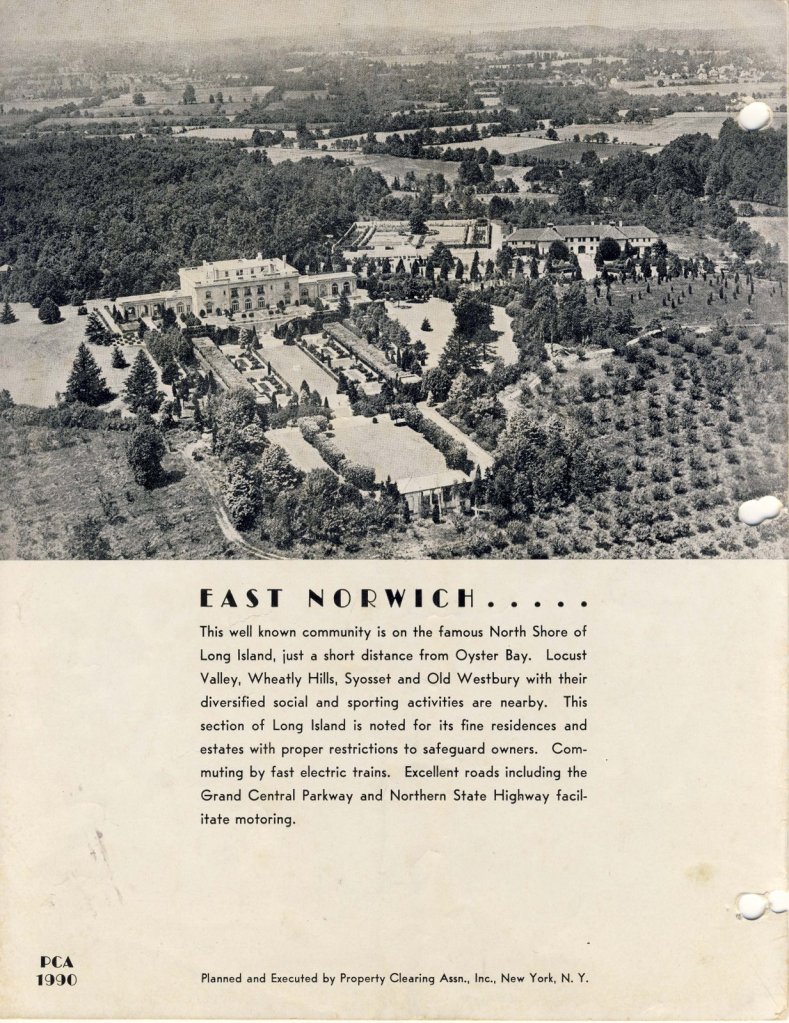
For that reason, in the late 1940s, “Knollwood” was placed on the real estate market yet again. This time, however, no one could’ve guessed who the buyer would be. Rather than a NYC based millionaire, or midwestern oil tycoon, it was the European King Zog that purchased “Knollwood.”
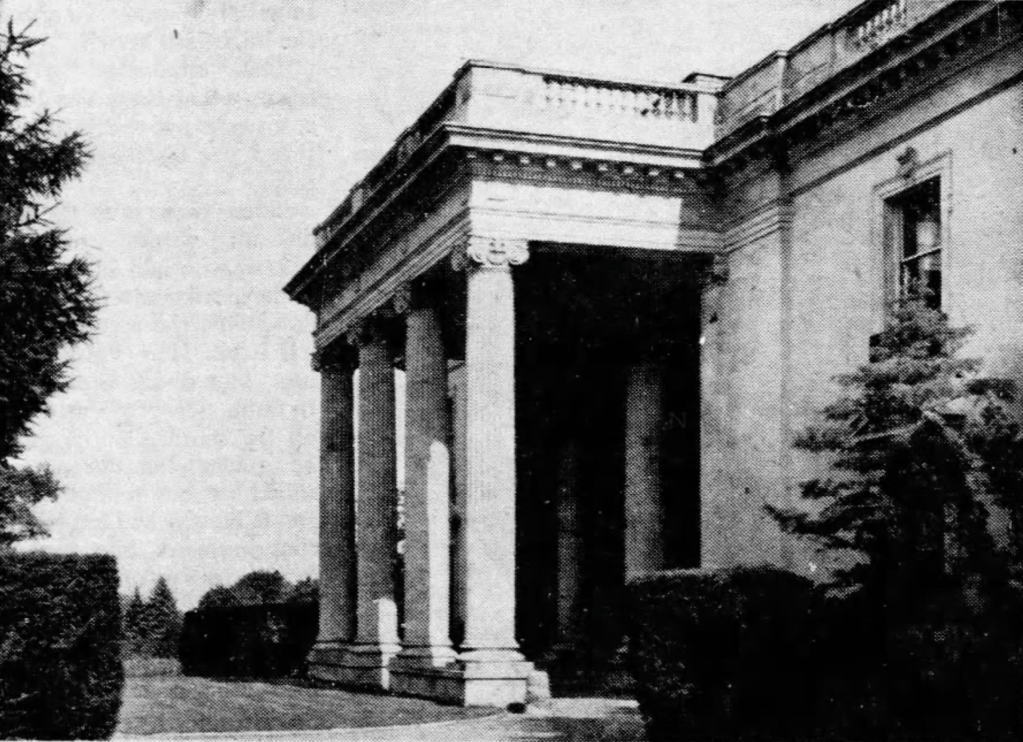
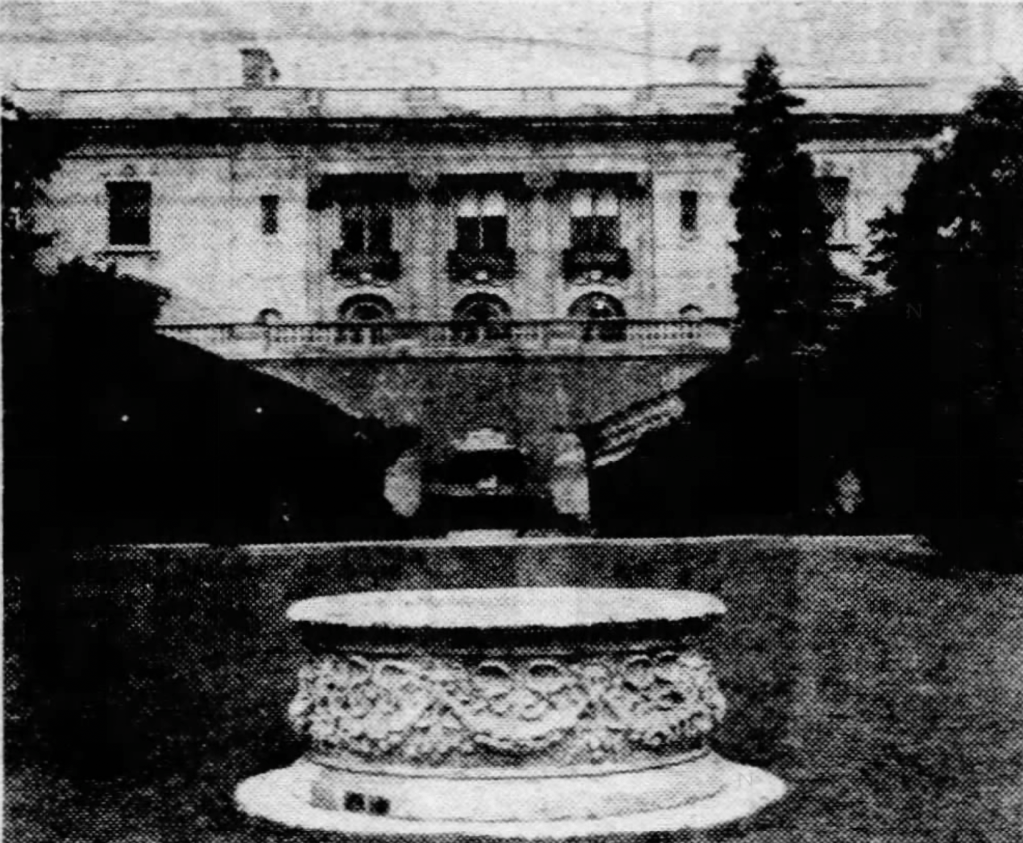
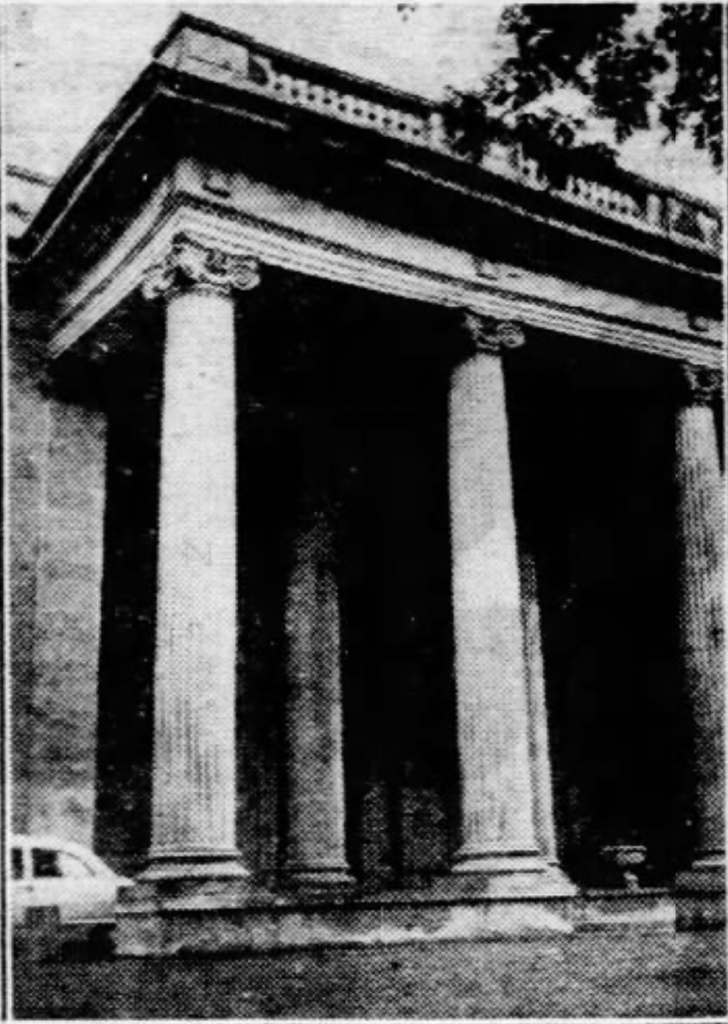
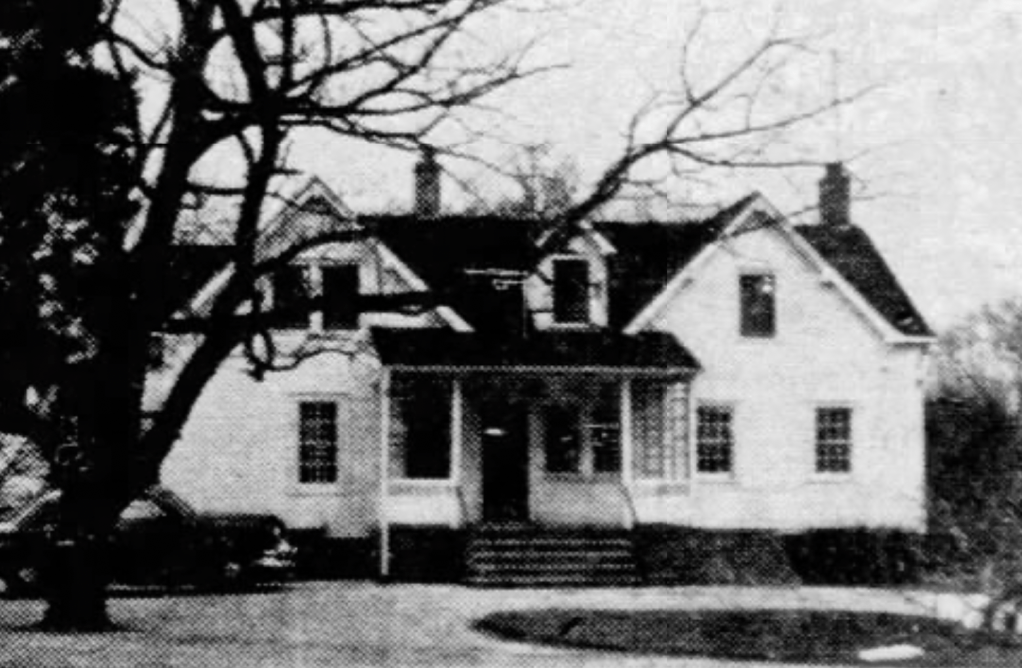
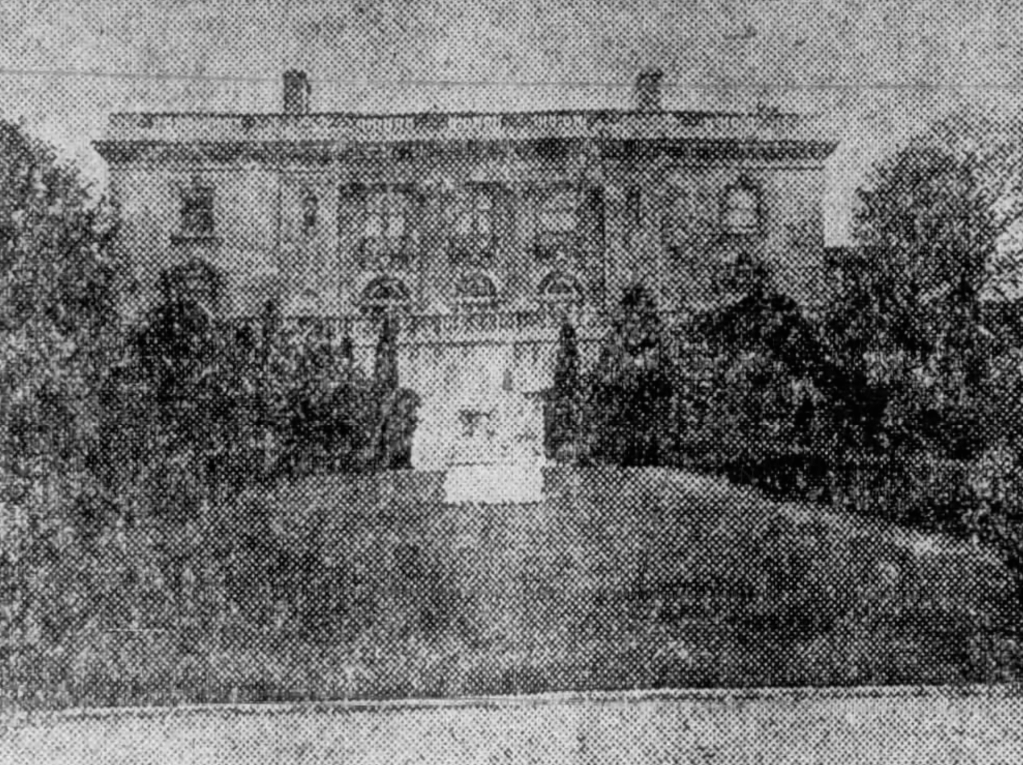
Knollwood as pictured when King Zog purchased it in September 1951. Courtesy of Newsday & Daily News.
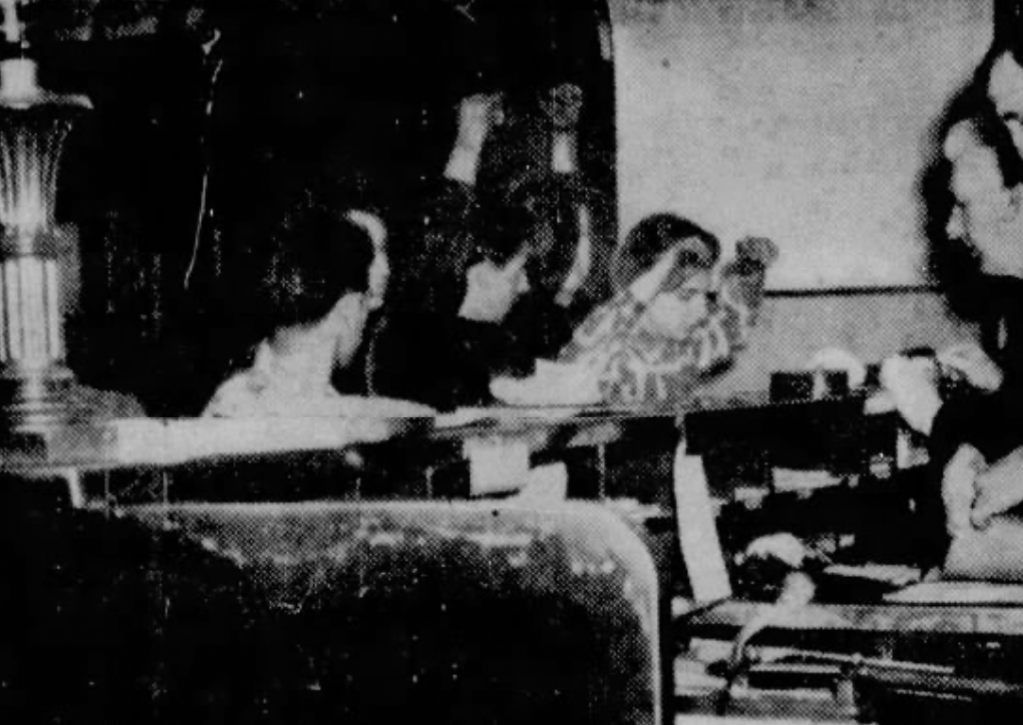
According to local legend (so take this with a grain of salt), Zog purchased the estate in late 1951 with a real bucket of various jewels (such as diamonds, rubies and emeralds) for a price of around $102,800 ($1,107,941 when adjusted for inflation). So, It’s no surprise that when this purchase was announced, newspapers did go wild. After all, an exiled European king buying a New York palace sounded like something out of a fantasy novel. Yet, on that fateful day in 1951, it did happen.
At the time of purchasing this estate, Ahmed Bay Zogu (AKA King Zog), was living in Egypt with King Farouk. Despite his albanian fame, he was exiled from the nation twice – in 1926 and 1939 – and had to rely off of foreign invites for shelter. Unfortunately, Zog wasn’t able to move to Long Island – yet. That’s because in 1952, Farouk was ousted, meaning Zog & his family had to flee once more. This time, they settled in the French Riviera.
It’s no surprise that, despite his “busy” schedule (to say the least), Zog did still have plans to move to the US. Not long after his move, Zog (with the help of a public relations firm), began trying to get the State department to allow a full staff of migrants (and his family) to reside on-site. Unfortunately, after they informed him that the maximum number of migrants allowed would be around 20-35, Zog ditched his plans and began discussing other matters. In the meantime, Zog attempted a new plea: Migrating to the US. Already annoyed with Taxes (as he thought his king status would make him immune with them), Zog was now begging for an easy and quick way into the country. Unfortunately, with him having been an exiled king, there was some hesitation.While that was being figured out, Zog made one more effort: Employing a caretaker for the estate. With the news already going haywire over his purchase, there had to be at least ONE person monitoring the grounds. So, with a caretaker finally keeping trespassers away, Zog could finally focus back on finding a way to see his home.
Yet, just one year later, everything would change again. It’s believed that, in 1953, Zog had to move from the French Riviera to central France. The reasons for this do remain unknown, however it is believed that he was becoming relatively sick as this point. Soon, this sickness spread even more. By the time 1954 had rolled around, it was believed that Zog was no longer fit for a “transatlantic voyage” to his New York castle. Despite timely news reports suggesting otherwise, Zog was truly unable to touch foot on Long Island again.
During this time of suffering, some changes had actually been made to “Knollwood.” For one, it appears that by 1953, that caretaker Zog had hired for monitoring purposes was no longer on-site. Admittedly, I am clueless to why this is the case. All I know is that by the time Zog made the choice to sell “Knollwood” in 1955, the place was in ruins.
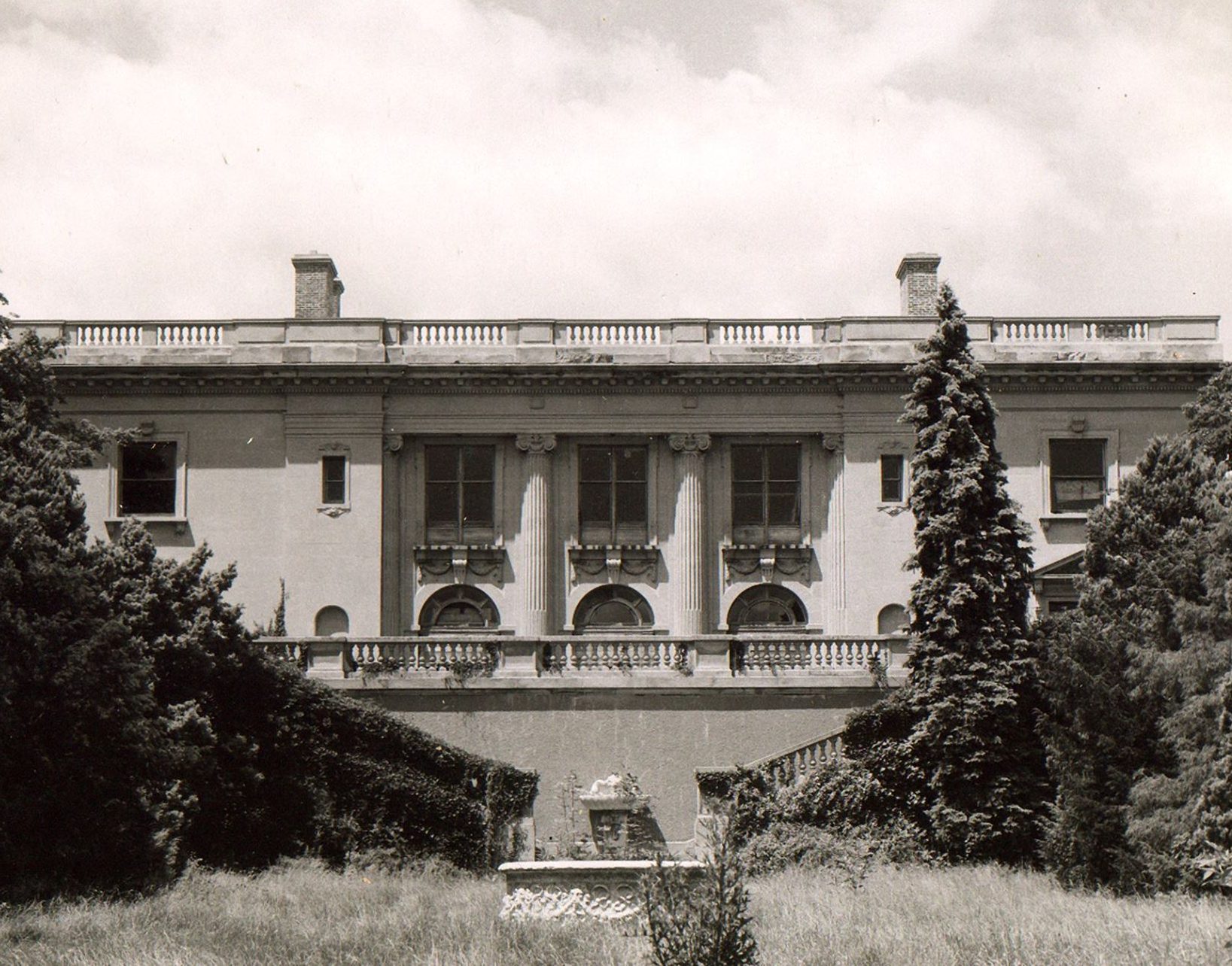
One influence for this extensive decay would most definitely be the rumors that Zog had, for some reason, stored all his riches in the home. Due to this belief, many locals would storm the estate, ransacking each and every corner in hopes to find some mysterious prize. When the estate was bought by Landell Christie, who owned the neighboring “Nassau Hall” Mansion, the roof was missing and the interiors were ripped apart. Christie, who was really just looking for extra land, was likely not pleased by this site. Having ran his own estate, seeing one in decay is never a pleasant sight! So, aside from occasional equestrian rides through the overgrown property, Christie chose to keep Knollwood under minimal care and supervision.
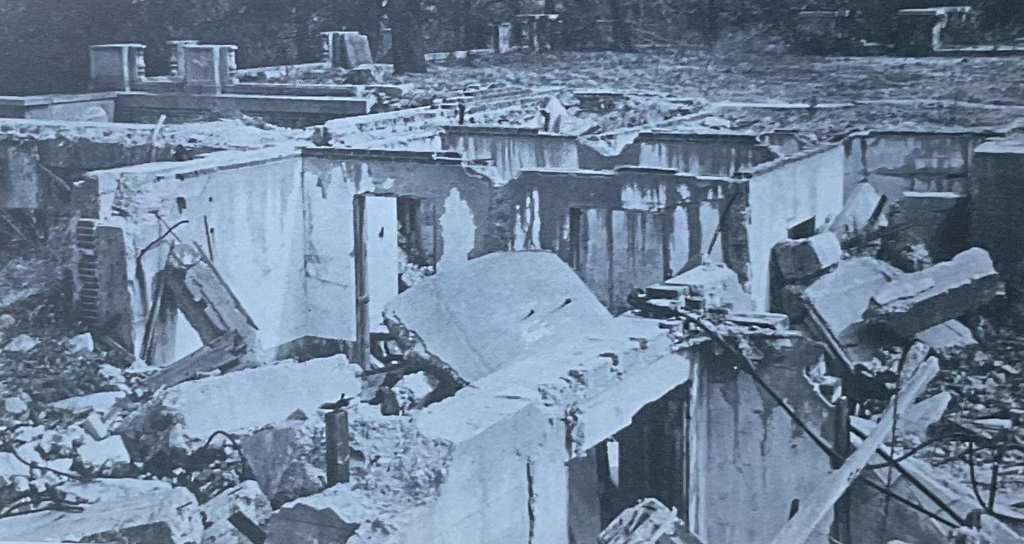
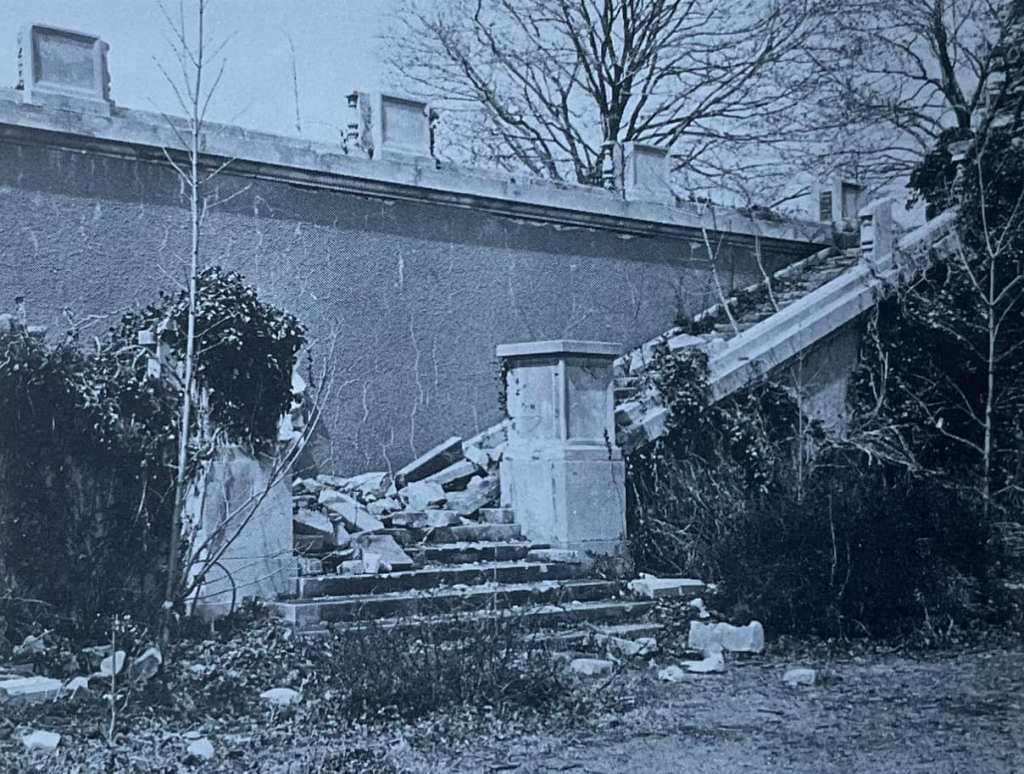
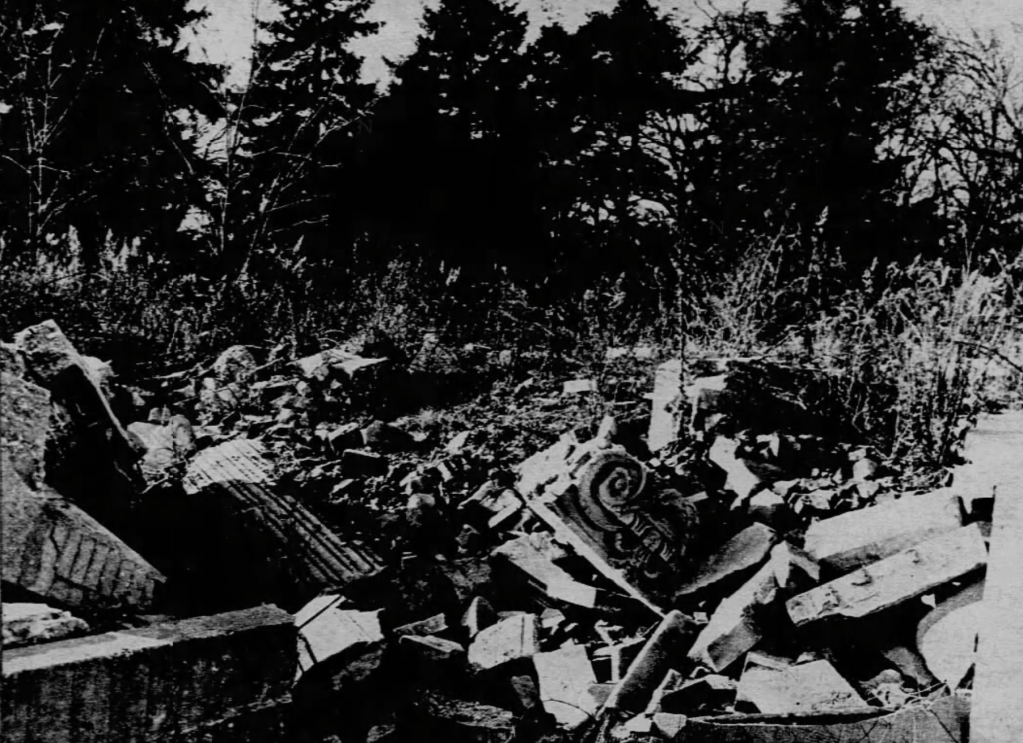
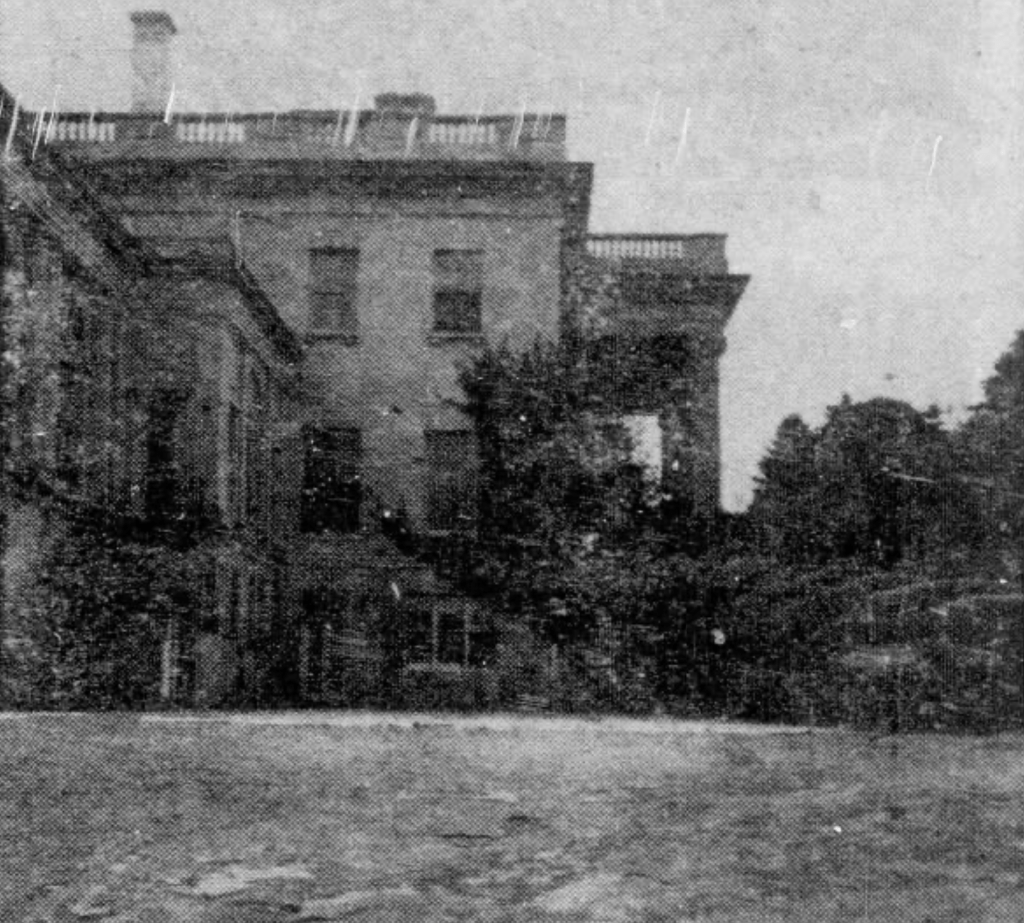
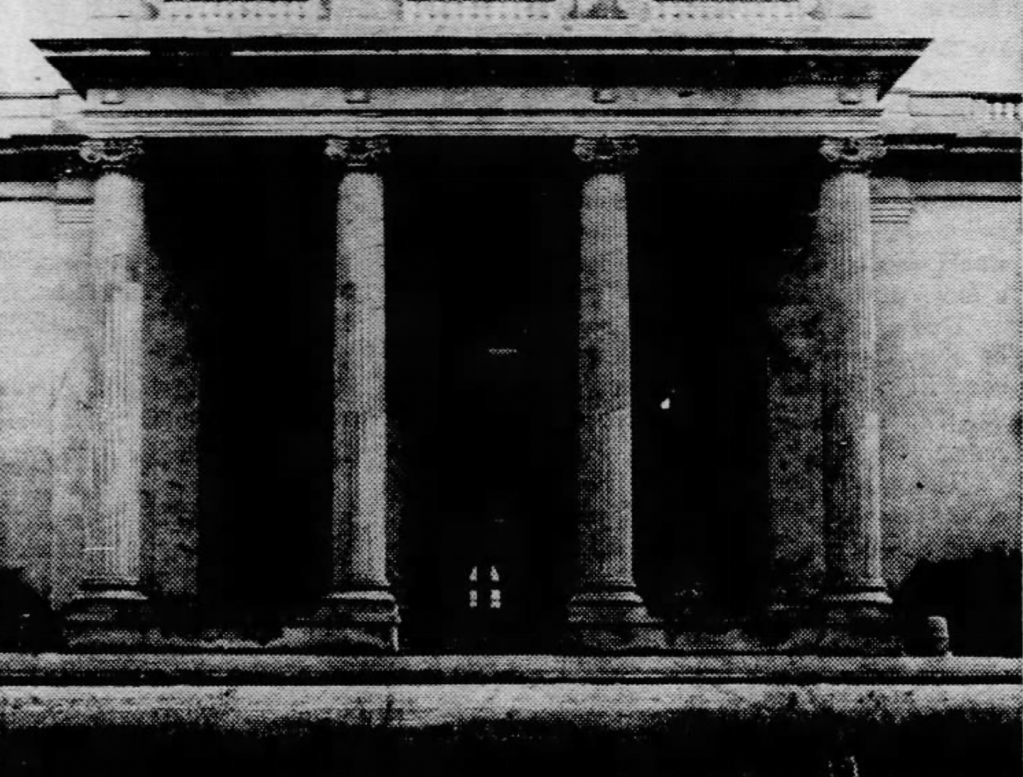
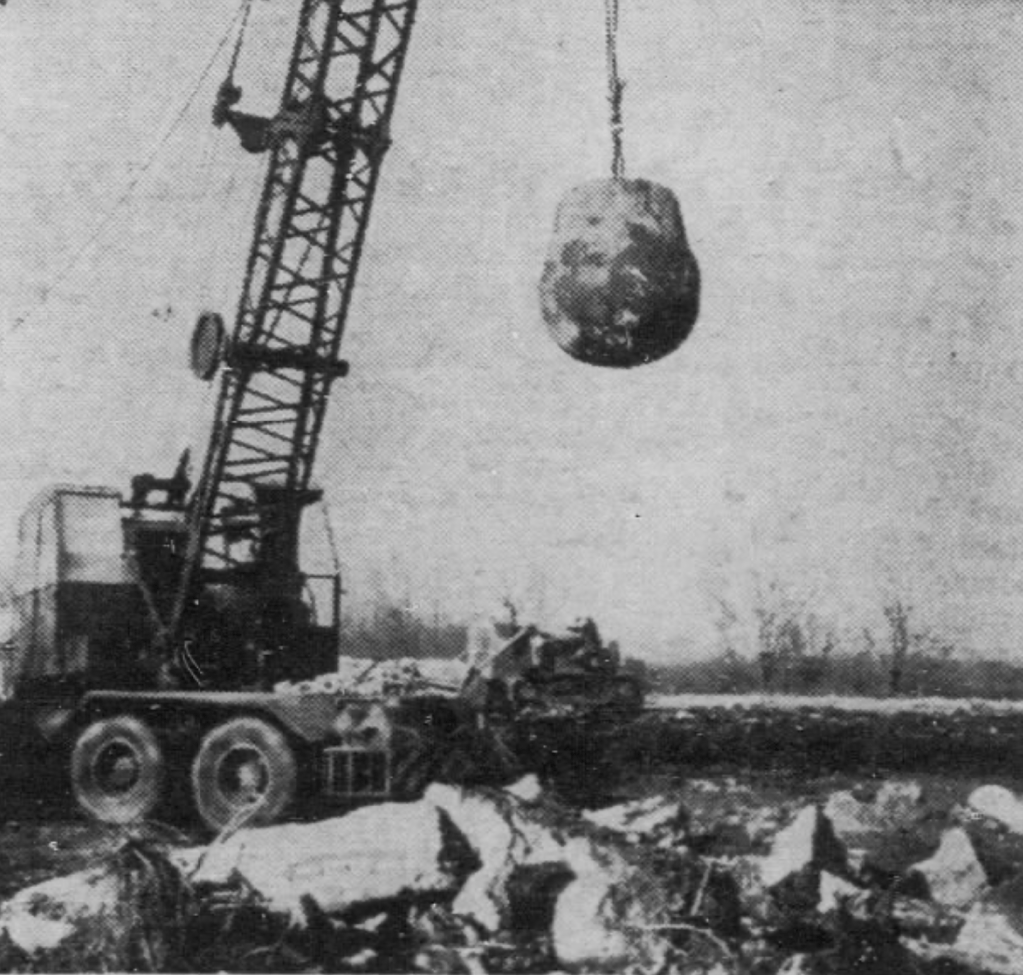
The basement floor, garden terrace, and general ruins of Knollwood as seen in the years following its demolition. Courtesy of Dynamics of Community Change the Case of Long Island’s declining Gold Coast, and Newsday.
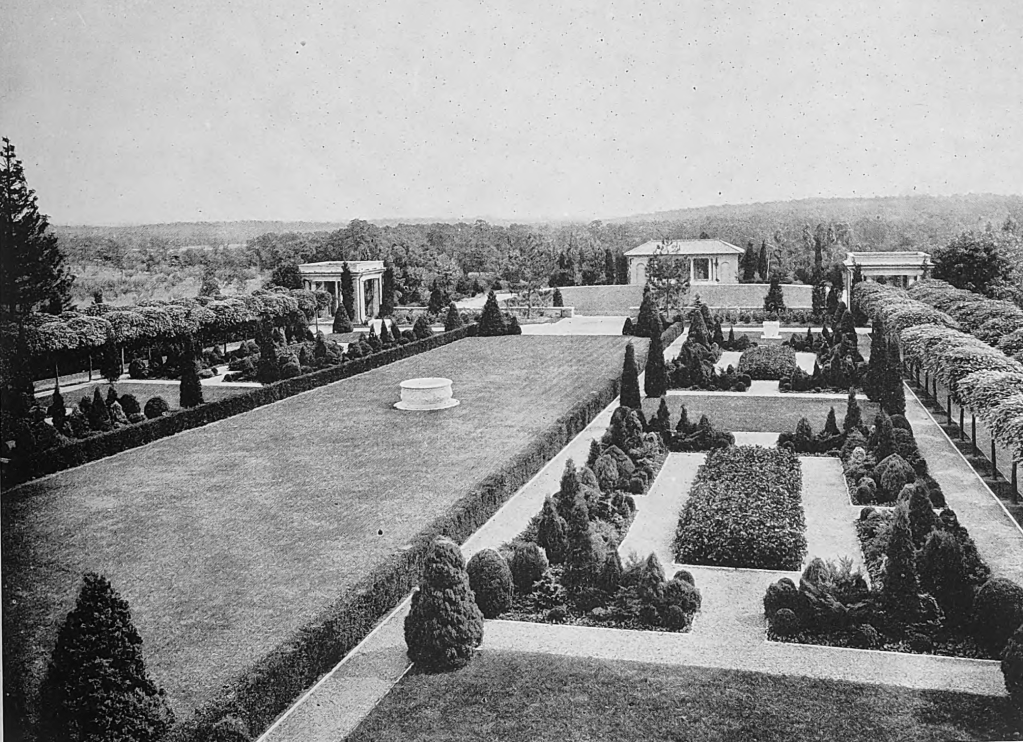
Anyways, by the end of the 1950s, rumors were already circling that “Knollwood” was to be demolished and/or turned into a grand country club. In 1959, the inevitable would occur: Knollwood was demolished. At least, the main mansion was. The rest of the estate, including Garden pavilions, outbuildings, farm structures, terraces, and even the basement of “Knollwood” was still standing. Oddly enough, some of these remnants would actually remain untouched for decades – including the incredible garden terrace. Sadly, this wasn’t the case for all of the Knollwood estate. To best visualize how the continued demolition of Knollwood came to be, I must continue outlining its history.
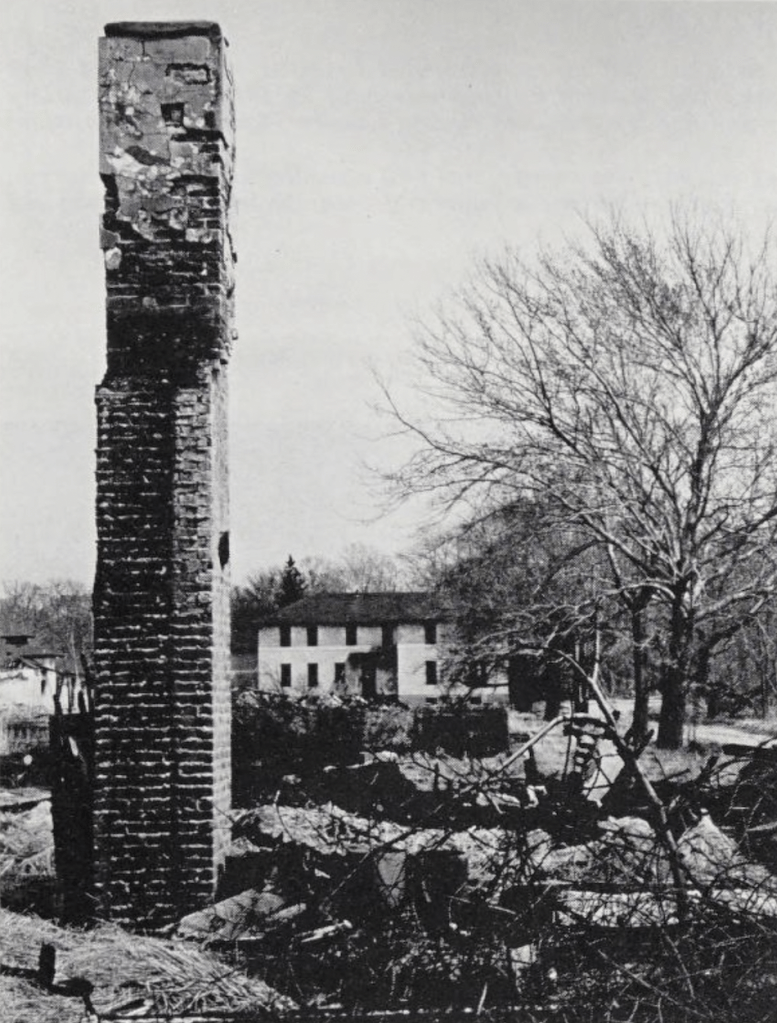
So, towards the latter half of 1959, Lansdell Christie had Town of Oyster Bay officials fill the basement floors of “Knollwood” (and some other structures on-site) with concrete for safety purposes. Soon after, smaller buildings like a beautiful garden pavilion and farm buildings were subsequently ripped down as well. By the mid-1960s, Christie was mainly using the property for horse riding only.
Landell Christie would die in 1965, leaving his massive 500+ acre estate to be monitored by a handful of caretakers only. Just two years later, though, deals would be made with Nassau County to convert the property into a preserve. With such an immense amount of mostly untouched land, a variety of plant and animal species already thrived here. Not only this, but most of the surrounding area had already been developed, making this land even more appealing. So, in 1968, the Muttontown Preserve opened to the public
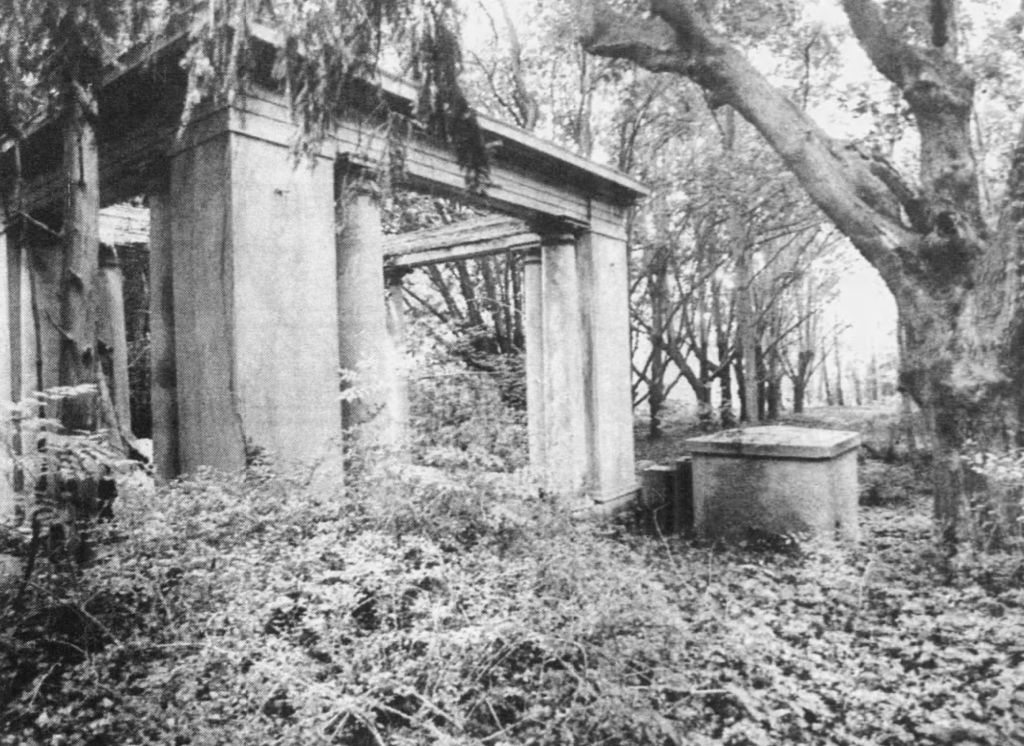
There was only one choice left to make: What should be done with “Chelsea” and “Knollwood”? The choice for “Chelsea” was clear, as the main home & grounds were very well preserved. So, that structure remained. But, “Knollwood”, in its ruined estate, needed some love. Unfortunately, it was decided that the effort was too extensive to restore what was left of this otherwise grand estate, and thus the power of mother nature and vandals has taken its toll.
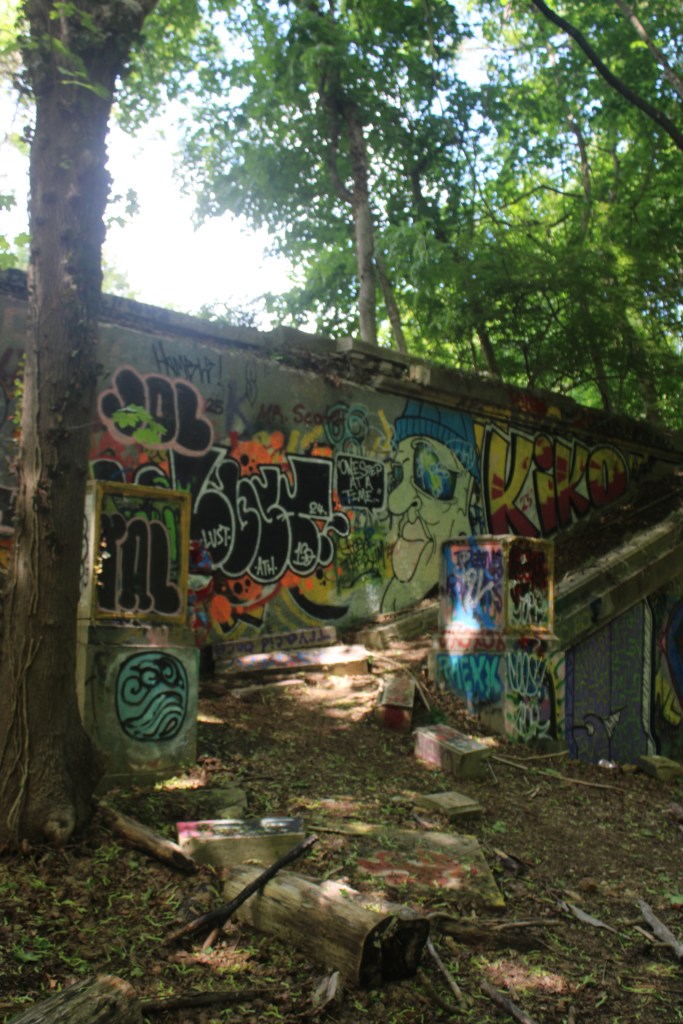
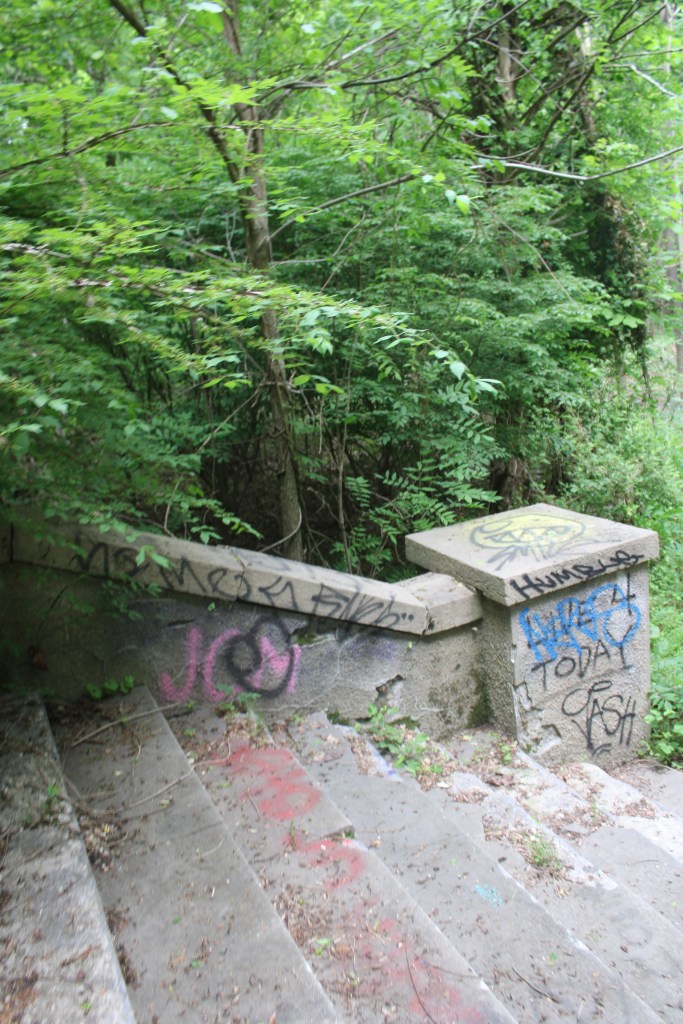
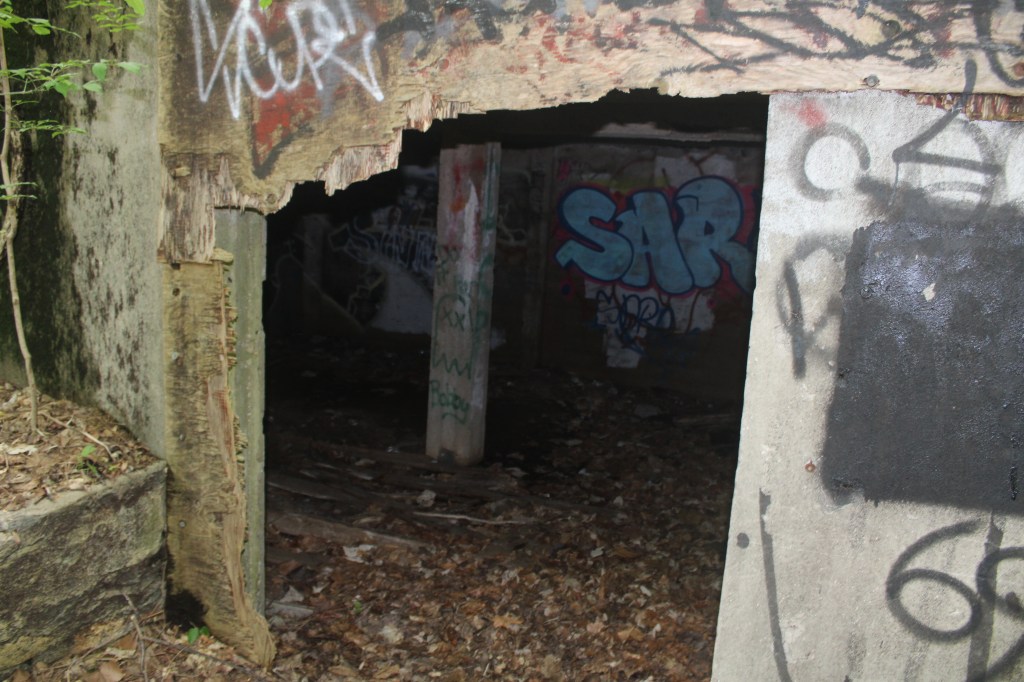
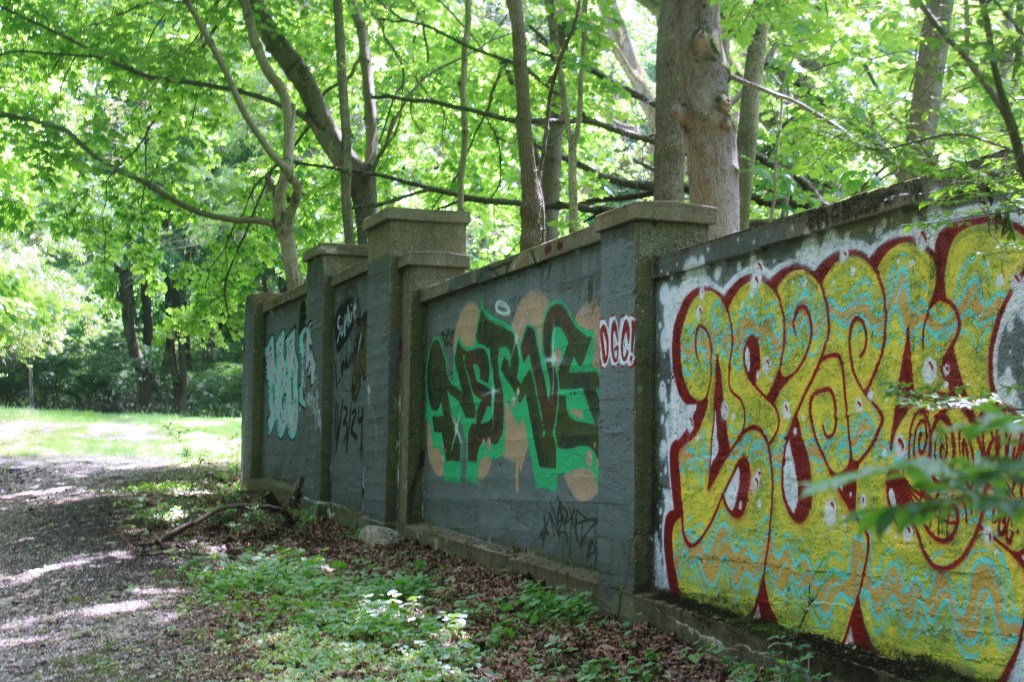
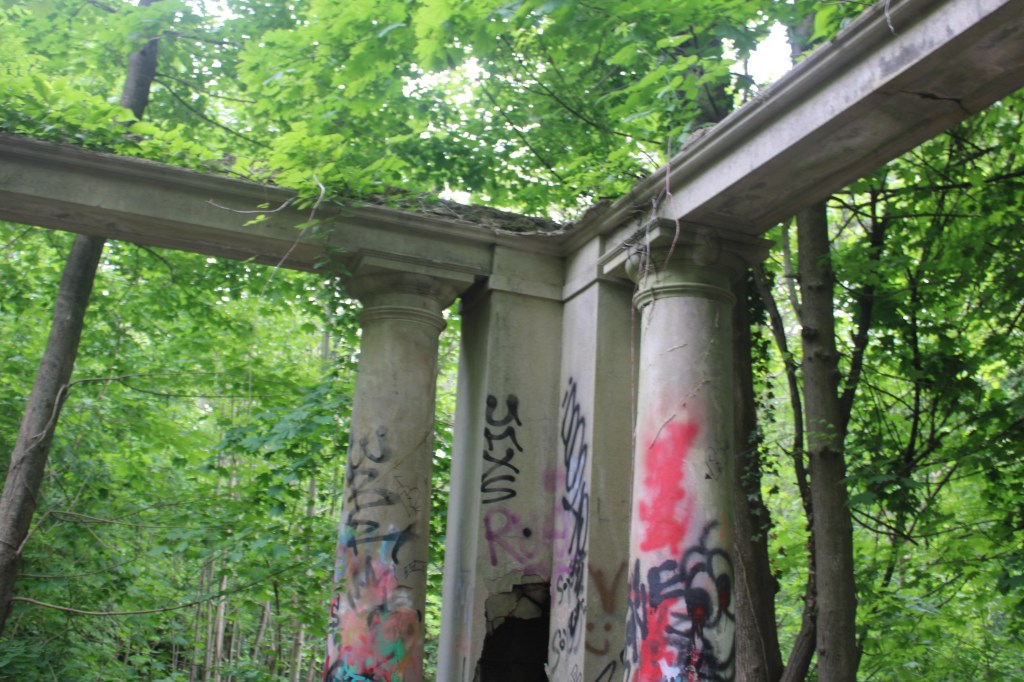
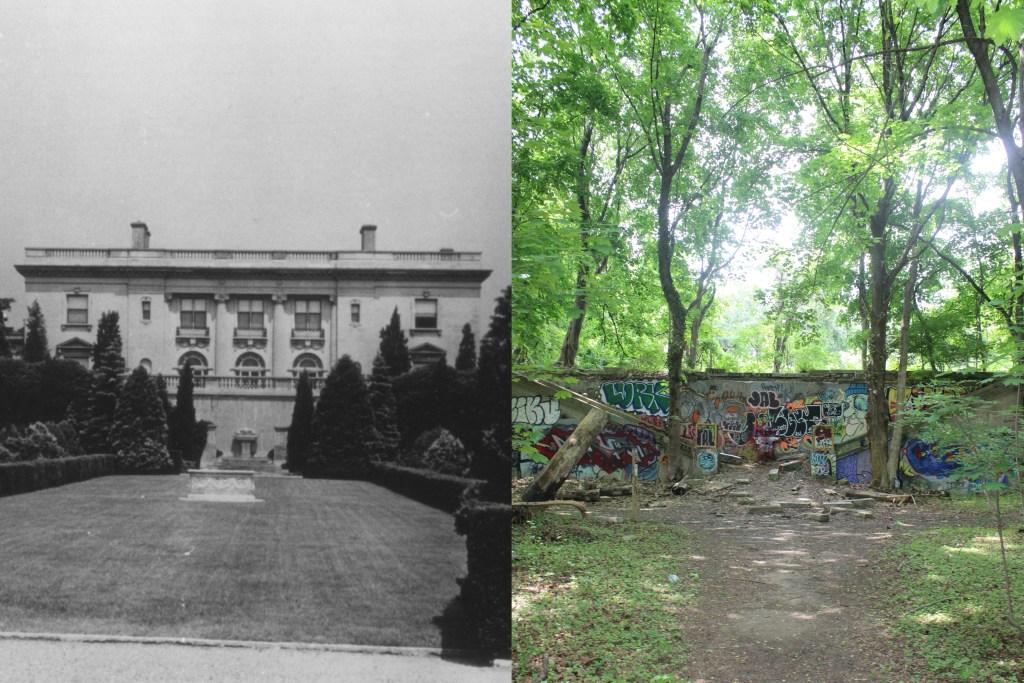
Today, “Knollwood” is barely recognizable, and it takes a pretty intense trek through the woods to reach. However, there is beauty in its ruins. From the glimpses of original color that can be seen between Graffiti art to chunks of limestone that once decorated the back facade, one can find a variety of remnants on this site.
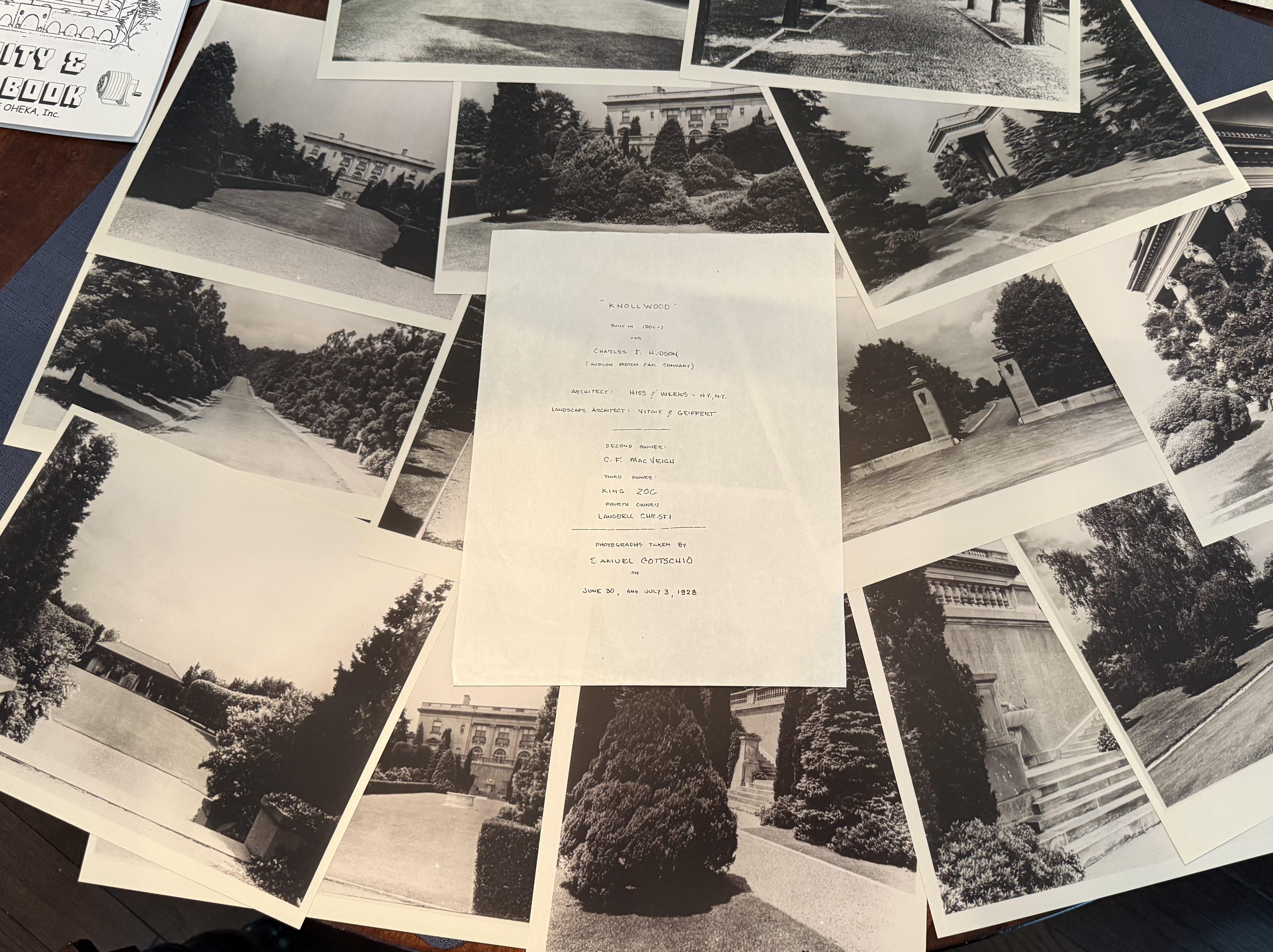
Yet, it’s been nearly 120 years since its construction and the story of “Knollwood” is not over. Today, I got the chance to help write a page in that book. Thanks to a local of the area named Mark Lane, I came into possession of 14 never before seen photographs of the Knollwood property, sealed from the public for nearly 100 years. It just so happens that these pictures were part of the very gallery that photographer Samuel Gottscho curated all the way back in 1928.
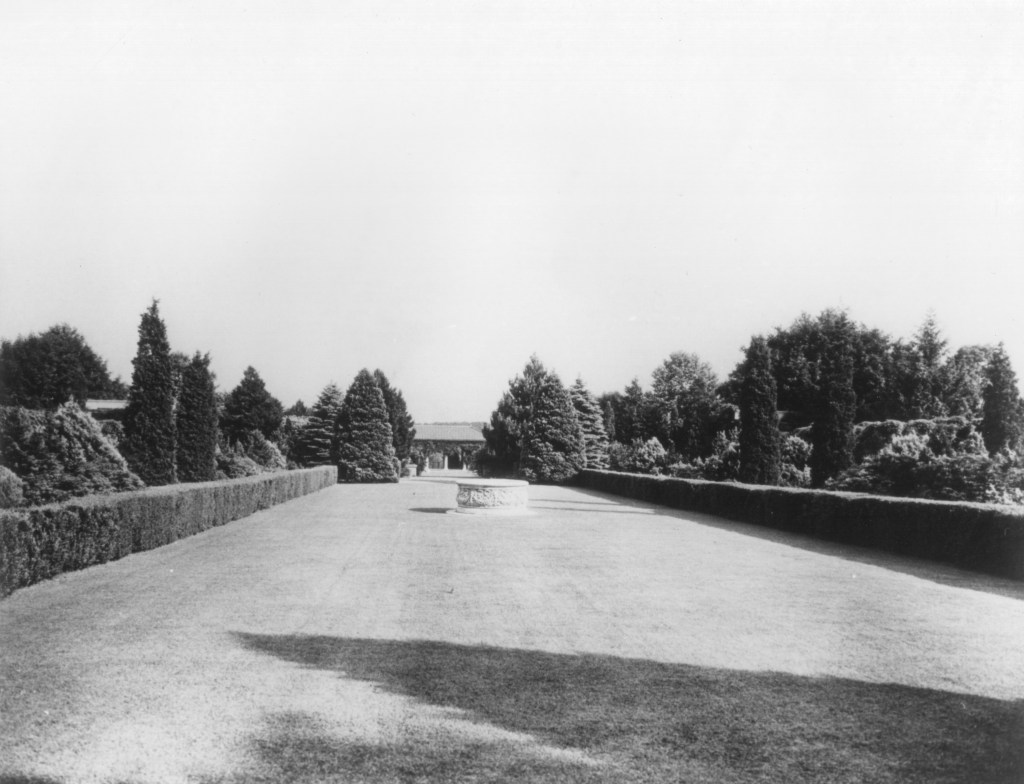
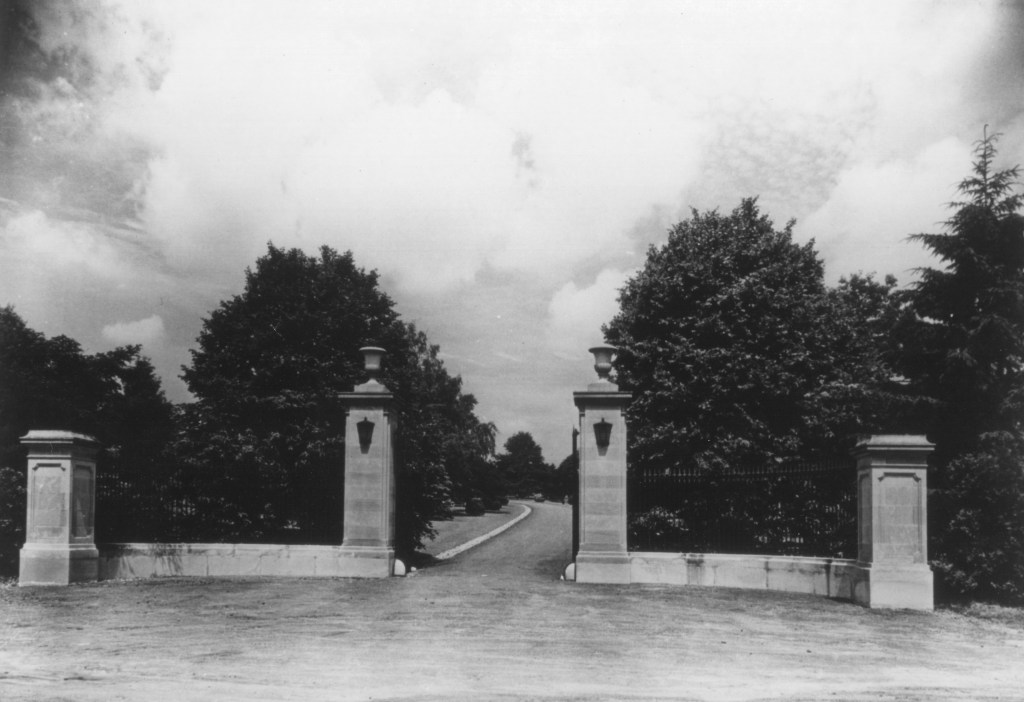
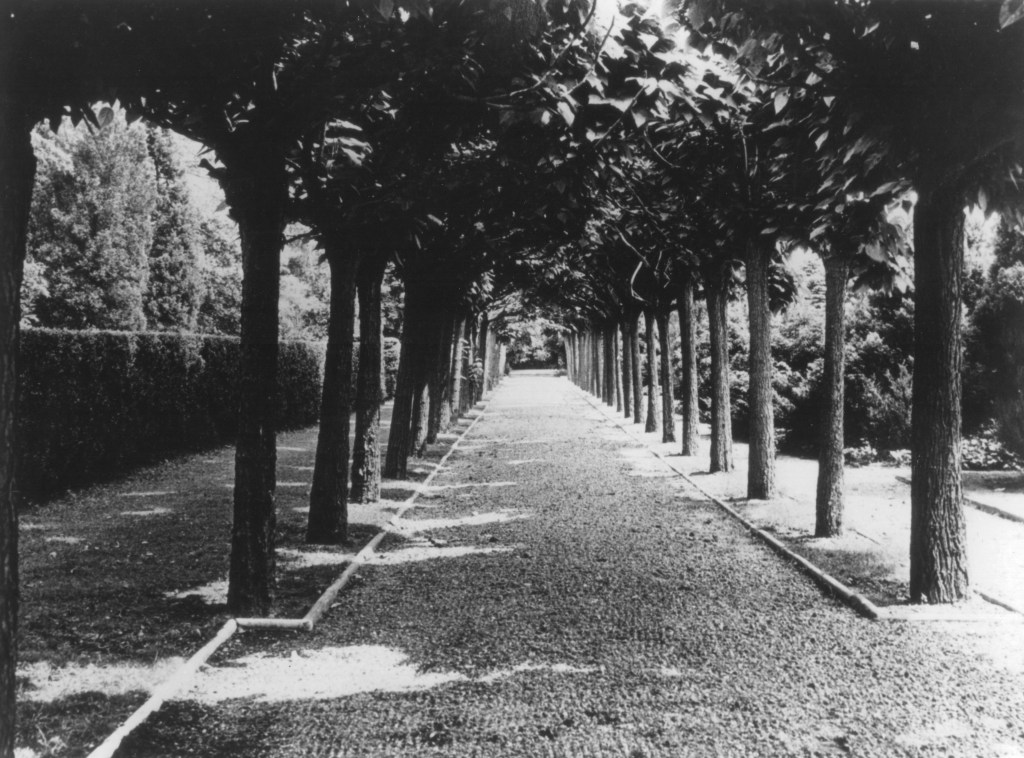
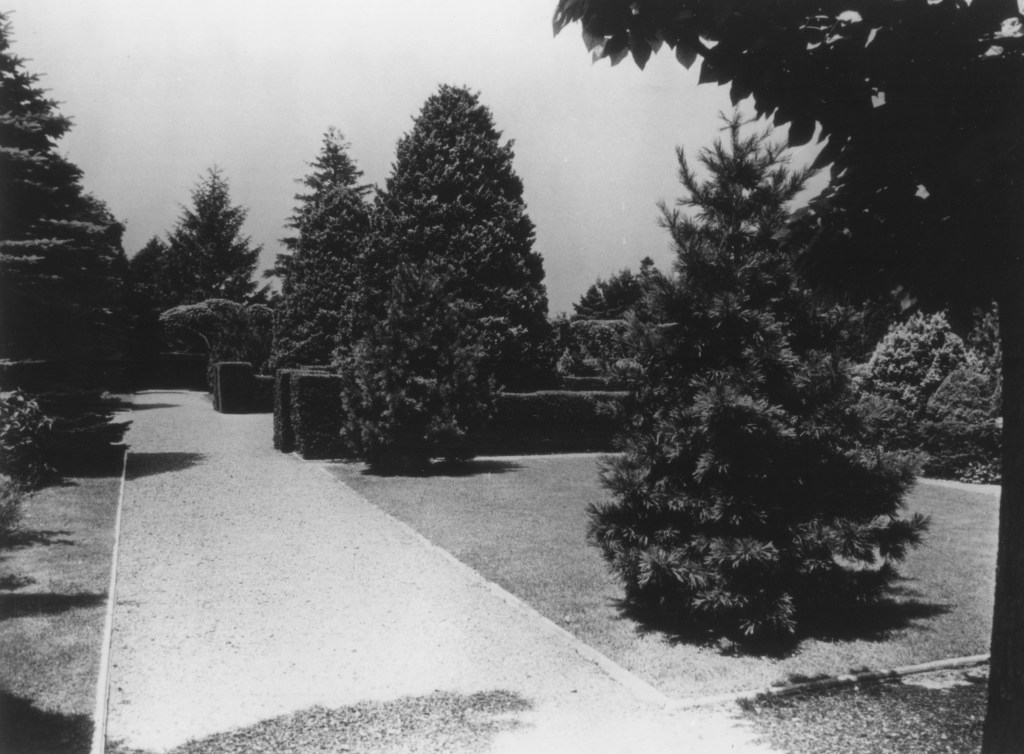
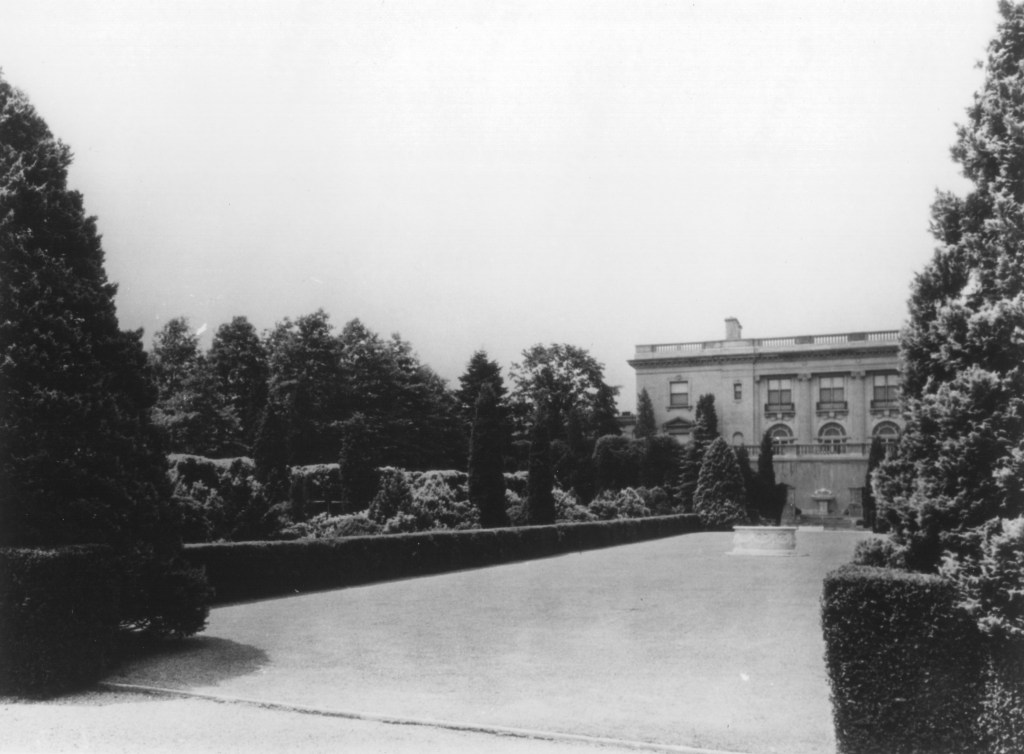
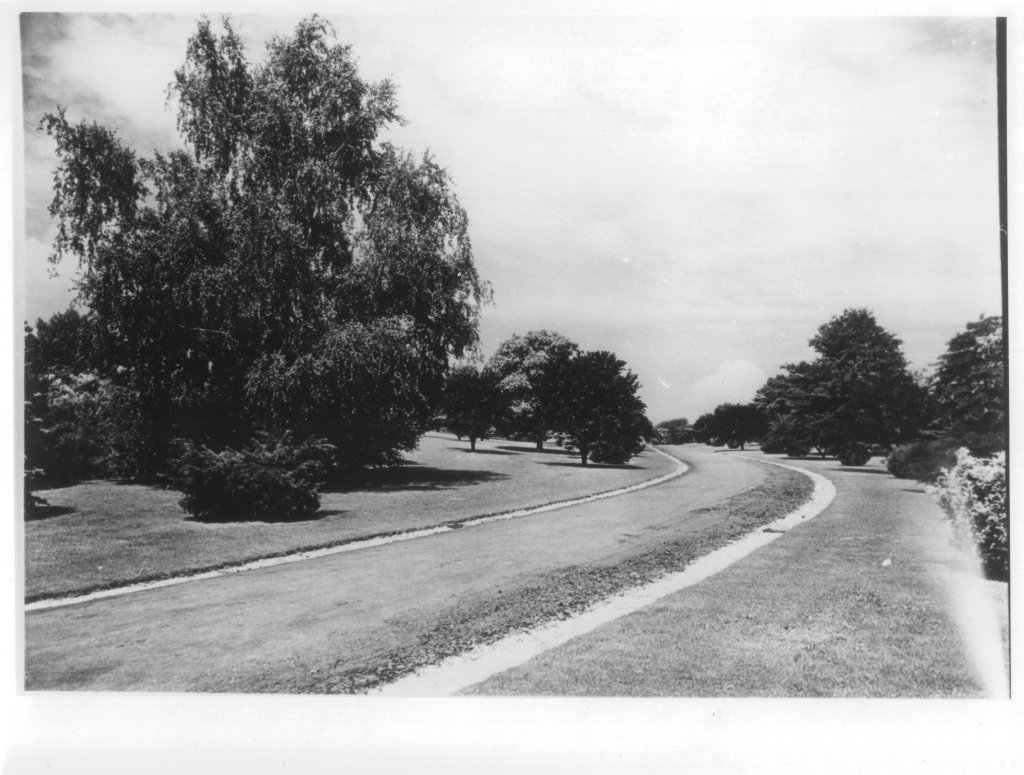
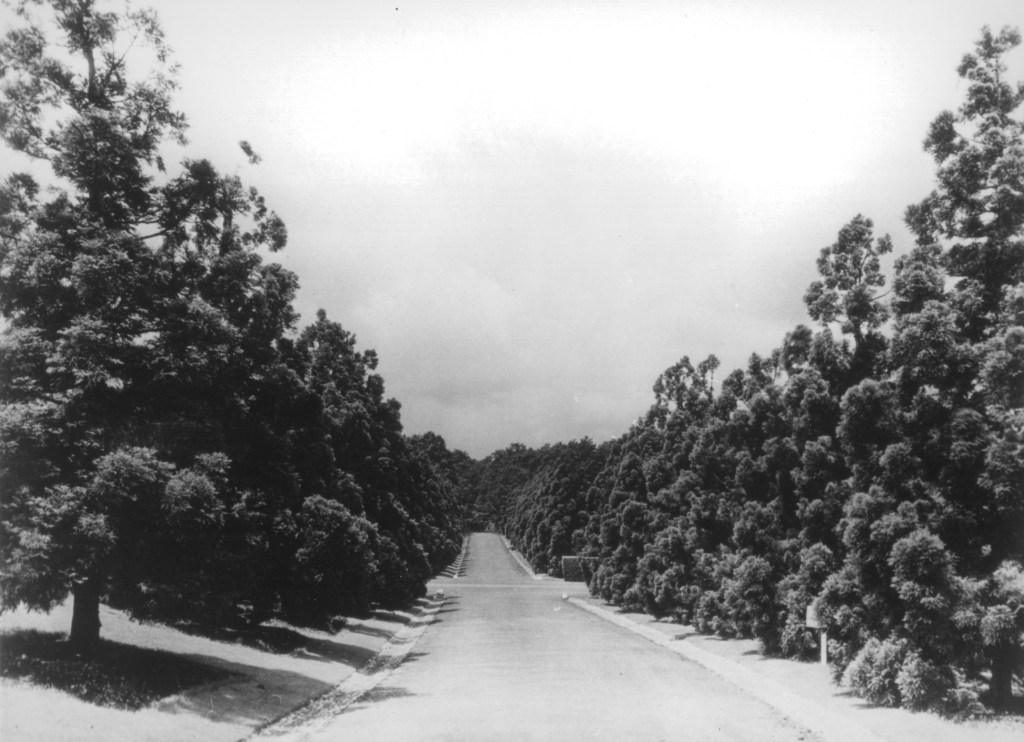
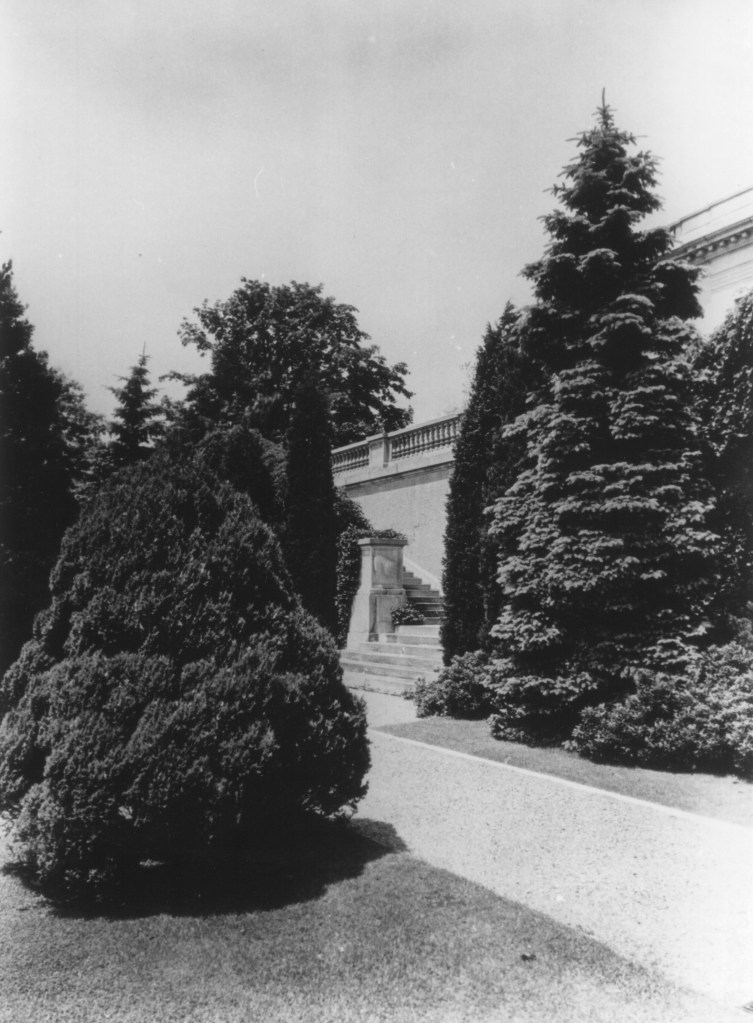
So, it’s my honor to now present them to you all. Enjoy! Above are the Gottscho photographs I have not yet featured in this article, mostly detailing the gardens and general property of Knollwood.


Leave a Reply